Episode: 347
The 7‑Day Habit Reset: Start Today, Feel Different By Next Week
Charles Duhigg
If you feel unmotivated and exhausted…
If you are tired of your own excuses…
If you are tired of starting out strong, only to end up in the exact same place…
If you feel like you can’t get your life together…
You need a little PUSH to get over the finish line.
So Mel is giving you the simple reset you need to finish the year with energy and focus.
Forget complicated routines. You are getting the 3 things that quietly upgrade everything in your life.
This is not another productivity pep talk. It’s a playbook that you can start using today.
Listen on:




You can become any person you want to be. You can build the habits that make you into a marathoner. You can abandon the habits that have weighed you down, once you understand how to change your habits.
Charles Duhigg
All Clips
Transcript
Charles Duhigg (00:00:00):
You can become any person you want to be that habit that's been driving you crazy for years. You can change it. You can build the habits that make you into a marathoner. You can abandon the habits of drinking or overeating that have weighed you down. Every habit can be changed. Aristotle once said, we are what we repeatedly do. Excellence then is not an act, it's a habit,
Mel Robbins (00:00:21):
And so is slacking off.
Charles Duhigg (00:00:23):
So is slacking off. So is exercising every day. So is procrastination now about 40 to 45% of what we do every day is a habit.
Mel Robbins (00:00:31):
45%?
Charles Duhigg (00:00:32):
Yeah. Oftentimes when we talk about changing a habit, we refer to it as breaking the habit. I'm going to stop doing that thing. And what we know is we know that that's not enough. We have to use what's called the golden rule.
Mel Robbins (00:00:44):
What's the golden rule?
Charles Duhigg (00:00:45):
Don't try and extinguish a habit. Rather, we have the power to be the people we want to be. We can be the person we want to be by changing our habits. And any habit can be created, any habit can be changed. You can live the life that you want.
Mel Robbins (00:01:04):
Charles Doig, I am so excited that you're here to teach us all about habits.
Charles Duhigg (00:01:10):
Well, thank you for having, this is such an honor for me. I really appreciate it.
Mel Robbins (00:01:13):
Well, you know your book, the Power of Habits changed my life. It is the best and it is the seminal, and it is the original, incredible book about habits. The research is unreal. I cannot wait for you to unpack all that today, and I'd love to start by having you speak directly to the person who's listening. They do not have a lot of time, but they have found the time to spend it with you and me, and they cannot wait to learn about your research with habits, how to create a positive ripple effect in their life. Can you tell this person what might change about their life if they take everything that you're about to share today and they apply it?
Charles Duhigg (00:01:51):
Absolutely. Absolutely. So here's the thing I would say, every habit can be changed. You can create as many habits as you want. You can change that habit that's been driving you crazy for years. You can change it because the way that habits work is that it's a very simple thing that happens inside our brain. And once we know how to take a habit and break it apart into its components, then suddenly we can adjust anything that we want to in our life. So you can become any person you want to be. You can build the habits that make you into a marathoner. You can abandon the habits of drinking or overeating that have weighed you down once you understand how to change the habits.
Mel Robbins (00:02:34):
I love that you started there because you said simple. And to me, behavior change on its face seems simple, but it is so dang hard to do. And so you're seriously going to teach us how we could create habits that change who we are, make more money. That's a habit?
Charles Duhigg (00:02:53):
Absolutely. Absolutely. Absolutely. You're exactly right. It is simple. That doesn't mean it's easy. There's lots of simple things in life, but you're going to make it easy. But we're going to make it easier. We're going to tell you exactly the steps to take because the truth of the matter is that once we start to change our habits, it has a cascade effect and it changes the rest of our life.
Mel Robbins (00:03:11):
So cascade meaning what?
Charles Duhigg (00:03:13):
Meaning that there's a chain reaction that something happens that causes other habits to change without us even having to use our willpower to change them within the literature. This is known as a keystone habit.
Mel Robbins (00:03:26):
Okay. What is ski I almost called it a keystone, but what is a keystone habit?
Charles Duhigg (00:03:31):
So a keystone habit. What we know is that some habits are more powerful than others.
Mel Robbins (00:03:35):
So there's a hierarchy to habits.
Charles Duhigg (00:03:36):
There's a hierarchy to habits, and sometimes when you change the right habit, it sets off this chain reaction in the rest of your life. One of my favorite examples of this is exercise. So we all know that on the mornings that you go and you exercise for some reason at lunch you eat healthier. And if you think about it, that doesn't necessarily make any sense, right? But it's easier. For some reason, my legs are kind of sore. Suddenly I go into the cafeteria and I get a salad instead of that sandwich that I always get. But what's really interesting is these two researchers named Oin and Chang, what they looked at is other things that change. What they found is that on the mornings when people exercise, they tend to use their credit cards less that day.
Mel Robbins (00:04:18):
What?
Charles Duhigg (00:04:18):
They procrastinate less at work, they'll actually start doing the dishes, like washing the dishes 20 minutes earlier in the day than when they usually do. Now, nobody goes for a run in the morning and thinks like, oh, I'm going to keep the Amex in my pocket today. But what's happening is that for many people, exercise is a keystone habit. When you start to exercise, it sets off this chain reaction that changes other patterns in your life, your eating patterns, your spending patterns.
Mel Robbins (00:04:45):
Wow.
Charles Duhigg (00:04:45):
It's really powerful.
Mel Robbins (00:04:46):
Well, okay, so I just want to back up a minute because I'm excited because you are not only going to teach us the research and science about habits and the simple things you need to understand to lock them in, but you've already said something that I want to make sure that the person listening really captured that you're going to take away. Because one of the things that struck me about your remarkable New York Times bestseller, the Power of Habit, is that being successful in life isn't about talent. That the science says that habits shape who we are and the outcomes that we achieve more than your ability. Can you unpack what that means? Because I think it's really exciting to listen to this conversation today as an invitation to change the type of person you think you are. And if you've been telling yourself that you just don't have the talent or you don't have willpower or you're not athletic or any of these other things, the research says otherwise, tell us what that means.
Charles Duhigg (00:05:54):
That's absolutely right. And we've known this since Aristotle. Aristotle once said, we are what we repeatedly do. Excellence then is not an act, it's a habit,
Mel Robbins (00:06:03):
And so is slacking off.
Charles Duhigg (00:06:05):
So is slacking off, so is exercising every day, so is procrastination. They're all habits and they all operate the same way in our brain, and the key to changing them is just to understand what's going on.
Mel Robbins (00:06:17):
And is habits just a fancy researchy word for patterns? These are patterns in your life or what is that?
Charles Duhigg (00:06:25):
So there's a part of our brain known as the basal ganglia that creates habits and every animal on earth has a basal ganglia. Without it, we would not have evolved to become humans or anything else. And it exists not just to create patterns, but to create a specific kind of pattern and to explain. Let me tell you how a habit works. We think of a habit as one thing, but actually there are three parts to every habit. There's a cue, which is like a trigger for an automatic behavior to start. Then there's the routine, the habit itself, what we think of as the habit, the behavior. And then finally, every habit in our life has a reward. It delivers a reward to us, whether we're aware of it or not. Now, about 40 to 45% of what we do every day is a habit.
Mel Robbins (00:07:08):
45%?
Charles Duhigg (00:07:09):
Yeah. We think of it as a choice, but actually when you're backing your car out of the driveway, you're operating on habit. When you walk into the cafeteria and you get that unhealthy lunch instead of the salad you said you were going to have this morning, that's a habit. When we get home and our kids kind of annoying us and we are short with them, that's a habit. And if we can diagnose the cue and the reward for those behaviors for those routines, we can change that habit or build new ones.
Mel Robbins (00:07:35):
And you're also here to teach us that there are three, as you call them, keystone habits. These are like the whoppers.
Charles Duhigg (00:07:41):
Yes.
Mel Robbins (00:07:42):
These are three things that you can teach yourself to do that create the biggest ripple effect in terms of changing the way that your life is and changing who you are.
Charles Duhigg (00:07:53):
Absolutely. Really, absolutely. These are three habits that we know are keystone habits for almost everyone. And if you make this change, you can just watch the change ripple through the rest of your life.
Mel Robbins (00:08:04):
Wow.
Charles Duhigg (00:08:05):
Yeah.
Mel Robbins (00:08:05):
That's exciting.
Charles Duhigg (00:08:06):
It is exciting. It is exciting.
Mel Robbins (00:08:08):
Okay. Well, let's stump into it. Let's talk about the first one, which is exercise. Why is exercise a keystone habit?
Charles Duhigg (00:08:18):
Exercise is a really, really powerful habit in many people's lives because it changes how we think about ourself. Now, for folks who are already athletes if they take, let's say they have a baby, they take six months off, they go back to running. It might not be a keystone habit for them, or it might be a keystone habit that they've already built in their life. But for someone like myself, somebody who never, never exercised in a high school, didn't play any sports. When I start running even just once a week, even for just like half a mile, suddenly in part of my brain, I start thinking of myself as the kind of person who's a runner, the kind of person, they don't use their credit card wastefully, they don't procrastinate at work, they don't eat unhealthily at lunch. What's happening there is that I'm actually changing my concept of self by engaging in this keystone habit. So now
Charles Duhigg (00:09:10):
The next question is how do we build an exercise habit?
Mel Robbins (00:09:13):
Well, let me ask you a question though. Does it have to be running?
Charles Duhigg (00:09:16):
It doesn't have to be running.
Mel Robbins (00:09:17):
Okay. So when you say if you were to develop a habit of exercising, moving your body, whether it could could be running, it could be going for a walk every day. It could be going to the gym three days a week. It could be any form of exercise works.
Charles Duhigg (00:09:31):
It can actually even be standing up from your chair regularly. Really? Yeah. We know that. You know how your watch sometimes buzzes and it tells you it's time to stand up? Yes. That's based on research. Research that shows if you can get yourself to a place where you're habitually standing up every 45 minutes or every 35 minutes and you're just standing and walking around for 10 seconds, that it will change your other behaviors because it changes your self concept. It changes yourself how you think about yourself.
Mel Robbins (00:09:57):
Now, I want to make sure that as you're listening to Charles, because this is such an important idea, because I think a lot of us think we should exercise because we know it's good for us and we think that it's something that we should do. What you are saying is something different. Just stop and think for a second as you're listening to Charles, and think about the kind of person that goes to the gym five days a week. And now, even if you're not that kind of person, you probably can imagine that there are certain things about that person that you know to be true because they seem to have the discipline, or in your words, the habit of moving their body that regularly, that maybe they don't procrastinate. Maybe they get out of bed when the alarm rings. Maybe they have more energy during the day. Maybe they are a healthier eater. Maybe they don't bury themselves in a bottle of wine every night. I don't know. But you have assumptions about who that person is When you see somebody doing something and you are saying that the same thing happens to yourself, that when you become the kind of person who doesn't drink or the kind of person who saves money regularly or the kind of person who exercises regularly, it changes your identity. That's super cool.
Charles Duhigg (00:11:18):
It's absolutely amazing. And you're exactly right. There's a part of our brain that pays attention not to what we think we should do, but how we actually behave. And in psychology, this is known as stated versus actual preferences.
Mel Robbins (00:11:32):
Stated versus actual preferences.
Charles Duhigg (00:11:34):
Yes. So my stated preference might be that I work out,
Mel Robbins (00:11:36):
You know how I say that? Stop talking and do it.
Charles Duhigg (00:11:39):
Yeah, exactly.
Mel Robbins (00:11:40):
You want to be that person, prove it.
Charles Duhigg (00:11:41):
Exactly. There's a part of your brain that does exactly that, and they say, you know what? You got up this morning and you went for a quarter mile jog. You're kind of a jock. You're kind of an athlete. You're kind of awesome and going to start changing our behavior based on this concept of what you actually do. That's how habits change our life.
Mel Robbins (00:11:59):
One of the things that's incredible, and I want you to explain the science behind how just this one habit, you're going to teach us all the mechanics of how to lock in exercise, whatever your form is as a habit. But can you explain the science, because you wrote about this in the book about how exercise compounds and leads to other changes like eating better, being more productive, even spending less money. You wrote about in your book, it's on page 1 0 9, that people who start running suddenly quit smoking or start budgeting. Why does exercise cause a ripple of other positive change?
Charles Duhigg (00:12:37):
Well, let me ask you a question.
Mel Robbins (00:12:38):
Yes.
Charles Duhigg (00:12:39):
On the days that you exercise, if I was to ask you, Mel, are you a person who has a lot of self-discipline or not? What do you more,
Mel Robbins (00:12:47):
You better believe? I do, Charles, I got up today at six 30 and I was in an exercise class at 7:00 AM before I came to the studio this morning.
Charles Duhigg (00:12:56):
That's pretty impressive.
Mel Robbins (00:12:57):
And I feel like a woman that has discipline.
Charles Duhigg (00:12:59):
And you know what? Your brain is impressed with you too, and your brain is saying, well, if Mel can wake up at six 30 and be in our exercise class by seven, well then it's going to be easy for her to have a healthy lunch. That's the simple thing. She's already proven how much self-discipline she has. Our brains are constantly looking for clues as to who we actually are, and when we give them the right clues, our brain becomes our partner in changing our behavior the way that we want it to change.
Mel Robbins (00:13:27):
So simply doing this keystone habit that you're about to teach us, the three steps to locking in exercise as a habit will lead to a ripple of other things that you're currently not doing.
Charles Duhigg (00:13:41):
Absolutely. Now, that doesn't mean that tomorrow your life is going to change because you went for a run. But here's the thing about how habits work, is that it doesn't matter what you eat for lunch today. It matters what you eat for lunch every day.
(00:13:55):
So when that ripple starts, when you start to change those habits, what you'll see is slow, slow at first, change in other patterns, but each time you do it, each time you get up to go exercise, each time you walk into the cafeteria and you get something healthy to eat, it's going to be a little bit easier than the time before. And eventually you're going to find, and this can actually happen in just a couple of weeks, that you don't even think about waking up in the morning anymore. You just do it automatically. It's a habit. It feels really normal and natural and all those other changes will become stronger and stronger and stronger until you have the life that you want.
Mel Robbins (00:14:30):
Why does the brain respond that way? I think it's exciting. If the first keystone habit that you're recommending that we really try to implement in our life is to make it a habit to exercise, to move your body, why does it do that in your brain? What does the research say about that?
Charles Duhigg (00:14:50):
Well, so first of all, exercise is very powerful in terms of the neurotransmitters that it helps to release. There's these pleasure hormones that we end up feeling when we exercise. But the second thing that happens is that when we start to exercise, oftentimes for many people, exercise is kind of intimidating. If you've never gone to the gym before, you're like, I don't want to show up. I don't want to. I'm going to look stupid. I know.
Mel Robbins (00:15:15):
Honestly, it's scary. It's scary. I literally travel a lot for work, and it took me a long time to walk into a hotel gym. I didn't know what to do in the gym. And so I agree with you. There's a lot of resistance. And then if you've let yourself go, you're like, oh my God, I don't even want to confront how out of shape I am.
Charles Duhigg (00:15:33):
So let's talk about how we overcome that,
Mel Robbins (00:15:35):
Please. Because I think exercise is one of those things that everybody would agree, this is something that I know is good for me and I need to do more of it, but I don't feel like it. How do we use your research to make this easier?
Charles Duhigg (00:15:48):
Absolutely. So I mentioned before the habit loop, right? Every habit has these three components, a cue, a routine, and a reward. So if I want to start an exercise habit in my life, or if you want to start an exercise habit in your life, we've got to figure out, first of all, we have to choose a cue.
Mel Robbins (00:16:02):
Okay.
Charles Duhigg (00:16:03):
A cue usually falls into one of five categories. It's a certain place, the presence of certain other people, a particular emotion, a particular time of day or a proceeding behavior that has become ritualized. So if I want to build an exercise habit, I'm going to build as many cues as I can. I'm going to say, okay, look, when I exercise, I'm going to set the alarm for seven. I'm going to have my running shoes right next to my bed. I'm going to plan on meeting my friend Jim at the corner. So here's what I've done. I've committed three cues for myself, a time of day, a certain environment, a particular place I see my shoes.
Mel Robbins (00:16:43):
That's a reminder,
Charles Duhigg (00:16:44):
And then the presence of certain other people, because Jim's going to be pissed if I don't show up after we've planned to run together. So now I've set some cues for my exercise routine.
Mel Robbins (00:16:54):
And the cue, the important thing about the cue is is there to kind of go ding, ding, ding, Charles.
Charles Duhigg (00:17:01):
That's exactly right.
Mel Robbins (00:17:02):
This is the time to do this thing you said you were going to do.
Charles Duhigg (00:17:05):
Over time, just seeing that cue will make you automatically start exercising.
Mel Robbins (00:17:10):
Okay, got it.
Charles Duhigg (00:17:11):
So we want them to be somewhat stable, and we're just going to choose them, and it can be anything. We can experiment with them. Then I'm going to go and I'm going to do my exercise. I'm going to run for three blocks and afterwards, as soon as I can. So we've done the cue, the routine. The third part is the reward. Afterwards, I'm going to give myself a reward as quickly as I can,
Mel Robbins (00:17:32):
And give me an example of reward.
Charles Duhigg (00:17:34):
A reward. Let's say you go on a run, a reward could be you have a smoothie when you come home, right? A reward could be you let yourself take a nice long shower. A reward could even be that you have a little calendar and you make a check every day. You go for an exercise and you look it and you think, oh my gosh, I have 13 checks this month. I'm amazing. Anything can be made into a reward. We just have to give ourselves that reward. Now, compare that to how most people try to start exercising, right? Here's what they do. Instead, they say, I'm going to go exercising tomorrow. And then they wake up at seven and they're like tired, and they're like, where are my shoes? Where's my running stuff? Then they go and they run three or four blocks and they come home, and now they're running behind and the kids need breakfast. So they jump in the shower, they take the fastest shower that they can. Then they're rushing to get the kids to school because they're going to be late for school. Then I'm rushing to my office, and as soon as I got into my office, I wasn't able to do all those emails. What I'm doing in that case, I'm actually punishing myself for exercising that morning.
Mel Robbins (00:18:31):
That's so true. And then the next morning when you wake up, you're like, I don't feel like doing this. I don't have enough time. Because you're thinking about the fact that yesterday it didn't work.
Charles Duhigg (00:18:38):
Your brain pays attention to what you reward yourself for and what you punish yourself for. And if you punish yourself for exercising, even if you don't mean to punish yourself for exercising, even if just not thinking about it ahead of time makes what happens afterwards, a punishment, your brain will be like, I don't want to exercise anymore. I'm not going to make that easier.
Mel Robbins (00:18:57):
Wow. So it sounds like the single biggest mistake that each and every one of us makes is not understanding these three components. That's exactly right. And not being intentional about what they are. Because if you don't have the three components, you're not locking in the pieces that make it automatic.
Charles Duhigg (00:19:13):
That's exactly right.
Mel Robbins (00:19:14):
You know what? I want to give two examples to see if these are accurate. So if you've ever trained a dog, we have this dumb thing that we always say, let's go see the puppy. That's like the verbal cue to be like, we're going outside and we're walking to the part of the lawn where I hope I'm going to train you to go number two or number one, the pattern I'm looking for is walk with me after that cue. Let's go see the puppy. And then when they go to the bathroom, what do we do? We give him a biscuit, and that's the reward.
Charles Duhigg (00:19:43):
That's exactly right.
Mel Robbins (00:19:44):
Now you're getting the dog to be trained to understand that that verbal cue leads to the biscuit.
Charles Duhigg (00:19:51):
Exactly. And let's talk about what happens in your brain. Your brain. The basal ganglia actually will take that cue, that routine, the behavior cue, routine reward. It'll connect them and actually make the neural synapses between those parts of your brain that are involved with that activity. Make them thicker, so it's easier for an electrical impulse to run down that synapse and to actually activate that part of your brain. Your brain is designed just like our dog's brain, just like every brain of any animal on earth. Your brain is designed to build habits, because if you didn't have habits, you wouldn't know how to stand up from your chair. If you were walking down the street and you saw an apple in a rock, you would have to stop and think, which one of those should I pick up and eat? Habits are energy saving technique that our brain uses so that we can think about other things.
Mel Robbins (00:20:39):
What's interesting is that as I think about the example of training a dog, the second I say, let's go see the puppy, I know the dog is not thinking about peeing. The dog is thinking about a treat, and if I think back to a period in my life where I had a rock solid, I'm talking keystone made of granite, thick, amazing habit of exercising every day. It was when I was a young mom, and there was a particular yoga studio that I loved, and I would always go to this particular class. So I would set my alarm and I would put my yoga outfit on the floor at night so that when I woke up, it was right there. I had to see it. I typically met a friend there, and afterwards, there was a great bakery across the street where I could get a latte, and if I had the kids in tow and they were reading a book, they could get a chocolate chip muffin. And what's interesting, and maybe you can explain this, is that the second the alarm went off once, I had done this several weeks in a row, and I saw the yoga close, which in your language is a cue. So it's the cue. We're going to yoga, now we're doing the walk. Now we're going to go do our stretches. Now, whatever your form of exercises is, you've got the cue. Okay, I'm doing it. The second I saw those clothes, do you know what I thought about the latte?
Charles Duhigg (00:22:03):
Yeah.
Mel Robbins (00:22:04):
I literally could feel the taste of this ice latte. What is happening in your brain that makes you not think about the exercise, but actually makes you start to think about the biscuit? If you're a dog or the latte, if you're Mel Robbins.
Charles Duhigg (00:22:17):
The reward you're going to get at the end of it. So I mentioned before that habits exist to help our brain save energy. And our brains always want to save energy. That's one of brain's big goals. And so it wants to take as many decisions out of your life as possible. And so one of the things that your brain is doing is it's saying, okay, if X happens, if I see X, if this Q merges in my life, I want to make this behavior that I know delivers a reward to me as simple and easy and automatic as possible. I don't want to have to think about it. I don't want to have to work at it. I don't have to want to use my willpower to make it happen. And the way that I do that is I actually power down the brain, the basal ganglia. When you are in the grip of a habit, you are actually thinking less. You are actually not making decisions. You're just acting automatically. And we've all felt that before, right? We've all felt that it feels kind of relaxing. Like when you're driving to the store and you get onto the road, that usually takes you home, and suddenly you find yourself home and you're like, oh, I didn't mean to come home. I meant to go to the store.
Mel Robbins (00:23:16):
Or how did I even get here? I don't remember driving.
Charles Duhigg (00:23:18):
Right? It's because you're relaxed, because you're not having to think about it. So what's happening? When you would wake up in the morning and you would see those workout clothes, and you started imagining the latte, your brain was saying the best way to make it easy for Mel to go do yoga. I know that yoga's good for her. It delivers a latte. I don't feel like it. I know it's something that she wants because it's something that's important to her. The best way I can help her is I can actually take away all the need for willpower. I'm going to make it automatic for her. And the thing is, once it's automatic, we hardly even have to think about it. We just do it.
Mel Robbins (00:23:51):
Wow. Alright, well, let's move on to keystone habit number two. So the first one, if you want a ripple effect exercise.
Charles Duhigg (00:23:58):
Absolutely.
Mel Robbins (00:23:58):
What is the second keystone habit?
Charles Duhigg (00:24:00):
So the second keystone habit is to have a morning routine. And morning routines are really, really powerful. Folks who are listening, they might have heard about these speeches that were given about making your bed, that a number of commencement speeches. The speakers have said, the most important thing you can do as a college graduate is make your bed in the morning. Now, why? What is it about making your bed in the morning? Well, a morning routine oftentimes determines how we feel about the rest of our day, and how we feel about our day influences the choices that we make and the habits that come out during that day. Now, a morning routine, every morning routine should have three components, and it's easy to remember. It's a RC arc. A morning routine should first of all create anticipation for the day, and anticipation means maybe I'm just thinking about one thing I'm excited about today. I'm just going to take 30 seconds and I'm just going to imagine I'm going to lunch with Mel. I'm really looking forward to that. I've got anticipation for the day. The second thing, R is relaxation.
Mel Robbins (00:25:05):
Relaxation,
Charles Duhigg (00:25:06):
Relaxation. Now, that doesn't mean it has to be a lot of relaxation, but I'm going to let my nervous system calm down a little bit. That might mean literally I just have a nice cup of tea and do the wordle. It might mean I take a shower and I just let myself kind of relax in the shower for 10 or 15 seconds. So a RC, anticipation, relaxation. And then the third thing that a morning routine ought to have to be really powerful is to have connection that you want to connect with at least one other person sometime in the morning. Now, that might mean that it's your husband. It might mean it's your kids. It might mean it's your dog. It might mean that you feed the fish, but that sense of connection is going to wake something up in you. That means you will seek out connection during the day, and we are happiest when we're socializing with other people.
Mel Robbins (00:25:57):
So those are the three components.
Charles Duhigg (00:25:59):
Those are the three components of building a morning routine, and they're really simple. It's very straightforward. So let's making your bed as an example. So it's not actually just the making the bed that matters.
Mel Robbins (00:26:11):
What matters?
Charles Duhigg (00:26:12):
What matters is that when I'm making that bed, I'm saying to myself, you know what? I'm going to start by making today's going to be a good day. I'm doing the anticipation. Today's going to be a good day. I started, I woke up, my room looks really nice, the comforter's all smooth. This is going to be a good day. Anticipation, relaxation. Actually, when you're making that bed, oftentimes one of the things that happens is you kind of just feel like I have time this morning. You have to have a schedule that gives you the time to make your
Mel Robbins (00:26:40):
That's so true.
Charles Duhigg (00:26:42):
You have to have time to relax. If you wake up at the last minute, you can't make your bed. So if you set your alarm a little bit earlier so that you can make your bed, now suddenly you've got time to have that cup of coffee, to read the paper, to do the wordle. So you've got the anticipation, you've got the relaxation, the connection. Most of the time when I make that bed, it's also I'm making my wife's bed. My wife and I, we sleep in the same bed, and so when I make that bed, I'm doing something nice for her. I'm connecting to her now. She might've already left for the day, but simply reminding myself, I'm going to make this bed look nice for Liz when she comes home, that gives me that connection. So something as simple as making a bed, which takes what, 15, 20 seconds. That is enough to build a morning routine that can change the rest of your day.
Mel Robbins (00:27:27):
So that's the way that you can start to lock in this keystone habit is when you get out of bed, make the bed, but take a little bit of time and be present as you're doing it to get all of that goodness that the research says.
Charles Duhigg (00:27:44):
Absolutely.
Mel Robbins (00:27:44):
And then you can add on from there?
Charles Duhigg (00:27:46):
You can add on from there. And the thing that you might've noticed is that we're giving ourself a reward.
Mel Robbins (00:27:52):
What is the reward?
Charles Duhigg (00:27:52):
Well, the cue is that I'm waking up. I look at the unmade bed and I'm going to go make the bed. There's the cue, there's the routine. I'm making the bed. The reward is that I'm giving myself a little bit of props. I did something nice for my wife. I should feel pretty good about myself. That's a reward.
Mel Robbins (00:28:09):
My room's clean. I don't have to do this later.
Charles Duhigg (00:28:11):
I look at my room and it looks amazing. That's kind of a reward.
Mel Robbins (00:28:15):
Now, are there other examples of things you could do in the morning that check off the ARC?
Charles Duhigg (00:28:23):
Absolutely.
Mel Robbins (00:28:24):
What are they?
Charles Duhigg (00:28:25):
They can be anything. The key isn't that there are some behaviors that are more powerful than others. The key is to take the behavior you want and to give it that anticipation, that relaxation, and that connection.
Mel Robbins (00:28:36):
Okay. So because I know that the person listening is like me, and they're like, just tell me what to do. So you're basically saying that it's not that there's particular things in the morning routine that are more important than others. It's that you need to create this keystone habit of having your routine of something you do in the morning every morning simply for the sake of creating anticipation, relaxing a little, which means just actually slowing yourself down so your morning doesn't start like a tornado. And what was the C? Connection. Connection, yeah. Some connection either to yourself, to another person, to being present in the moment. So are examples like meditation?
Charles Duhigg (00:29:14):
Absolutely. Meditation is a great example because when you're meditating, usually what you're doing is you're anticipating a little bit. The rest of the day, I really want to get centered because I have that meeting coming up and I'm looking forward to it, but I don't want to be too excited, right? I'm relaxing because meditation is relaxation and I'm connecting with myself. Connection doesn't have to be with another person. I can connect with myself. Or let's take morning journaling or saying a prayer every morning. There's a number of people who find that a keystone habit in their life that's really powerful. Their morning routine is that they wake up and they say a prayer. Why would that be powerful? Well, it's because first of all, as I'm saying that prayer, I'm oftentimes thinking about the people. I want to help the people that I'm going to see my son tonight. I want him to be safe, but I'm excited to see him. There's that anticipation. I'm in a moment of contemplation, and that's relaxing, and I'm connecting to whoever you're praying to. The connection doesn't have to be with another person. It can be with ourself. It can be with a spirit. But that connection reminds us how much value we get from socializing with other people, with spending time being part of a community.
Mel Robbins (00:30:24):
Now, you talked about how exercise creates this ripple effect, and there's all this research that shows that people that exercise stop smoking, they spend less money during the day, they make other healthy choices. How does creating a habit of a morning routine that has this anticipation, this slowing down and relaxing and being in the moment, and the connection to self, or connection to nature, or connection to another person, how is it that having something you do every morning that has those three things, how does that ripple through your day?
Charles Duhigg (00:30:57):
In two ways? Well, one of them is when you have that morning routine, you actually have to kind of plan for it, right? If I know that I'm going to start making my bed in the morning, I figured out yesterday that I tried to make my bed, and it was just I ran out of time. So today I'm going to set my alarm five minutes earlier so I have time to make my bed.
Mel Robbins (00:31:18):
And also you're thinking I'm just the kind of person that makes my bed, which means I'm orderly.
Charles Duhigg (00:31:23):
I'm organized, organized. I'm disciplined. I'm the kind of person who can go do other great stuff because I woke up this morning and I made my bed. So that's a really important part of it, is I'm changing my self image. I'm forcing myself to plan a little bit, but most of all, what I'm really doing is I'm reminding myself to be intentional. Think about all the times in your life when you've been most intentional, when the gifts you get for your husband that you really think about the party that you plan, the thing you're going to say to your kid, that really is something meaningful. The more intentional we are, the more we achieve our goals and the happier we are. And there's something about building a morning routine, a morning ritual that allows us to be intentional about it. And when we are intentional, what we're doing is we're giving ourselves the gift of being able to think about the rest of our day, the rest of our week, all the things we want to accomplish that now feel like they're within grasp.
Mel Robbins (00:32:23):
What does the research say about the difference between a person that has a habit of having a morning routine that creates anticipation, relaxation, meaning we're slowing down, we're not running through the morning like a freaking tornado and connection to something like yourself or other people or something important to you. What's the difference between that person, even if it's just making your bed and somebody who doesn't have morning routine? What's the research say?
Charles Duhigg (00:32:52):
Well, what the research says is that when you have that morning routine, you tend to make much better decisions. And in particular, you tend to make better decisions on what to focus on. So if you think about the challenges that we all face every day in life, a lot of them are, there's some things that I want to be able to focus on, but I get distracted. I get distracted by someone bringing me a problem. I have to react to my kids. I get distracted by my phone. I get distracted by this email that just came on, and I'm suddenly worrying about something.
(00:33:21):
We want to accomplish the things that we care about, and those distractions are the things that draw us away from it. And when we start with a morning routine because of that intentionality, what we're saying is we're saying, I'm the kind of person who doesn't react. I'm the kind of person who is proactive, who makes choices about where to focus my attention. And that's really, really powerful because as we start defining ourselves as a person who makes proactive choices rather than reacting to the chaos of life, then suddenly we start seeing ourselves in that light. And when that notification pops up on your phone, you say, whatever, I'll wait until later to deal with it. I'm focused on what I want to be focused on right now.
Mel Robbins (00:34:01):
So knowing that the person listening is probably a lot like me, and they're like, okay, but what's the list of things that should be in the morning routine? I mean, clearly you can exercise because another keystone habit, so now you're powering up two things. But if you had to give somebody a menu of things to choose from, if they're building a morning routine based on the research, what are the top five things that you would want somebody to think about? And obviously we got to bring the ARC framework to it where we're actually infusing what we're doing with it, but what are the actual things to do that based on the research are kind of the big ones.
Charles Duhigg (00:34:39):
So there's a couple of things that we know consistently have a powerful effect on people when they do them in the morning, in addition to making your bed, if you do something that has an organizational element, it makes you feel settled, it brings that relaxation. It usually gives you a chance as you're organizing to think about the day. And oftentimes when we're organizing, we're doing it for other people.
Mel Robbins (00:35:02):
Like what? Give me an example.
Charles Duhigg (00:35:03):
I wake up every morning and I go through the house and I pick up all the stuff that my kids have left. They leave cups everywhere. There's cups on every single surface. I pick up all the cups and I bring them to the sink, and I put them in the sink. That's one of my morning rituals. Another one is eating breakfast, right? When we sit down and we eat breakfast with our family, or even if we eat breakfast by ourselves, that is a morning ritual that we know has huge impacts. In fact, the National Weight Loss Registry, the largest database of people who have lost weight on earth, see that there are two major things that determine if you lose weight. And one of them eating breakfast really? Now, why is eating breakfast so powerful and helping me lose weight because I'm eating well for two things. Number one, I'm not hungry later in the day. It helps me regulate my meals. I feel a sense of discipline. But number two, if I have a breakfast routine, it means that I have created space in my life for having breakfast.
(00:35:57):
I'll bet you, I'm like, look, I have to have breakfast every single morning. It's going to take 10 minutes to eat that bowl of cereal. I need to set my alarm 10 minutes earlier. Now, suddenly I'm being intentional. Now suddenly I'm planning what my day is going to be like. So if you can do something that has an organizational element that's going to be powerful, if you eat breakfast, that's going to be powerful. Number three is if you get a chance to spend time with other people. Now, that might mean spending time with your kids at the breakfast table. It might mean that you walk to work with your friend and you guys meet up and you walk over together. It might mean that you're taking your dog for a walk or you're giving him a cuddle. When I find a habit that has some sociability to it, that's going to be a powerful morning routine.
(00:36:40):
And then from there, it can be almost anything you want it to be. As long as you decide, this is a behavior I want to do every morning as part of my morning routine, I'm going to journal every morning, I'm going to say a prayer. Every morning, I'm going to meditate every morning, whatever it is, I'm going to call up a friend. I'm going to listen to this comedian that I like. Whatever it is, as long as you're planning around it, you have a sense of anticipation for the event, it creates anticipation for the day. You're relaxing because it's something you enjoy and you feel connected to something, then it's going to be powerful.
Mel Robbins (00:37:13):
I love that. I absolutely love that.
Mel Robbins (00:37:15):
Is there any mistake that you see people making in terms of not being able to lock in the habit of a morning routine that has these elements?
Charles Duhigg (00:37:24):
The mistake that we sometimes make is that we don't allow ourselves to enjoy the reward.
Mel Robbins (00:37:29):
What is the reward?
Charles Duhigg (00:37:30):
Well, okay, let's talk about exercise for a minute. Think about how many people say like, I went for a run this morning, and then I let myself have a really good kale smoothie. That is not a reward. Nobody likes a kale smoothie. We drink them. It feels virtuous to us. But the people who are going to continue exercising are the ones who say, I had a kale smoothie and then I added some fruit to it, and I put a little bit of sugar in it. Or I had a strawberry smoothie, which is a little bit less healthy than a kale smoothie. But you know what? I really like it Oftentimes, particularly in America, because we are stoics, right? We don't like to reward ourselves.
Mel Robbins (00:38:06):
Speak for yourselves, but okay, go ahead.
Charles Duhigg (00:38:09):
Oftentimes we try and punish ourselves for doing the right thing. I just went on that long run, and now instead of just laing in front of the tv, now I'm going to go lift some weights. So the biggest mistake that we make when it comes to morning rituals or when it comes to any other habit that we're building, is not giving ourselves a reward and then not letting ourselves enjoy the reward.
Mel Robbins (00:38:29):
Well, I don't know what the reward is in the morning routine.
Charles Duhigg (00:38:32):
Okay, so which routine are we talking about?
Mel Robbins (00:38:34):
Let's just say I'm meditating, which I don't have as a habit, so I don't know why I'm picking that one, but that's one.
Charles Duhigg (00:38:41):
Okay, so when you do meditate, how do you usually feel afterwards?
Mel Robbins (00:38:45):
Well, when I have meditated in the past, I feel accomplished. I feel more present. I feel proud of myself that I did it, that I'm the kind of person that meditates because I'm married to somebody who is that kind of person.
Charles Duhigg (00:39:00):
And so those are all the beginnings of rewards. The question is how do we make them into a reward? Yes. Because if you feel accomplished, if you feel proud of yourself, that's a reward. Yes, it's a reward you're giving yourself. So how do we make it into something tangible?
Mel Robbins (00:39:12):
I don't know.
Charles Duhigg (00:39:13):
We turn and we write it down. We keep a calendar where we say, oh, I meditated today. I'm going to check off that thing.
Mel Robbins (00:39:20):
And what about the cups? So how does the cups you picking up the, because I love that example.
Charles Duhigg (00:39:25):
Yeah,
Mel Robbins (00:39:25):
I can visualize it because I have people that our kids just visited. There's stuff everywhere.
Charles Duhigg (00:39:32):
You know what the reward is?
Mel Robbins (00:39:33):
No.
Charles Duhigg (00:39:33):
There's two of them. First of all, once I'm done collecting all the cops and I put them in the sink, I walk through the house and I just look and go. I let myself enjoy a clean house.
Mel Robbins (00:39:44):
I think this is super important because what I'm gathering from this, and we'll get to the third keystone habit in just a second, is that if you really do just embrace, it's the cue which signals that we're about to do this thing. And for me, I do make my bed every morning, and one of the cues is that I've got all these throw pillows. I'm psycho about pillows when I get up. It's not the unmade bed, it's the fact that the pillows are on the floor.
Charles Duhigg (00:40:08):
I love it.
Mel Robbins (00:40:09):
That actually trigger me to turn around and do it immediately. And then I also do this thing where I karate chop the pillow to give it that nice interior design looking thing, and there's something so satisfying about that. But what I realize is that I rush past it once it's done, and I don't often take that moment to savor what I just did. Now, in the exercise example, I definitely, oh, this latte tastes so good, and so I'm locking in the habit by actually enjoying the aftermath of the reward. I'm starting to realize
Charles Duhigg (00:40:52):
That's exactly right. And what if when you made that bed, what if you literally took four seconds to look at those pillows that you just put that dent in that looks perfect, and say like, this bed looks great. I am the kind of person who has an amazing bed. This, that's a reward you can give yourself, but you're right. You have to let yourself savor it. The other reward that I get from clearing up all those cups is that my wife comes down and she looks around and she says, oh, it looks nice down here.
Mel Robbins (00:41:19):
If you are having trouble locking in a new behavior and making something a habit, and it could be anything balancing your checkbook, it could be, I dunno, making healthy dinners. It could be meditating. It could be not spending money on frivolous things.
Mel Robbins (00:41:34):
Is it fair to say that one of the things that you should probably do is take a look at the thing you're trying to make a habit and go, okay, do I even have a cue?
Charles Duhigg (00:41:44):
Yeah.
Mel Robbins (00:41:45):
Do I know what the repeatable behavior is? Because one of the things for me with exercise that it sounds dumb, but unless I actually plan ahead what I'm going to do, I know this class I'm going to stream, or I know the thing that I'm going to go to. It all falls apart because even though I might have the time I'm doing it, now I have to stop and think about what I'm actually doing.
Charles Duhigg (00:42:08):
And there's a reason why it falls apart from science,
Mel Robbins (00:42:11):
Why?
Charles Duhigg (00:42:11):
It's what's known as hot mind and cold mind,
Mel Robbins (00:42:14):
Hot mind and cold mind.
Charles Duhigg (00:42:15):
Yeah. So let me ask you this. Is it easier to eat healthy when you walk past an ice cream store and you just had dinner or when you're starving?
Mel Robbins (00:42:25):
Well, it's easier to eat healthy when I've just had dinner.
Charles Duhigg (00:42:29):
Okay? Right, exactly. You don't stop at the ice cream store, right?
Mel Robbins (00:42:31):
If I'm starving, we're making a U-turn. Let's go.
Charles Duhigg (00:42:33):
Because when you're starving, your mind is in a hot mind place.
Mel Robbins (00:42:36):
Oh,
Charles Duhigg (00:42:37):
You're at the moment where you have to make a decision, and our brain hates making decisions. So what it does is it makes the first easiest decision that it can. So how do we overcome this instinct? We make decisions when we're in a cold mine state.
(00:42:52):
I am going to exercise tomorrow morning. You know what? I'm going to decide what class I'm going to do right now before I go to bed. It's not that hard to decide right now. I'm just going to do this one class. I know that I like it. I'll just cue it up. Now, if you wake up that morning and you're like, I'm tired, I'm overwhelmed. I got to get to work. You're in a hot mind state. You can't make a decision about what class to do. Your brain's going to say, I feel too overwhelmed. This is too much. It's too much anxiety. I'm just going to say, skip exercise today. Let's go to the next thing
Mel Robbins (00:43:20):
A thousand percent. That happens all the time.
Charles Duhigg (00:43:22):
So the key is you make a decision before you have to make the decision, and this is known within science as implementation intentions. An implementation intention is, when I say from a cold state, I say, tomorrow morning when I see X, I'm going to do Y. Tomorrow morning when I wake up and I see the alarm clock going off and I see my workout clothes that I left on the ground, I'm going to go do that class. I've already decided what class I'm going to take. I don't have to decide in the morning because deciding is too much hard work. My brain wants to avoid it.
Mel Robbins (00:43:56):
I love this making it easier. When I think about exercise, I exercise consistently. When I'm in Boston recording episodes, I know the class I'm going to go to. I meet my buddy Lynn before the class. It's the same time every time, and I have a latte afterwards. It's perfect. So those are the conditions that I need to put in place in order to make it easier when I'm in my normal life, because I am deciding what to do with a hot emotional, I don't want to exercise mind.
Charles Duhigg (00:44:22):
Right. That's
Mel Robbins (00:44:23):
Boom.
Charles Duhigg (00:44:24):
And you asked, is it worth actually sitting down and figuring out these components? Here's what I do when I want to build a new habit or when I want to change a habit, I pull out a piece of paper and I write down the cue, the routine, and the reward. I literally will say like, okay, my cue for running is I'm going to call Greg right now and ask him to meet me tomorrow morning at nine 30 at this corner, right? My plan, I'm not going to just run wherever. I'm not going to decide wait until I'm running to decide where to go. I'm going to plan out my route. Here's my routine. And you know what? When I'm done, we're going to be near that one cafe and they have that almond croissant that I love. I'm going to let myself have an almond croissant. I'm going to buy myself an almond croissant. Literally, it takes, again, 20 seconds to plot out what the habit loop for exercises, but I'm doing it in a frame of mind where it's going to be so much easier to do it tomorrow because it's just going to be automatic.
Mel Robbins (00:45:16):
I love that cold versus a hot mind. Boom. Let's move on to keystone habit number three.
Charles Duhigg (00:45:21):
Yeah.
Mel Robbins (00:45:22):
What is it?
Charles Duhigg (00:45:22):
Keystone habit number three is to track something in your life. Yeah, I know. Sounds,
Mel Robbins (00:45:29):
That sounds like the dumbest thing I've ever heard track something in my life.
Charles Duhigg (00:45:32):
So here's a good example. Here's a example. I know that you drink water.
Mel Robbins (00:45:35):
Yes.
Charles Duhigg (00:45:36):
Okay. So do you know how much water you had to drink today?
Mel Robbins (00:45:41):
Yes. I have had one and a half of these. I've got, and if you're not watching on YouTube, this is one of these big wide mouth mason jars. I love these because this is four cups of water. It's surprisingly hard to track how much water you're drinking.
Charles Duhigg (00:45:58):
That's exactly right. Why would we track how much we drink when we're thirsty and we don't drink when we're not thirsty? But let me ask you this.
Mel Robbins (00:46:05):
Yes.
Charles Duhigg (00:46:07):
Why do you use that mason jar? Why do you track how much?
Mel Robbins (00:46:09):
Well, because I am trying to drink, I'm going to completely blow it on the math. I try to drink four of these a day because I want to make it a habit to be very hydrated and to drink a lot of water because I just feel better. I have more energy, I feel better, and I can't remember what the four cups, 16 cups of water. I know how much water that is, but that's what I'm trying to do. So I know I need four of these to get that done.
Charles Duhigg (00:46:38):
So what you just told me is you told me the why for this behavior, which is really powerful. You said, I want to drink more water. I want to be hydrated because it gives me more energy. It makes me happier. It feels healthy to me. You are telling yourself the why now, drinking water. You are going to drink plenty of water. You'll drink water when you're thirsty, right? But when you start tracking how much water you're drinking, you're reminding yourself of the why that matters to you. You're giving that activity, meaning, and purpose. When you pick up that glass and you take a sip.
Mel Robbins (00:47:12):
Yes.
Charles Duhigg (00:47:13):
Part of your brain is saying, you know what? I'm taking care of myself.
Mel Robbins (00:47:16):
But you know what I said now is I said, shoot, I'm behind. I got to get going on the drinking because I only had one and a half of these suckers. I've been busy talking to my friend, Charles. I need to get going with the water.
Charles Duhigg (00:47:25):
Well, and the best thing is it's super easy to drink more water. Literally, you just pick up the cup and you put it to your lips. You can accomplish that goal in seconds.
Mel Robbins (00:47:35):
But why is learning to track things? What does the research say about, let's say, I dunno, tracking what you eat, tracking the number of steps that you have, tracking the spending, that you're, I don't want to track this stuff, Charles. I mean, it's actually hard to track what you're doing.
Charles Duhigg (00:47:51):
It can be hard, and you have to choose the right thing. Right?
Mel Robbins (00:47:53):
Okay. What does the research say?
Charles Duhigg (00:47:55):
What should we be tracking? What the says is? Think about how much of your day you spend on autopilot, right? The great thing about a habit is that it feels like it's autopilot. You don't have to think about the thing you're doing. What's the drawback to that? The drawback to that is that you stop making choices, right? You start reacting instead of pro, but equally, there's nothing there to remind you of your purpose. There's nothing to remind you of why this activity has meaning. If I'm on autopilot, I'm just doing things without even thinking about it. Tracking something, it's like a small interruption that causes us to remember the why in our life.
Mel Robbins (00:48:30):
One of the things that you write about, one of my favorite stories in your book, it's on page one 20, is about how the research says that when someone is trying to lose weight, that the biggest change came from simply writing down what they ate. Can you unpack that research for us?
Charles Duhigg (00:48:50):
Absolutely. And this comes from, we mentioned before, the National Weight Loss Registry, the largest database of how people have lost weight. One of the big important things is eating breakfast. The second, and actually even more important is simply tracking some aspect of either eating or your weight. And the reason why is because two things happen when you're tracking. Number one, you start to notice patterns that you might've missed before, right? Suddenly you're like, I'm going to write down every day what I have for breakfast. And you're like, I ate that unhealthy cereal four times this week and the healthy cereal only three times. I didn't realize I was eating that much unhealthy cereal. I'm just going to change it. I'm going to do five healthy, two unhealthy, right? Suddenly, I am noticing the patterns that are otherwise invisible in my life. But the second thing is, every time I pull up my pen and I write down what I had for breakfast, I'm reminding myself of the why of eating more healthily.
(00:49:44):
I'm saying in my head, this matters. This matters. I'm tracking this because you know what? I want to be healthy and I can be healthy. And I've proven to myself that I can. There's a professor I know who he told me he hated grading papers. It's boring. It's the worst part of his job. And he told me this is what he does. Every time he sits down to grade a paper is he says, if I grade this paper, then the student's going to pay tuition, and if they pay tuition, they're going to fund my laboratory. In my laboratory. I'm trying to cure cancer. So by grading this paper, I am helping to cure cancer. And he said, as soon as he does that, it makes grading so much easier because he reminded himself of the why. When we track something, we are reminding ourselves why we're doing it, of our purpose, of our mission. We are helping ourselves see the best side of ourselves.
Mel Robbins (00:50:34):
So how does that connect to the people that track what they eat, actually lose more weight?
Charles Duhigg (00:50:40):
Because all of a sudden they're reminding themselves why they're trying to eat healthily. Right? I walked past that donut place this morning and it'd be so easy to stop. I didn't get a donut, but I'm going to have to write it down in this little book, and
Mel Robbins (00:50:56):
It's so true.
Charles Duhigg (00:50:57):
It's going to be so disappointing to me to write it down. So I'm just going to skip. I'm just going to walk past it. Now, the thing is this tracking, it doesn't have to be really cumbersome. It doesn't even have to be complete. Sometimes just writing down what you had for one meal matters. Sometimes tracking how much water you're drinking. Now, my guess is if I asked you how much water you drank yesterday, you'd say, I don't know. I think I drank three. I think I drank four, right?
Mel Robbins (00:51:23):
Yeah, I think so.
Charles Duhigg (00:51:23):
Yeah. Yeah. So achieving the goal that you're looking for is not the point of the tracking. The tracking is to remind you, oh, Mel, I'm the kind of person who wants to be healthy, who wants to have a lot of energy.
Mel Robbins (00:51:35):
It's keeping you present and intentional about what you're doing.
Charles Duhigg (00:51:38):
That's exactly right. That's what the tracking does.
Mel Robbins (00:51:40):
Well, I could see how that absolutely helps. I think most of us probably don't even realize how much money we're spending.
Charles Duhigg (00:51:45):
That's exactly right,
Mel Robbins (00:51:45):
Because we're shopping online or we're double clicking, or we're scanning with our phone, or we're using a credit card.
Charles Duhigg (00:51:50):
So I'll tell you what I do for money. I have a website that downloads all of my transactions, and once a week I set aside 15 minutes and I go through and I just look at them.
Mel Robbins (00:52:01):
Wow,
Charles Duhigg (00:52:01):
That's my tracking. My tracking is, it only takes 15 minutes a week. But you know what? Sometimes
Mel Robbins (00:52:06):
What changed by you doing that?
Charles Duhigg (00:52:07):
Well, what changed is that couple things. Number one, if I do that 15 minutes a week, I suddenly say, you know what? This one charge keeps coming up. I think that's a subscription that I got two years ago that I totally forgot about. I'm going to go cancel that subscription, so I'm actually saving money. But the other thing that's happening is that sometimes when I pull out my credit card, I'm thinking to myself, okay, I know that I'm tracking what I'm spending, right? This is going to show up when I'm that 15 minute review, do I really need this thing? Do I really need to hit buy on Amazon or can I wait a day to get this thing? That's what tracking gives us. And it doesn't have to be time consuming. It doesn't have to be exhaustive. It doesn't even have to be complete. It's just that intentionality that you mentioned that makes all the difference.
Mel Robbins (00:52:47):
So for someone who's listening right now and they're like, I don't even know what to track. I don't even know what this means. So I can understand how the keystone habit of exercise has this massive ripple effect. I understand the cue the exercise planning. So do it with a cold mind so you know what you're going to do, and I understand the importance of the reward and savoring it. I also can understand keystone habit number two. So the morning routine and being able to anticipate a great day ahead, being able to slow yourself down and relax into the day, being able to create connection through all the different things that we could try, whether it's making your bed or meditating. I can see how that could make me more productive. I could see how that could set the tone for my day. I can see how that has a positive ripple effect. But when we get to number three, and it's like tracking. I'm like, Charles, this says like wah wah wah, but I can see that it's actually a habit of being intentional in the moment.
Charles Duhigg (00:53:48):
That's exactly right.
Mel Robbins (00:53:50):
So how could you implement this and maybe is there a good way or a particular thing to start with? Or should we combine it with exercise? What should we do?
Charles Duhigg (00:54:02):
Let's do it with you. Let's build a new thing that you're tracking.
Mel Robbins (00:54:06):
Okay,
Charles Duhigg (00:54:06):
So lemme just ask if there's something that you wish you did more of or less of anything in life, take more steps, take fewer steps.
Mel Robbins (00:54:16):
Oh,
Charles Duhigg (00:54:17):
Maybe eat more breakfast with your husband, eat more blueberries in the morning. Anything at all. If there's something that, what do you wish you could do more of or less of?
Mel Robbins (00:54:29):
I wish I was consistently going to bed earlier.
Charles Duhigg (00:54:37):
Perfect, perfect. Okay.
Mel Robbins (00:54:39):
I mean, I'm pretty good, but I definitely in those hot moments, Charles,
Charles Duhigg (00:54:43):
Absolutely. You're watching a really good show.
Mel Robbins (00:54:45):
I find myself, why did I stay up two extra hours? Why did I, you know what I mean?
Charles Duhigg (00:54:49):
Was that television show really that compelling?
Mel Robbins (00:54:52):
How did I just waste an hour on my phone?
Charles Duhigg (00:54:54):
Did I actually have to send that email or read what's happening?
Mel Robbins (00:54:57):
Yes, so how do I do this.
Charles Duhigg (00:54:57):
Okay, so we're going to build a habit around going to bed early. Before we do that, we're going to talk about how you're going to track it.
Mel Robbins (00:55:03):
Okay?
Charles Duhigg (00:55:04):
So every night when you go, I want you to have a little book next to your bed. Before you get under the covers, just take out your pen and just write down the date and what time it says on the clock.
Mel Robbins (00:55:15):
Oh my God, I'm already feeling nervous.
Charles Duhigg (00:55:16):
It's going to take 10 seconds.
Mel Robbins (00:55:18):
I know, but I'm feeling like, oh my God, I'm about to find out that I have a point of view about myself that is not true.
Charles Duhigg (00:55:24):
Now, what's interesting,
Mel Robbins (00:55:25):
Because I'm sitting here telling you on my own podcast, Charles, that I go to bed early every night. My husband does, and I think I'm going to find out, Mel Robs is a liar. Actually, it's like 10:30, Mel. It's not 9:30.
Charles Duhigg (00:55:38):
And here's the dirty secret is that Mel Robbins already knows that she's a liar about it. Oh my God, no, Charles. And you feel bad about it. You are not admitting it to yourself, but you feel bad that every night when you go to bed late, you still feel a little bit bad about it, but now you're taking a step to get better at it.
Mel Robbins (00:55:53):
Oh my gosh,
Charles Duhigg (00:55:54):
Charles, now you're moving in the right direction. You don't have to feel bad anymore. And let's say tonight you go to bed at 10:30 and you write down 10:30 in your book. That's okay.
Mel Robbins (00:56:01):
It's just data.
Charles Duhigg (00:56:02):
It's just data. You're running an experiment.
Mel Robbins (00:56:05):
You know what else I'm realizing is there's so many things like this in my life. For example, I am the world's best cleanest, most whole food eater. I would get a plus plus from any expert that comes in here and talks about health and nutrition. I'm pretty good about getting my walk in every day or moving my body. Dude, the wheels are off at 8:00 PM There is something about that time period where I realize now I have a habit. I stand in front of our pantry and I pull open the drawer, and my latest just is K Chloe Kardashian's, new protein popcorn, damnit, is it good? And I stand there with the bag open, stick my MIT in there, and I'm just eating from the bag.
Charles Duhigg (00:56:51):
And you've gotten into that habit.
Mel Robbins (00:56:51):
And then I roll it up and I put the clip on it, and I go back into the TV room like nothing ever happened. So how do I use tracking to stop myself from doing that?
Charles Duhigg (00:56:59):
Okay, so tracking can definitely, what I'm hearing you say in that moment is, I have a habit I want to change.
Mel Robbins (00:57:06):
Yes. I don't want to be,
Mel Robbins (00:57:07):
If I've gone all day, you know how you have a good day. We got a winner here. I have had a good day. I've checked the boxes. I've drank the water. I've had all the good foods. I've connected with my people. I planned my morning. I made my bed, I moved my body. Then I'm pouring a Manhattan and eating popcorn all night.
Charles Duhigg (00:57:27):
Exactly
Mel Robbins (00:57:27):
What is happening.
Charles Duhigg (00:57:28):
So let's talk about, because there's the difference between creating a new habit and changing an old habit. Oftentimes when we talk about changing a habit, we refer to it as breaking a habit. I'm going to stop doing that thing. And what we know is we know that that's not enough. We have to use what's called the golden rule. What's the rule? Which says, don't try and extinguish a habit, rather figure out what the cue and the reward are, and then change the behavior so that it's something that's related to the old cue and that delivers something similar to the old reward. So let's take your popcorn habit,
Mel Robbins (00:58:01):
Okay?
Charles Duhigg (00:58:01):
Okay, so let me ask you, what is the cue?
Mel Robbins (00:58:04):
That's like the healthy version. I mean, sometimes it's the ice cream standing with the freezer open and the spoon right in the pin.
Charles Duhigg (00:58:12):
So what is the cue? When you're standing in front of the pantry, your family is standing in front of the freezer.
Mel Robbins (00:58:16):
You know what it is? It's like I'm somewhere else in my house, and it's sort of that zone where dinner's done and the kids aren't home anymore. The dogs are kind of laying down now tired, and I'm trying to decide, am I going to watch something? Am I going to read something? Am I going to log back onto my computer? Am I going to have a glass of wine going to, and there's something about that zone. Or if I'm watching a program, the program is halfway done. I just find myself floating toward the kitchen. There's something about filling that time that leads me to make the choices that seem to cancel everything. It's like your chocolate croissant after the run.
Charles Duhigg (00:59:08):
Let me suggest to you what I think the cue is.
Mel Robbins (00:59:10):
Please,
Charles Duhigg (00:59:11):
You're bored.
Mel Robbins (00:59:11):
Yes,
Charles Duhigg (00:59:12):
You're bored
Mel Robbins (00:59:13):
And lonely.
Charles Duhigg (00:59:14):
Yeah you're bored and lonely. You're halfway through an episode and you're like, what's going to happen next? It's kind of the most boring part of the episode. You're trying to decide whether you should read a book or watch a show or do emails. It's kind of a boring question. You are bored. So that's your cue, that moment of boredom.
Mel Robbins (00:59:29):
This, by the way, I'm just realizing is also what happens. That makes me stay up too late because I then do something that then makes me stay up a little bit later. And the next thing you know, I'm writing 1130 down in that damn notebook next to the bed that you want me to put there.
Charles Duhigg (00:59:45):
That's right. You want to fight that boredom. So, okay, we know the cue, the queue is that you just have a, and that's totally natural. Everyone has moments of boredom during their day. We're going to respect that cue.
Mel Robbins (00:59:55):
Okay?
Charles Duhigg (00:59:55):
Now we're going to talk about the reward. What reward are you getting when you eat that popcorn or you eat that ice cream?
Mel Robbins (01:00:03):
Oh, I'm no longer bored because I'm distracting myself.
Charles Duhigg (01:00:05):
Okay?
Mel Robbins (01:00:06):
Yes. And that's also why I pick up my phone, because now instead of being lonely or bored, I'm now distracting myself and I'm thinking about something else. I've occupied my mind.
Charles Duhigg (01:00:15):
And you know what I love about your answer is you're exactly right. And you didn't say, oh, it's because the ice cream tastes so good, or, oh, it's because the popcorn tastes so good. That is a small. It does. It does. But you recognize the reward is that you need something distraction. You need novelty, right? That's what oftentimes when we eat something sweet, when we pick up our phone, what we're seeking is we're seeking novelty because novelty is the opposite of boredom. So now we know the cue is boredom. The reward that you are craving is novelty is something that's distracting. What's a new behavior that we could stick into that habit loop?
Mel Robbins (01:00:53):
Dear God, I don't know. What does the research tell me to do? What could I do?
Charles Duhigg (01:00:57):
Well, I don't know. Let's brainstorm a little bit, right? Because we just need a behavior that gives you some sense of novelty.
Mel Robbins (01:01:06):
You know what I think I should do? I think I should go fine, Chris. Yes. Or I should call Chris.
Charles Duhigg (01:01:11):
That's perfect.
Mel Robbins (01:01:12):
Yes. Before I go to the kitchen, I'm going to pick up the phone and call somebody versus looking at something online.
Charles Duhigg (01:01:16):
That's exactly right. So here's what you've done. You have reprogrammed that habit. You have changed that habit by observing the golden rule, by respecting the cue and the reward, and just finding a new behavior, a new routine that corresponds that old cue in that old reward. And now when you get bored tonight and you're standing in front of the pantry, you're going to think to yourself, I'm just going to call Chris. And as soon as you call Chris, you're not even going to give a second thought to going and eat it.
Mel Robbins (01:01:42):
That's so true. It's true.
Charles Duhigg (01:01:44):
Because you understand. You've diagnosed the cue and the reward that's driving your behaviors, and now you're in control of them. Now you are deciding what behaviors you want and which behaviors you don't want.
Mel Robbins (01:01:54):
I love this. I'm about to go on a hunt for the queue. I'm going to do the cold prediction and planning. If this happens, then I'm going to do that, and then I'm going to savor the reward. I love this.
Charles Duhigg (01:02:05):
Well, and the best part is we can teach our kids to do this. I do this all the time with my kids. When my kids say, Hey, dad, I want to go ride my bike tomorrow to school. Is that okay? We sit down and we say, okay, what's the cue? What's the cue for waking up and remembering to ride your bike? Okay, you're going to have to leave a little bit early, right? It takes longer to ride your bike. So let's set the alarm clock 10 minutes early.
Mel Robbins (01:02:23):
And put the helmet right next to it
Charles Duhigg (01:02:24):
And put the helmet right next to it so that you remember your helmet. You don't have to look for it. And then the routine is riding your bike. And what's the reward? I ask my kids and they say, oh, well, after school, I'm going to get to go hang out with my friends. Now we can ride our bike all over town. So now he's reminding himself of the reward. He's giving himself the reward. He's savoring the reward. When we teach our kids to do this, we are giving them one of the strongest tools they can have to be successful in life.
Mel Robbins (01:02:50):
Well, and I also love the visual of take out a piece of paper, draw three columns. What's the cue? What are all the different cues I could use? What is the cold pattern I'm going to do and what is the reward? And make sure to savor it. Charles, you're a genius. This is the best book on habits. I love that there are super habits and that the benefit of exercising, the benefit of getting intentional about your morning routine and the anticipation and the slowing down and relaxing, and then that connection that you create, and then this notion of a habit of tracking something so that you snap yourself into intentional behavior. Even just listening to you, I'm literally like, I'm the kind of person that has good habits because I know Charles. If the person listening takes just one thing from this, what is it that you want them to do?
Charles Duhigg (01:03:44):
What I want them to do is I want you to believe that you can change any habit. There is someone in this world who has smoked their last cigarette today. There is someone who went and exercised for the first time today, and in a year from now, they're going to run a marathon. Any habit can be changed. We have the power to be the people we want to be, and there's techniques. There's lessons that we can learn to make it easier. But the science says that this is true. We can be the person we want to be by changing our habits. And any habit can be created. Any habit can be changed. You can live the life that you want.
Mel Robbins (01:04:24):
I love that, and I believe you, that if we focus on these three things, the cue, the cold pattern, and the reward, then we're using science to help us do it. Charles, do it. What are your parting words?
Charles Duhigg (01:04:39):
You know my parting words are, it's really easy to get down on ourselves, and there's a type of habit that we haven't really talked about, which are mental habits, and sometimes we don't think of them as habits. We get down on ourselves. We start thinking about all the things that we should have done better. We get angry because we think about that call that we got from our dad and sort of riles us up. Those are mental habits. Those are habits that happen automatically. There's a cue and there's a reward. And once we recognize them as habits, we get to interrupt them.
(01:05:14):
So one of the things that I do is whenever I get into one of those spirals where I start thinking about all the things I've done wrong, here's all the mistakes I've made. I force myself. That's my cue. I take a second. I think I'm going to think of four things that I've done really well in the last month, and I'm going to let myself actually enjoy feeling that because there's part of us that says, yeah, yeah, yeah, but those aren't important. Nope, nope. I'm going to take a second. I'm going to let myself savor that. My wife needed me to come pick her up at something, and I showed up and I did it, and my son was having trouble at school, and we had a real conversation about it. And instead of telling him how to fix the problem, I just asked him questions. So we figured out the solution on his own. I'm going to feel good about that. That's the reward I'm going to give myself. When I start taking control of my mental habits, that's when suddenly I am in control of how happy I am. And so that's the one part of the thing that I would leave people with is if you find yourself falling into mental patterns that you don't like, just recognize their habits. They have cues and they have rewards. You can change them just like you started running. Or just like you drink four glasses of water every day,
Mel Robbins (01:06:24):
You're amazing. I think that should be your next book, habits of Happiness. Fabulous. Charles Doig, thank you, thank you, thank you.
Charles Duhigg (01:06:34):
Thank you for having me, Mel. This is such a treat.
Mel Robbins (01:06:36):
I just love this. Thank you, thank you, thank you for being here. I feel smarter. I kind of feel I don't know how you feel as you've been listening to us. Let's go make some habits. I mean, let's go run. Let's go drink more water. Let's have a morning routine, and if you can make us feel that way about habits. Charles, you absolutely nailed this, so thank you, thank you, thank you. Because I'm empowered, and I know as you're listening and you're sharing this with people that you care about, you're empowered too. And that's exactly what I hoped would happen. And one more thing, I want to make sure in case no one else tells you, I make this a habit. I really do. I make it a habit to tell you that I love you and I believe in you, and I believe in your ability to create a better life.
(01:07:16):
And this entire conversation today taught you the science and the research that shows that habits are the foundation of your life. That if you want to change who you are, you heard Charles say it. Take a look at the habits of the kind of person that you want to be, and then use the science that you learned today. Find the cue, the cold pattern, and the reward, and now you have the simple secret to making that behavior who you are. I love this. Alrighty. I can't wait to see how this conversation changes your life and the people that you shared it with. And I will also be waiting for you in the very next episode. I'll welcome you in the moment you hit play. I'll see you there. And thank you for subscribing, and I know you're thinking, all right, Mel, enough. Tell me what to watch next. You got it. You're going to want to watch this video next, and I'll be waiting to welcome you in the moment you hit play. I'll see you there.
Key takeaways
You can change any habit when you spot the cue, lock in a simple routine, and savor a real reward, because your brain reshapes what you repeatedly do each morning you reinforce the identity you want.
When you build an exercise habit, you trigger a quiet cascade that shifts your identity, making healthier choices and steadier focus feel unexpectedly easier.
A simple morning routine that builds anticipation, a touch of relaxation, and honest connection helps you choose your focus instead of reacting all day.
When you track even one small behavior, you spark practical intentionality that makes your daily choices clearer and strengthens the purpose behind your actions.
If you plan with a cold mind, you sidestep your hot impulses and set clear implementation cues so you can follow through with less friction and more control.
Guests Appearing in this Episode
Charles Duhigg
Charles Duhigg is a Pulitzer Prize-winning journalist and the bestselling author of The Power of Habit. His work has appeared in The New York Times, The New Yorker, and NPR’s This American Life, blending storytelling with cutting-edge research.
- Check out Charles’ website
- Follow Charles on Instagram
- Connect with Charles on X
- Follow Charles on LinkedIn
- Read Charles’ work on The New York Times
-
The Power of Habit: Why We Do What We Do in Life and Business
In The Power of Habit, award-winning business reporterCharles Duhigg takes us to the thrilling edge of scientific discoveries that explain why habits exist and how they can be changed. Distilling vast amounts of information into engrossing narratives that take us from the boardrooms of Procter & Gamble to the sidelines of the NFL to the front lines of the civil rights movement, Duhigg presents a whole new understanding of human nature and its potential.
At its core, The Power of Habit contains an exhilarating argument: The key to exercising regularly, losing weight, being more productive, and achieving success is understanding how habits work. As Duhigg shows, by harnessing this new science, we can transform our businesses, our communities, and our lives.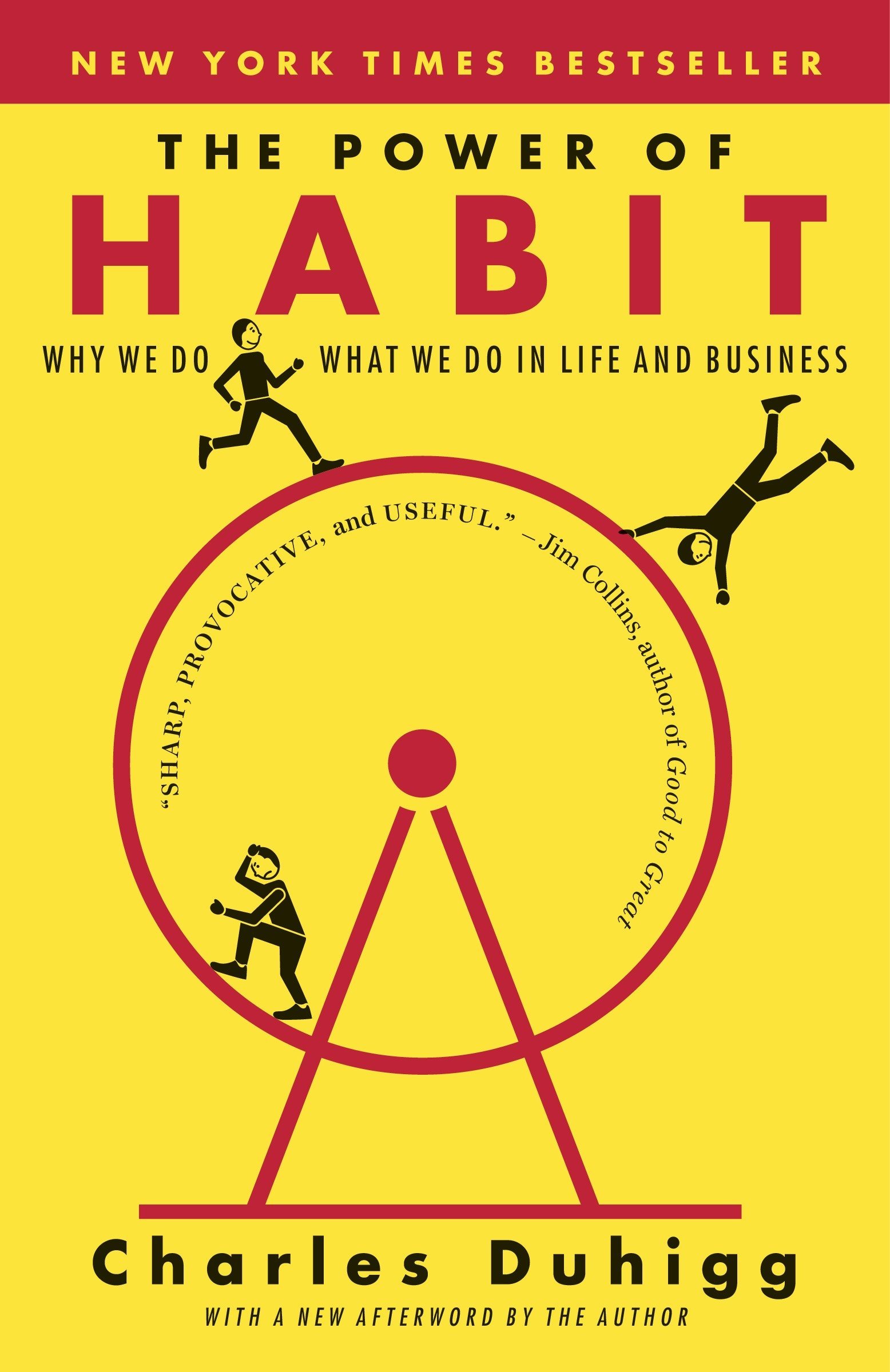
-
Supercommunicators: How to Unlock the Secret Language of Connection
Supercommunicators know the importance of recognizing—and then matching—each kind of conversation, and how to hear the complex emotions, subtle negotiations, and deeply held beliefs that color so much of what we say and how we listen. Our experiences, our values, our emotional lives—and how we see ourselves, and others—shape every discussion, from who will pick up the kids to how we want to be treated at work. In this book, you will learn why some people are able to make themselves heard, and to hear others, so clearly.
With his storytelling that takes us from the writers’ room of The Big Bang Theory to the couches of leading marriage counselors, Duhigg shows readers how to recognize these three conversations—and teaches us the tips and skills we need to navigate them more successfully.
In the end, he delivers a simple but powerful lesson: With the right tools, we can connect with anyone.
Resources
-
- Association for Psychological Science: Habits, Goals, and Effective Behavior Change
- British Journal of General Practice: Making health habitual: the psychology of ‘habit-formation’ and general practice
- MIT News: Brain researchers explain why old habits die hard
- National Geographic: The power of nouns - tiny word change increases voter turnout
- The Decision Lab: What is loss aversion?
- Stanford Report: A decade of data reveals that heavy multitaskers have reduced memory, Stanford psychologist says
- Wired: The Power of Habit and How to Hack It
- British Journal of General Practice: Making health habitual: the psychology of ‘habit-formation’ and general practice
- New York Times: How to Build Healthy Habits
- TIME Magazine: How Better Habits Can Make Your Day
- Harvard Business Review: What Does It Really Take to Build a New Habit?
- CNN Health: Breaking bad habits: Routines trump willpower
- Berkeley University: How to Help Your Students Develop Positive Habits
2 Million Readers.
1 Life-Changing Newsletter
Simple and Straight-to-the-Point...
Just Like Mel.