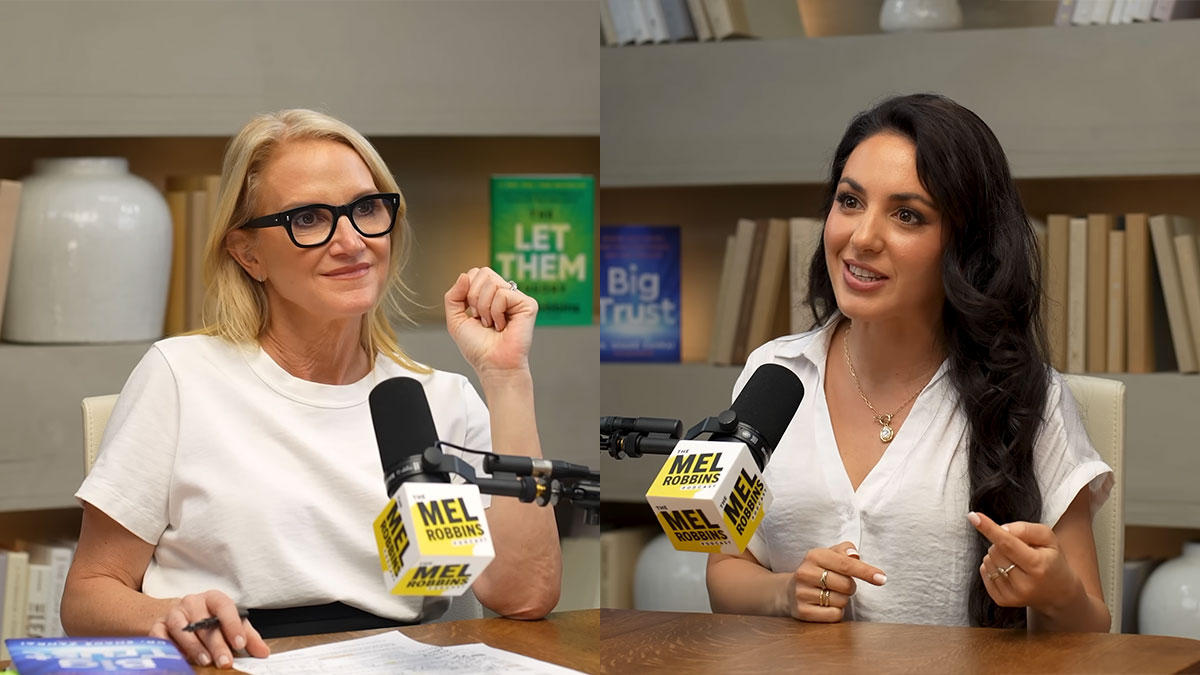
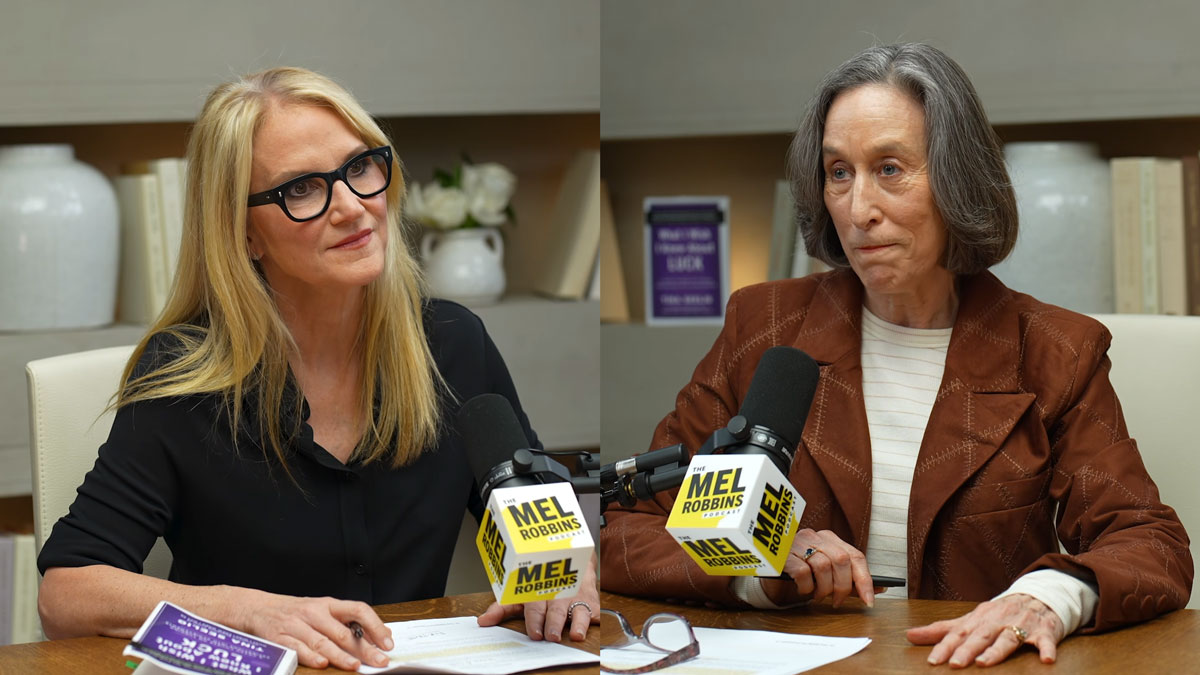
Episode: 413
How to Build a Better Future: 2 Simple Questions That Uplevel Your Life Immediately
with Seth Godin
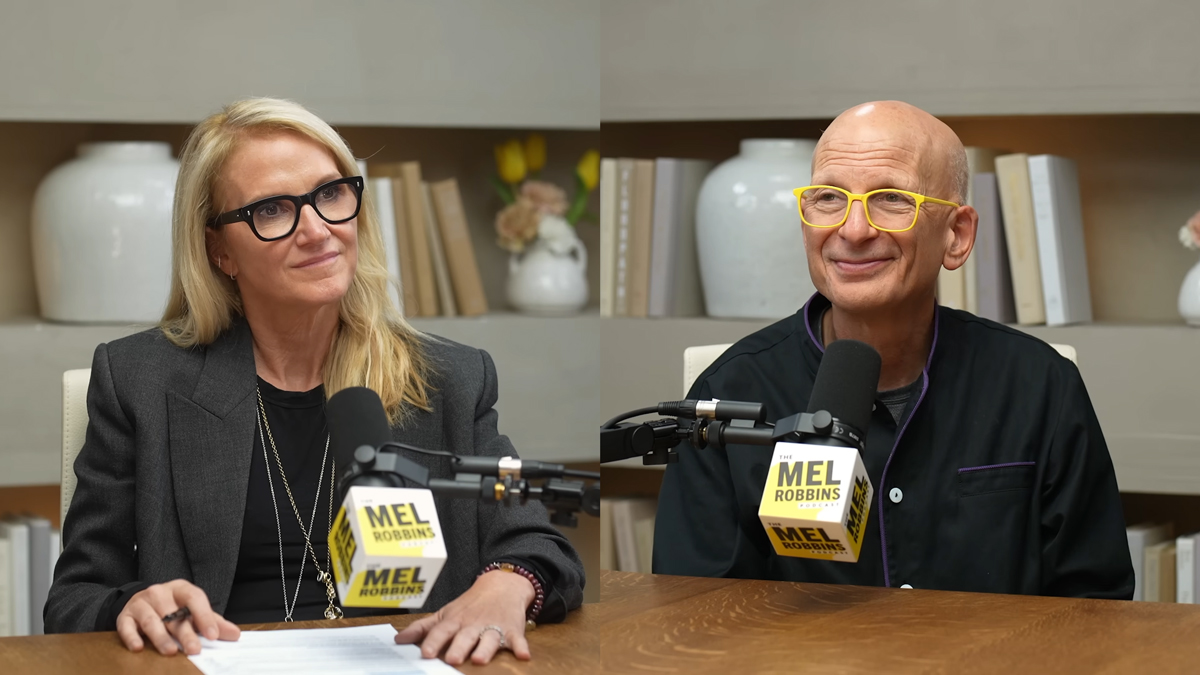
Before you make your next move, ask yourself these 2 questions.
Mel sits down with Seth Godin, one of the most influential thinkers of our time and one of Mel’s most trusted mentors.
Today, Seth is sharing 2 questions that will change how you make decisions, spend your time, choose what to quit, and figure out what is worth building next.
You can use these questions for anything: your career, your business, your goals, your creative ideas, your relationships, and the life you say you want but have not started building yet.
By the end, you’ll know what to stop doing, what to start doing, and what to focus on next.
Listen on:




If you wait until you feel better to start living your life, you will be waiting forever.
Mel Robbins
All Clips
Transcript
Mel Robbins (00:00:00):
Today, you and I are going to talk about a topic that I get a ton of questions about. Whether you're in a job right now and you want to make more money and get promoted and get ahead or you dream of having a business of your own, this is the episode you've been asking for. Here today is the one and only Seth Godin. Seth is considered the godfather of modern marketing and is the bestselling author of more than 20 books. He is also the person that I have called my mentor from afar for the last 15 years, and he's going to give you the business secrets that will help you finally move forward.
Seth Godin (00:00:34):
Why don't we do work that's worth doing? Why don't we take a deep breath and say life is really short. Why would you waste a minute or a day or a year just doing your job if you have any other option? I've had a series of businesses, almost all of which did not make a lot of money. Fine. The same way Picasso painted a lot of paintings, but only a few of them became famous.
Mel Robbins (00:00:55):
Oh, I love that. How do you know when to quit?
Seth Godin (00:00:59):
You don't wear a tutu to work anymore, even though you took ballet lessons when you were six, right? Yeah. And so we all quit stuff as we grow up. What we want to figure out, is there a dip, the hard part before it gets easier? This is what happens at the gym in February. Most people quit the gym in February because that's when it gets hard. If you get through that dip, it's pretty clear that by June you've got six pack abs. I get it. I've been to places where people need to work today to eat tomorrow. But if you are not one of those people, are we making excuses about the system or are we making the system better?
Mel Robbins (00:01:35):
Hey, it's Mel and I am so excited to learn from Seth Godin to be inspired. You are not going to be the same person after watching this today. But here's the thing. My team just told me that 57% of you that watch the Mel Robbins podcast here on YouTube are not subscribers. So here's how you know you're not a subscriber. The button is lighting up right now. It is free to hit subscribe. I know you're the kind of person that loves supporting people who support you. So I want to thank you in advance. Thank you for hitting subscribe. It's the best way to show our team that you love what we're doing. It also supports us in helping you bring world-class, world-renowned experts like Seth Godin, 20 bestselling consecutive books in a row. He's about to pour into you like you've never felt before. I don't want you to miss his thing.
(00:02:23):
That's why hitting subscribe matters. Thanks for doing that. All right, let's get into the show. Seth Godin, welcome to the Mel Robbins Podcast.
Seth Godin (00:02:33):
Thanks, Mel.
Mel Robbins (00:02:34):
I am so fired up that you're here because you have had an enormous influence on me, on the way that I think about marketing, on making an impact, on running a business, on self-worth, on confidence. And I am so excited because I envision what's about to happen. Is this conversation is a free resource for somebody who has an idea or who has a little business or who has something on the side or just wants to be more successful to get coaching and advice from the person I think is the best in the world at this.
Seth Godin (00:03:17):
Thanks, Mel. That's really kind to you. The reason to do the work is for people to put good things in the world. So I'm going to chalk this one up as a good one. Thank you.
Mel Robbins (00:03:27):
You're welcome, and thank you. What could change if you take everything to heart that you're about to share with us about business, marketing, success, confidence, making an impact to heart and you put it to work in your life?
Seth Godin (00:03:44):
My hope is that the words and ideas we're going to talk about today will help you find the empathy to show up for people, to help them get to where they want to go. Because once you do that, the sky's the limit. If you solve people's problems, they will show up and ask you to do it again.
Mel Robbins (00:04:06):
Seth, before we jump into everything that you're about to teach us about starting a business, running a business, being successful in business, all of these same rules apply about you being successful in your career, how to make more money, how to get a promotion. All of that stuff will work for you as well because the truth is not everybody wants to start a business, not everybody should. And a lot of people who want to start a business are currently working full-time in a job that they still want to be successful in.
Mel Robbins (00:04:35):
If you had one piece of advice when it comes to the world of business marketing being more successful and fulfilled this year, what would it be?
Seth Godin (00:04:49):
Why don't we do work that's worth doing? Why don't we take a deep breath and say, life is really short. I'm never again going to say, I'm just doing my job. Why would you waste a minute or a day or a year just doing your job if you have any other option? I think we need to be proud of our work that I get it. I've been to places where people need to work today to eat tomorrow. But if you are not one of those people, I think you need to raise the bar and you need to say, are we proud of this? If my mom was watching, would I want her to see what we're doing? Are we making excuses about the system or are we making the system better? One of the lines I like the most is, you're not stuck in traffic, you are traffic.
(00:05:38):
And you should think about what that means.
Mel Robbins (00:05:43):
What does it mean?
Seth Godin (00:05:45):
Well, it's easy to complain about being stuck in traffic, but if you weren't in your car on that road, there might not be traffic today
(00:05:53):
That we all show up to eagerly be part of some system because we think we don't have a choice. But the fact is you didn't sit around waiting for Dateline or 60 minutes to call you up and say, we're going to put your show on network TV. You started a show. There are people who say, I don't approve of the college industrial complex, so I'm going to start something that gives gap year students a way forward. There are people who say, I don't like the way the nonprofit world deals with hunger, so I'm going to build a totally different way to exchange information. They don't want to be traffic. They want to do something about it. I think where I begin every time is this work I'm doing, who's it for and what's it for? If you can't answer those two questions very specifically, go back, rewind 30 seconds and start over.
(00:06:43):
Who exactly is this for? What's the smallest viable audience? How many people would be enough? And what is the change I'm here to make? So when you look at something like your book, Home Run, not because it sold 40 million copies, but because the right people bought it for the right reason and it made a change happen. So let's get very clear who's it for and what's it for? And then the second part is to develop the empathy to realize other people don't want what you want. They don't see what you see. They don't need what you need and that's okay. Well,
Mel Robbins (00:07:21):
That feels like two conflicting messages. Who's it for and what's it for? So if I'm a hairstylist or a photographer or a realtor and I'm asking, who is it for and what's it for? And I'm like, well, it's for people who need haircut? What's it for so that they feel better?
Seth Godin (00:07:39):
Let's do the hairdressing.
Mel Robbins (00:07:40):
Okay.
Seth Godin (00:07:41):
Because if your motto is, you can pick anyone and I'm anyone, then you're doomed.
(00:07:48):
That was the attraction of Google in the old days. If you could just win the search for hotel or hairdresser, you're looking for someone, I'm someone. That's not going to help you. There's a hairdresser near my home that only works on women who have curly hair. All she does. Perfect. If you're bald, don't come. If you're a guy, don't come. If you don't have curly hair, don't come. If you have curly hair but you want a cheap haircut, don't come. I can only cut 10 people's hair a day. That's enough. Who's it for? It's for people who want to look the way I want to help them look. What's it for? To give them an experience that will make them decide it was worth more than it cost. That's it. Who's it for? What's it for? And now if somebody shows up and says, "I can promote you here and do this and do this, " you can say, "No, thanks.
(00:08:39):
I know exactly who my who's it for is. I know what the what's it for. This is going to be a great
Mel Robbins (00:08:44):
Gig." What's so genius about those two questions in the example you just gave, who's it for, what's it for? Is it forces you to get very honest with yourself about what you're doing and why you're doing it.
Seth Godin (00:08:59):
Yes. So this leads to two interesting outcomes. The first one is you need to be able to regularly say, "Sorry, it's not for you. No apology. These bake goods are so expensive. Sorry, they're not for you. " And number two is how often are you regularly referring people to someone who they might think of as your competitor? If you're never doing that, then you're really stuck in the, I'm anyone. But that woman with the curly hair, if you show up with bangs and straight hair, she's going to say, "Oh, go to David down the street." If you're a Ferrari dealer and someone shows up and says, "I got a carpool, seven kids." They don't try to persuade you to buy an Enzo. They say, "My brother-in-law's got a Volvo dealership. I'll call ahead for you. " That generosity of being specific pays all these enormous dividends.
(00:09:54):
If you're trying to collect everything all the time, it's exhausting.
Mel Robbins (00:09:59):
I want to go through a couple more examples because this foundational piece, I truly skip it all the time. When you skip it. And I know why you skip it. You skip it because when you think you're new, no one's coming. And when you're new, you're terrified that if you have any differentiator, you're going to miss out on business. And I understand that. If you got to pay your bills or you have certain goals and you're like, "Ah, if I limit myself, I'm limiting what's possible."
Mel Robbins (00:10:31):
But I guess if you're marketing to everyone, you're marketing to no one.
Seth Godin (00:10:34):
Correct.
Mel Robbins (00:10:35):
And if you're available for everything, then you really don't stand for anything.
Seth Godin (00:10:40):
Right. So the two most popular jobs in America are real estate agent and truck driver. Both of those professions are guilty of this problem.
Mel Robbins (00:10:49):
So how would you do this for the truck driver? Who's it for? What's it for?
Seth Godin (00:10:53):
So if a truck driver says, "I drive trucks, where do you need me to go? " You're a commodity. The trucking company's going to hire the cheapest person they possibly can. But if you're a truck driver who has earned the skills to transport really expensive collectible cars, now you can be the best in the world at that. You're the one and only. Get me Terry. Terry knows how to do this. At first, it's harder because you better be really good at it. You can't just be average,
(00:11:22):
But then it's better. For a realtor, "Oh, I have the business card with my little picture on it just like everybody else does. I started calling my group a team because that's what everybody else does. And we signed up with the biggest funds. That's what everybody else does. And I'm part of multiple listings, so I can sell any house or buy any house." Well, if you disappeared, I'd be fine. I'd find somebody else to work with. You're not the one and only. But two examples, there's a real estate broker in New York City who, as far as I know, only buys and sells in one luxury building. It's enough. If you're selling $8 million apartments, you don't need that many. And if you live in that building, you know about him, he probably sold you your apartment. By obsessively focusing on the building where he lives, he becomes the one and only.
(00:12:10):
It's enough. It's more than enough. Or I think about the real estate agent I wrote about in my town. His father was the real estate broker before him. When we went to look in the town, he puts you in his car and he takes you on a tour of all 2000 houses, especially the ones that aren't for sale. He tells you who lives where, why they live there, and he doesn't try to sell your house. And he knows all the teachers. The Cub Scouts can have a meeting in his office. He's the mayor without being the mayor. You want to buy a house two towns over? Don't call him. What a waste that would be. One place he stands for something. Another broker I know has built a following without breaking any laws in which most of her clients are lesbians. They feel comfortable with her, she feels comfortable with them, and she's the one and only.
(00:13:00):
And you're not trying to be something to other people.
Mel Robbins (00:13:03):
Let me give you a business that I actually have three different friends that are experimenting with this. The business is granola, that I have a recipe for granola that I love to make. My friends tell me it's fantastic. I love making it. I package it up. I give it as gifts. People love it. I've been thinking for a couple years I should go to the farmer's market. I should try this out. And I'm hearing you, Seth, and I'm going, okay, who's it for? What's it for? How do we apply some of this foundational stuff to somebody who's got to go do it this Saturday?
Seth Godin (00:13:43):
So I want to answer a different question and then we're going to come back to
Mel Robbins (00:13:47):
It. Great.
Seth Godin (00:13:49):
Business is almost never about what you make right now. I know some kids who grew up wanting to be musicians and they've ended up getting jobs in the music industry. So how are they spending their day? They're spending their day in meetings and with filing cabinets. They should have just gone to work at a law firm because they have nothing to do with music except that Elvis Presley's name is on something they make. That to be in the granola business almost certainly means you're not going to be making any granola. That's not what it is to be in the granola business. To be in the granola business is to create a story and an item that people will happily pay more than it costs to make and tell their friends about. These are issues of logistics and marketing and packaging and customer service and finance and supply chain and management of people.
(00:14:45):
The number of times you're going to be in the kitchen inventing a new kind of granola is close to zero. So we should take a really deep breath before we even get there and say, how do you want to spend your day?
(00:14:57):
You're not going to spend your day making granola. So my wife runs one of the biggest gluten-free bakeries in America.
Mel Robbins (00:15:03):
She does?
Seth Godin (00:15:03):
She does.
Mel Robbins (00:15:04):
I don't think I knew that.
Seth Godin (00:15:05):
Yes. She's in 700 stores around the country.
Mel Robbins (00:15:08):
You're kidding. What's the name of the bakery?
Seth Godin (00:15:09):
It's called By The Wa.
Mel Robbins (00:15:10):
By the way. I did not know that, Seth. It's in
Seth Godin (00:15:12):
Sprouts and Whole Foods and she has four retail outlets in New York.
Mel Robbins (00:15:16):
Congratulations.
Seth Godin (00:15:17):
Well, I'll pass it on to her. It's all hers. Sometimes I will deliver a cake in an emergency. So if you order a custom cake and you see me show up, that's true.
Mel Robbins (00:15:27):
Oh, I
Seth Godin (00:15:27):
Love that. But she doesn't spend any time making brownies. That's not her job. There are more than 80 people work there. Of course, she's not making brownies. That's not what you do. You are the exception, Mel Robins, because you make a podcast. If you send somebody else in, we would notice.
Mel Robbins (00:15:42):
Yes.
Seth Godin (00:15:43):
God,
Mel Robbins (00:15:44):
I hope so.
Seth Godin (00:15:44):
Every other job, that's not your job. Your job is to create the system and the conditions for the business to thrive and you're going to hire somebody to make granola. You can aprove the granola, but Martha Stewart isn't sitting there making granola either. So what I suggest to people, do not pick a glamorous business. Do not pick a business that everyone is buzzing about because it's going to be filled with people who are doing it sort of as a hobby. Instead, pick a business where you solve a problem for people who have plenty of money to pay to have that problem solved so that you can have the installation to live the life you want to live.
Mel Robbins (00:16:27):
Seth, I totally understand what you're talking about. I just want to make sure that we are highlighting the profound life-changing importance of you giving yourself permission to lean into this thing that you've always wanted to do, even if it's not going to pay for your bills, even if it's not successful. Because if I look at those questions, who is it for? What is it for? Who is it serving? What happens when you do that? You want to know who you're doing it for? You're doing it for you. You want to know what you're doing it for? The what is so that you can be proud of yourself. The what is so that you meet other people. The what is so that you have this experience of witnessing yourself pushing through the resistance and the excuses. That has value and I want you to do that.
(00:17:18):
I want you to set up the Etsy store. I want you to do the YouTube channel. I want you to do the granola business. But what you're talking about, Seth, is something different because what you're talking about is what happens if it's wildly successful and then all of a sudden the reasons why you did it in the first place, you did it for yourself are now changing because you're in the shipping business, you're in the employee business, you're in the HR business. We're going to get to that in just a minute, but I think it's so important to talk about having a seed of an idea and giving yourself the permission and finding the courage to lean into it and do it. I think about when I was in high school, my mom, she and her best friend Susie decided they were going to open in Muskegon, Michigan, this little kitchen gourmet store.
(00:18:10):
So imagine William Sonoma, early, early '80s, nobody was doing this. She had gone to the Chicago Gift Show and had been on a trip with my dad somewhere and discovered flavored coffee. Back then, nobody drank hazelnut flavored coffee or caramel flavored coffee. And she had this big vision of, I'm going to do this. I'm going to open this store. She didn't know if anybody else in our town would like flavored coffee. She just felt like it was something that she wanted to do and that it could work. And she and Susie did it and it worked. It didn't become some big franchise. It was a staple in the community. It brought her so much joy. I'd love to have you speak to the profound just magic that you feel when you do recognize the seed of this idea that you don't know if anyone's going to buy your candles.
(00:19:17):
Can you speak to that spirit in somebody and why that's so important?
Seth Godin (00:19:22):
So why do I even bother doing this? I started my first business when I was 14 and I've had a series of businesses, almost all of which did not make a lot of money. Fine. The same way Picasso painted a lot of paintings, but only a few of them became famous. The act of showing up to make things better for other people, whether you're a volunteer nurse at a nursing home or you're building a company in the culture we live in, it's thrilling. It's priceless. We are in dignity. We are in reputation and we build community. That's what I'm hooked on, teaching people how to get from here to that feeling. And I can see all the ways we get stuck talking ourselves out of it. Your mom's business was not about coffee at all. It was about serving someone she had empathy for, someone a little bit like her in a town like hers, to be able to look that person in the eye, delight them, to give them an experience that's prustian that they'll remember, that you remember decades later.
(00:20:39):
So when we get back to first principles, who's it for and what's it for? We get to be alive again and say, "You know what? In this little town in Michigan, there's 500 people who every couple of weeks are going to buy a pound of coffee. That's enough for now. And I'm making a promise. And if the coffee's no good or the experience is no good, they won't come back. The promise is very clear. So that's what I'm pushing people to do, to start, to listen, to learn, to evolve, sometimes to quit and other times to do it more, but to be very clear about what you're seeking to do and who you're doing it for.
Mel Robbins (00:21:16):
Incredible. Now I want to pivot, Seth. I want to talk about what does happen.
Mel Robbins (00:21:22):
What happens when you start the wedding photography business and now it's taken over every weekend of your life and you never see your own family? What happens when you start the personal training business and you're so busy training other people you can't even work out for yourself? What happens when you're the realtor and now you are so busy running around and doing open houses and printing posters and working on the website and trying to do social media and talking back and forth to the lawyers and working on closing and staging things that now you just are working a hundred hours a week and you can barely keep your head above water. Let's talk about what happens when the business that you're running is running you over.
Seth Godin (00:22:00):
So I want to take a step back and talk about this myth of being an entrepreneur. Lots of people call themselves entrepreneurs. I used to be an entrepreneur. I'm not an entrepreneur anymore. I'm a freelancer. Freelancing is a great way to make a living. Freelancing and entrepreneurship are different. And an entrepreneur uses assets, usually other people's money to build something bigger than themselves. An entrepreneur makes money when they're asleep. If you are doing the work, you're probably a freelancer. If you're an entrepreneur, you're building an institution. Now what tends to happen is talented freelancers get dreams of building something bigger than themselves. They're tired, they want something that's going to have scale. But every time times get tough, they hire the best available, cheapest person. You know who that is? Themselves because they work for free. And so you end up hiring yourself to do all the jobs and no wonder you're exhausted because you're not doing your real job, which is building something bigger than yourself.
(00:23:06):
You keep hiring yourself to do the jobs. What's a freelancer? Freelancer, someone who gets paid when they work. They and they alone do the work. You might have assistance or whatever, but a freelancer can't scale because they're a freelancer. They're hands, insight, skills for hire.
Mel Robbins (00:23:27):
Not everybody is built to be a freelancer or an entrepreneur. Most people are going to have a very successful, happy, healthy life working for someone else. How do these principles apply to somebody who wants to be more successful in their career this year?
Seth Godin (00:23:46):
I love this. Here's the deal. Whether or not you're getting a paycheck, you're still marketing. You're still telling a story to your coworkers, to your boss. Every time you go to a meeting and you open your mouth, people have an expectation of what they're going to hear from you. You have a personal brand even if you don't have a personal ad campaign. And that brand is the promise we make. It's what do we expect? So Nike has a brand. If they came out with a line of hotels, we all know what it would be like. Hyatt doesn't have a brand. They're just a logo. If they came out with a line of sneakers, we have no clue what it would be like. So what do people expect from you? What does it mean when you say, I'm going to take on a project? How do you become seen by living your story as the linchpin, as the person that would be hard to live without?
(00:24:37):
Whether you're a waitress at a cafe or you're making six figures on Wall Street, it's always the same. There is a shortage of people who make promises and keep them. There's a shortage of people who light up a room every time they walk into it. And you might not currently be as skilled as some people. You might not be as privileged as some people, but what we get to do is market this story and inhabit it and become the contributor we're proud to be. And if you have a job where your boss doesn't deserve that from you, you should go get another job. The goal is to be someone we would miss if you were gone.
Mel Robbins (00:25:22):
Oh, I love that. The goal is to be someone you would miss if you were gone. I also think it's a great thing to reflect on. Am I actually somebody that my company would miss? Because if you are phoning it in or you are disenfranchised and you can see that there are areas where you are not bringing the energy, you are not doing your best work, I like those questions even when I think about myself as an employee. Who's it for? Who is it for? And what's it for? This thing that I'm doing right now, this presentation that I'm doing, who's it for? And what's it for? And can I do it better? What do you want to say to that person who is in a day job and they're a freelancer for their dreams and the who's it for? What's it for? Who's it serving?
(00:26:24):
They're doing that.
Seth Godin (00:26:27):
I'm worried that you might have the world's worst boss. This person doesn't appreciate you. They're constantly nitpicking the work you do. Sometimes they call you at home in the middle of the night to make you worried about something. They don't get you the training you need and they're filled with negative talk. You have probably guessed that that person is you. That sooner or later we work for ourselves as a freelancer or even as someone building a career. And that boss, that one who's denigrating us, undermining us, pushing us to conform, telling us we will never amount to anything, amplifying our fear, pushing us to hide. When we have the world's worst boss, it's no surprise that our work isn't filling us with anything because the talk inside of our head, the story we're telling ourselves undermines all of it. And we can go find a friend or a group, start a circle to change the way our boss talks to us.
(00:27:31):
Because if there was a boss like that in the real world, you would never work for them. And you shouldn't work for yourself if you're undermining yourself that way.
Mel Robbins (00:27:40):
How do you find that circle? I'm seeing a lot of people emailing just saying, "I really want to find a circle of people that are going to help me achieve my goals." What are some strategies or tools that you have or thoughts that you have on that?
Seth Godin (00:27:59):
In my experience, the most direct path is to find someone who's doing any kind of work online or just commenting interestingly online and support them. To find people who wish that someone like you would show up for them. Because if you do that, they will probably return the favor.That when we say, "I am here to help you see where you are going and if I can help, I would be delighted." They might be able to do that for us. Right now before the sun sets, go find two or three people and support them. And that's how it begins.
Mel Robbins (00:28:36):
So let's get into some of the tactics because a lot of people that are trying to build a business, trying to market themselves, you're putting yourself out there, you got to show up consistently. What does that even mean?
Seth Godin (00:28:49):
What a trap,Mel. What
Mel Robbins (00:28:51):
A trap. What do you mean?
Seth Godin (00:28:53):
People don't spend good money to buy from people who are familiar to them. Marketing is not about getting the word out. Marketing is not showing up in social media or in other places becoming familiar and then people just give up and buy from you. That's not how it works. You tell a story. This story creates tension. The tension of being left out, the tension of falling behind, the tension of maybe this will work for me. The tension of all my friends are doing it. That tension might spread because it's remarkable, worth talking about. But then what you want is for people to relieve the tension by buying from you. They're not going to hire you to be a trainer because they've seen you on TikTok. That's not what happens. One person told me he got 40 million views to a video he did on TikTok and sold four copies of his book.
(00:29:47):
No surprise because entertaining and performing for people on TikTok is not the same as solving their problem by selling them a $20 book. Those are totally different transactions. I
Mel Robbins (00:30:01):
One of the things that I see a lot is people focusing on the outcome, like how much money you make, how many downloads you have, how many things that you've sold, how many likes it got, how many views it got, and you say that will destroy your business.
Seth Godin (00:30:22):
Yeah, and you. So let's begin with compared to what? You have this many views compared to what? Well, why are we comparing the number of views you have to someone who does something unrelated or even something related to you? Compared to what isn't relevant. It's who did I help today? If you've decided to set up a shop in a place that's filled with lots and lots and lots of other people who are hustling way harder than you, that's your future. You're going to have to keep hustling, but that's not what you signed up for. You signed up for connection, signed up to make a difference. So we need to not get distracted by how many views you got. The people who like you online don't like you. The people who friend you online are not your friends. The people who follow you online are not your followers.
(00:31:08):
They're just clicking buttons because the algorithm wants them to. What are we measuring here and how can we force ourselves to ignore the measurements that are going to distract us? And that means that if a one-star review on Google is going to ruin your whole day and push you to change a menu that's working, you need to create a boundary so you never even see a one-star review on Google because it's not relevant to the success of what you're trying to build. So forgive that person and move on. And if you need to hire a person whose only job is to send nice notes to people, give you one-star reviews, fine, but you don't want to hear about it. You want to measure what does matter. You want to figure out, oh, when I changed the menu to do this, this many people bought more stuff or fewer things.
(00:32:01):
I can watch what people do. I'm not going to engage in a dance with someone who's not good at giving criticism, self-acknowledged, not good at giving criticism, but I'm going to take it for gospel, memorizing every word of it. That's not going to make your business better. You're hiding. It's resistance.
Mel Robbins (00:32:20):
This has been critical for me taking this advice for you. And I think one thing that's really helped me is thinking about what is the one thing I can spend my time on that creates the biggest impact? What are the things that only I can do that really drive the results that I care about that are around making a positive difference? And so I'm just going to explain this because it's really helped me. People constantly ask me, Seth, how do you deal with all the negative comments? I'm like, what negative comments? I don't live in a bubble, but I know myself and negative comments from strangers online aren't aligned with the mission that I have. So why would I waste time looking at them? I also do not have the logins for the backend of the data on this show because if I started obsessing over downloads, then I would take my eye off the ball of the one thing I can do, which is spending my time on what is the next best conversation I can have?
(00:33:27):
What is the next best thing that I can put out and work on that would make a difference with one person somewhere in this world? How do I put Seth in the biggest light to make the biggest difference? And if I had looked at the downloads before, now all of a sudden I'm looking at that. And so I think that this is something that's super important. Everybody has a megaphone. Everybody can tell you what they think, but I'd really only take that criticism from somebody who deeply cares or somebody who's already doing something similar
(00:34:01):
Or somebody whose opinion you respect.
Seth Godin (00:34:03):
Right. And when we add the authenticity part, it gets even more toxic. What
Mel Robbins (00:34:06):
Do you mean?
Seth Godin (00:34:07):
Well, you and I are special cases because we need to be the face of our brands. But most people, if you're selling granola, or even if you're a real estate broker, you don't have to be the face of it. It should be about the customer.
Mel Robbins (00:34:18):
Yes. The
Seth Godin (00:34:19):
Patagonia logo isn't about the people who started Patagonia. It's about the badge the customer wears. So if you're showing up saying, "I am authentically me, please punch me in the face." People who like punching folks in the face are going to show up. So it might be a shortcut hack that you want to avoid saying, "I'm everywhere on social media. I am the face of what we are doing and I make all the granola myself and I'm reading all the reviews." Well, of course you're feeling burnt out. You're doing at least five jobs. And the second thing to think about is idiosyncrasy. When someone is called idiosyncratic, often it's viewed as an insult, but it's the opposite of being average. It's the opposite of being the normal one. The normal spot is already taken. The normal brand of french fries, the normal brand of pizza, the normal brand of granola, you're never going to be the normal one.
(00:35:14):
So what makes you the idiosyncratic one that a few people would miss if it were gone? Instead of making average stuff for average people, you want to make something specific for people who want that.
Mel Robbins (00:35:27):
I love that.
Mel Robbins (00:35:28):
How do you make good decisions?
Seth Godin (00:35:31):
So Mel, let me ask you a question.
Mel Robbins (00:35:33):
Yes.
Seth Godin (00:35:34):
In the last six months, have you made a good decision?
Mel Robbins (00:35:38):
Yeah.
Seth Godin (00:35:39):
Did it turn out well?
Mel Robbins (00:35:40):
Yeah.
Seth Godin (00:35:41):
That's what everybody says. They're completely unrelated. We have become attached, connected to say good decisions lead to good outcomes.
(00:35:51):
They are unrelated. If you buy a lottery ticket and win the lottery, you made a bad decision. Buying a lottery ticket is always a bad idea, but then you got lucky. Congratulations. I'm glad you got lucky. But that's not the point. On the other hand, if you make a good decision and it turns out badly, not your fault. You just didn't get lucky this time. And so what Annie Duke, the world poker champion, taught me is that the secret of winning at poker is exactly the same as any other decision you want to make, whether you're a football coach or you're at work or you're a parent. Stop worrying about the outcome. Stop deciding that good outcomes are caused by good decisions. They're not. Good decisions are simply based on the data that's in front of us. Would a good decision maker choose what I chose?
(00:36:40):
If the answer is yes, then you made a good decision. So suddenly we're not paralyzed anymore because we say, I don't have to fall in love with the outcome. I don't have to guarantee the outcome. I can just say, based on what's in front of me, any good decision maker would choose what I chose and stop conflating outcomes with decisions.
Mel Robbins (00:37:02):
You know what else I just got was that a lot of times when a decision feels like a bad one in the moment, when you look backwards 10 years from now, you realize it was actually a really good decision based on the circumstances. It was the right decision. It just often feels wrong in the moment to make the right decision.
Seth Godin (00:37:24):
Yeah. You want to become the person your future self will thank you for. You want to make decisions that the male in eight years is going to say, wow, I'm glad I did that.
Mel Robbins (00:37:35):
And the only way you know that is if you are really true to yourself. If you look at the facts that you have, if you go back to these questions, you literally can ask, who's it for? What's it for? Who's this serving in terms of this decision? How do I know it would be a good decision or the right decision or the wrong decision based on what I know? And if I analyze all of that and with the best of intentions make the best decision that I can at that moment, then it's always a good decision.
Seth Godin (00:38:12):
Correct. Nailed it.
Mel Robbins (00:38:14):
Yeah, because there's a lot of times where you make a really good decision, it impacts somebody and your intention wasn't to do that. So even though somebody might've been disappointed or upset, it doesn't make the decision bad, it just means it impacted somebody. So you can apologize for the impact and still know you made the right decision for you.
Seth Godin (00:38:33):
Exactly.
Mel Robbins (00:38:34):
Wow. That's so good.
Mel Robbins (00:38:37):
You have the saying, Seth, choose your clients, choose your future. What does that mean?
Seth Godin (00:38:43):
Okay. So you're going to spend most of your time dealing with your clients or chasing people who aren't yet your clients and you want to make them happy. So if your clients are really, really stressed out brides and grooms a week before their wedding in the Hamptons, that's who you're going to be spending all your time with. That's the kind of emergencies you're going to have to deal with. If your clients or people who are penny pinchers and who examine every single line item, well then be prepared that that's how you're going to have to spend your day.
(00:39:14):
If you have a restaurant like McDonald's, McDonald's figured out that the clients that they could do the best with were in a car in a hurry to get somewhere. So what they do at McDonald's is they're inspectors with stopwatches and they show up and they see how long... That is not what happens at the modern restaurant in Manhattan that Danny Meyer owns. There's nobody with a stopwatch there. Different clients, different output. So when you pick your customers, their stories, their fears, their desires, their budgets, what they use as fuel, you've just announced how you want to spend your days. Don't let your clients decide this. You decide. When you pick your clients, you then get to pick. And the same thing's true if you're a teacher. When you pick your students, if you're going to have a whole bunch of fractious, sugared up students who don't care about school, that's the way your day's going to be spent.
(00:40:09):
Whereas if you go to someplace that's selective and the people are really enrolled like Julliard, you don't have to say people shut up and sit down because you're teaching at Julliard. The students you picked determine how you spend your day.
Mel Robbins (00:40:21):
So how do you get ahead if you're a freelancer? It's simple. Get better clients. Better clients challenge you more, pay you more, talk about you more. You can't have more clients because you're a freelancer, but you can have better clients. Better clients are the ones like Chip Kidd, the great book cover designer. Chip Kid can only design 30 book covers a year, whatever it is. And if you don't get the joke, get out. No one goes to Chip and argues with him about typography. No one says, go make this book look like my self-published mother-in-law's book. He's Chip Kidd for God's sake. That's how you move up.
(00:40:59):
Become the kind of freelancer that better clients want. That doesn't mean you're cheaper and you don't get to be that by doing a good job for bad clients. You do that by showing up where freelancers for good clients show up doing work that freelancers for good clients do. So if you're a freelancer, guard your time like gold because you don't get it back. If you're a freelancer, don't imagine you can hire 30 versions of you, but who work cheaper. No going to happen. Freelancers can do great because they can find a path where they can do their craft and be respected for it. Entrepreneurs can do great because they see the market and serve the market, not because they try to hustle their way by turning their hobby and too many hours and too much stress into somehow magically getting big. No, there's a dead zone in between there.
(00:41:51):
Don't fall into that zone, that zone of eight people or 18 people or 30 people where you're doing all the jobs, you're not getting paid enough, you're too busy to do anything and you're stressed out of your mind. That happens when you fall into the gulf of trying to muscle your way through without leverage.
Mel Robbins (00:42:08):
So there's so much that you just said that I want to unpack because when you started to say that you often make the mistake of hiring yourself for the cheapest rate to do the jobs because you're now too busy, you've got the wrong clients, you're working too many hours and you don't actually understand that your time is the most important thing. And you hear that phrase a lot that I'm stuck working in the business versus on the business. Correct. So if that's you where you're listening, you're like, "I'm a realtor. I have an HVAC company. I am working 90-hour weeks because I am doing all the jobs that need to be done that I for some reason can't slow down to hire somebody to do or the business isn't profitable enough for me to just focus on the thing I need to do and hire..." Let's talk about that moment.
Seth Godin (00:43:00):
Yeah. So your lack of discipline is because of fear. It's hard to go develop new streams of business. It's hard to go call on people who need your services. It's hard to lean out of the boat and bring somebody else in to do the job. And it's very hard to have, if you're used to be a freelancer, to have someone to come in who's not as good and not as fast as you. So you're looking at them and saying, "What are you talking about? I could do this so much faster and so much better. Get out of my way." Then you're a freelancer. Be a freelancer. It's fine. Every single time you are tempted to hire yourself to do a job, ask what am I hiding from? Because you're avoiding your real job, which is to build the assets that enable you to do none of the jobs.
Mel Robbins (00:43:47):
What am I hiding from? I think that's a big excuse that people get to because if you start a business and then it starts to get a little traction and then you start to make some money and next thing you know you swell from hourly to, "Wow, I'm doing this full-time," to, "Wow, I'm working all the time, but I'm not quite sure what I'm working on. " And then you start using the excuse that I'm too busy doing all this other stuff to market the business so the business isn't growing and now I'm running to the store to buy paper for the printer that just ran out because I'm also now on the computer trying to do posters to market the house that I'm selling. And then I got to run over to the open house.
Seth Godin (00:44:30):
It's thrilling. I started one of the first internet companies, Mel, and grew it to almost a hundred people. 50 of them reported directly to me. It was thrilling. I would walk in at eight o'clock in the morning, and just nothing all day, but interacting, answering questions, solving problems. And I was hiding from the important work of where am I going to find the big partnership that's going to transform this institution? And I'm really proud in the three months before we sold the company, I managed to make it so that there were whole parts of the operation that I didn't touch. That's how I grew up as an entrepreneur because in that moment, you're actually building an asset, which is it's bigger than me. It would work without me here because I need to go be doing that other thing. So again, there's nothing wrong with the thrill and excitement of being a freelancer, and there's nothing wrong with being an entrepreneur.
(00:45:26):
It's when you are confused that the stress kicks in.
Mel Robbins (00:45:31):
If you are hearing complaints from a client or you get pushback on pricing, or you are looking at the reviews of this product that you've launched and you're looking for constructive feedback, but it's just starting to feel like, oh my God, everybody hates this. How do you process feedback and not hide in the sand? How do you deal with this?
Seth Godin (00:45:56):
When someone criticizes your product, they are not criticizing you. They're saying, based on who I am and what I see, I don't want this. And if you get defensive and tell them they're wrong, you've helped no one. It doesn't matter what you want and it doesn't matter what you like. It matters the customers you have chosen to serve. What is the story they tell themselves? And that leap of empathy is critical because you're going to have to pick the customers who have a problem you want to solve. And then they're right. As soon as you say you're wrong, they're not your customer anymore. In the digital world, there are things that I have offered that cost hundreds or thousands of dollars. And the first time someone says, "I don't like it, " I'm not going to persuade you you're wrong. I'm going to ask you if you're enrolled in the journey, se if you want to be enrolled in where we're going.
(00:46:52):
And if not, thank you so much for telling me your truth. Here's everything back. I don't care that you're ripping me off because you're not ripping me off because you trusted me and now I'm trusting you and we can move on. It's not for you. It's a totally legitimate sentence.
Mel Robbins (00:47:08):
I love that. If you're going to launch something scary, so you're starting that side hustle, or you found a product that you just love and you would like to start a business selling it, you have really good advice about fear.
Seth Godin (00:47:26):
It's really easy to conflate our fear with the tasks to be done. So my product isn't good enough. I can't ship it yet.
Mel Robbins (00:47:32):
Well,
Seth Godin (00:47:33):
That's not really what you're afraid of. So here's an exercise that you should actually try in real life. Go to the bus station and bring with you a $10 bill and walk up to somebody and say, will you give me a five for this $10 bill? Now it's really obvious that it's a real $10 bill. It's really obvious it's worth more than $5. This is very hard to do. This is scary to do. Yo feel totally out of your depth, but you're selling something that's obviously worth more than you're selling it for. It turns out that feeling is why you're afraid. You're afraid of having a transaction with somebody who might say no. I've trained thousands of Girl Scouts how to sell Girl Scout cookies. They set up in front of a supermarket at a place I was staying for a week or two. And as everyone was walking into the supermarket, these nine-year-olds would yell, "Want to buy some Girl Scout cookies?" And everyone's going to the supermarkets.
(00:48:32):
They just will walk right by. And I talked to the group leader and she said I could talk to everyone. I said, "Look, ask a different question. As people walk by, say, what's your favorite kind of Girl Scout cookie?"
Mel Robbins (00:48:46):
It turns
Seth Godin (00:48:46):
Out everyone has an answer to that question. And as soon as someone answers that question, now they're engaging with you. Now they're over the hump because before they were just hoping for a no, people will walk by because they don't really want to interact. But now that person's looking at a nine-year-old face-to-face. Of course, they're going to buy a box of cookies. Their sales went through the roof because they got over the hard part of the interaction. So we have the fear. We should name the fear. We cannot make it go away, but we can dance with it. Well, guess what? Transacting with strangers is going to triger fear. It's the shadow. It's the same thing. Two sides of the same coin. Do not deny it. Do not pretend it's going to go away. It's real. And the hack that people have is, "Oh, I know I'll just post a whole bunch of pictures on Instagram instead." That's not something you're afraid of, so you're going to do it and it's not going to work.
Mel Robbins (00:49:43):
The next topic I wanted to cover was this one.
Mel Robbins (00:49:46):
How do you know if it's a hobby versus a business?
Seth Godin (00:49:51):
Two parts. Number one, don't let a business ruin your hobby. This is really important. Don't let a business ruin your hobby. If your hobby is giving you joy and you can afford it, it's your hobby. But and as soon as you turn it into a business, it's not yours anymore. It's the customer's. The customer doesn't buy your candles because you want them to. They don't buy your granola because you want them to. They buy it because under the circumstances, it's their best option. Everyone always picks their best option. This is why selling to your friends is such a disaster because now you're saying, "If you're my friend, you're going to buy something that's not good for you. " Don't do that. You want to show up and say, "I make canoe paddles. I don't make a lot of canoe paddles. If this paddle's worth a lot more than I'm selling it for, please buy it.
(00:50:47):
But if it's not worth a lot more to you, don't buy it because it's my hobby and I get that you want something I don't necessarily want. " So we keep coming back to being of service. Other people don't want what you want, see what you see, believe what you believe. That's okay because you can't serve them unless you acknowledge that that's okay. That said, there's a huge opportunity for people who can bring passion and skill to a thing that most people can't do. And if your hobby lets you do that, that's fine, but don't turn it into a business for everyone because now you'll ruin it.
Mel Robbins (00:51:24):
I love that distinction. It especially clicked for me when you said the second it becomes a business, it's no longer yours, it's your customers. Wow, that makes a lot of sense. That's why selling real estate isn't really a hobby. Right. It's a business because people are going to work with you if you're the best option for helping them find the house.
Seth Godin (00:51:48):
There was a letter to the editor in the Times a few years ago. Our close friends are selling their house and they refuse to list it with my wife and now I don't want to speak to them anymore. Well, if that's how you're getting listings, you're not being of service. What you're saying is I'm going to leverage my friendship to get listings. That's not how professionals do their work. You should be the obvious choice or else they're not going to pick you.
Mel Robbins (00:52:16):
I think there's a lot of people that are working hard trying to find their thing or the problem to solve. And there's that famous Jay-Z quote, the genius thing that we did is we didn't quit. And I look at myself and I look at the last 16 years and all the grueling stick-tuitiveness and all of the things you do in the dark that nobody sees that are not easy and hard. But how do you know when to quit versus when to stick with it?
Seth Godin (00:52:50):
So I wrote the first book about quitting. It's called The Dip. And I was amazed at how many people felt like it touched them. You don't wear a tutu to work anymore, even though you took ballet lessons when you were six. And so we all quit stuff as we grow up, but along the way, quitting got to be viewed as a shameful act that I'm a failure, I quit. That's a mistake because there's huge rewards for being seen as the best in the world at what you do. That you're the best in the world at being Mel Robbins, you're the best in the world at the Mel Robbins podcast. It's category. But you couldn't do that if you hadn't quit being a lawyer.
(00:53:31):
And so what we want to figure out is this thing we're doing that we're persisting our way through, is there a dip? The hard part before it gets easier. This is what happens at the gym in February. Most people quit the gym in February. They joined in January because that's when it gets hard. If you get through that dip, it's pretty clear that by June you've got six-pack apps. So if you can see someone who's come before you who's gotten through the dip, this is an example from real estate. There are some real estate brokers who make a fine living and aren't hustling out of their minds, but none of those people have been real estate brokers for one year. They made it through the hard part. But then there are other things we sign up for where either no one's ever gotten through this dip or there is no dip.
(00:54:21):
It's just a slog. So you can't smoke your way through emphysema. It's just going to keep getting worse and worse and worse and worse and worse. So what we need to do is be honest and say, these costs I put into this business, my blood, my sweat, my tears, my time, my money, they're all gone. They're gone no matter what. So tomorrow, do I want to accept what that bought as a gift from my former self? Or do I want to say, no, thank you. I'm going to go build a new thing that's going to resonate with the people who need it. And if you talk to people who made that smart decision of walking away from some costs, almost all of them will tell you they're glad they did.
Mel Robbins (00:55:07):
If someone is sitting on a business idea, whether it's a side hustle or a new product or even a tough decision at work, what is one small step forward that they can take today?
Seth Godin (00:55:24):
A friend of mine taught me this great simple hack. Write three completely different business plans. They don't have to be three pages long each. Who's it for? What's it for? Who am I serving? How will I know if it's working? Three completely different ones knowing that you're going to randomly pick one as the spinner points to one and that's the one you have to do. So now instead of falling in love with one idea and defending it, you have A, B, or C. And that's the only way you're going to fall out of love with A, is to make B even better. And then C, a completely different one. Because when you have to write three completely different plans, you're going to think about it with your whole brain, not the defending part of it. And if you don't have time to write three different business plans, I don't think you have time to start a business. I
Mel Robbins (00:56:16):
Love that idea because you're right. If you have one vision for how it's going to go, you do get very rigid.
Seth Godin (00:56:23):
Or go even further. Three things that are... I'm an architect for snowmen. I'm going to build a snow shoveling business in Buffalo, New York, or I'm going to import snow shovels. So snow is involved in all three, but they're completely different scales, completely different kinds of investment, completely different. And you can even do it if you're starting a nonprofit. I want to start a nonprofit that's going to help single moms. I want to start a nonprofit that's going to help. And you can look, where am I going to get donors for this versus donors for that? But when we show up as a professional, we're saying to people, "I'd like you to trade money for something I'm going to do for you. " That's what professionals do. We show up even if we don't feel like it. We show up consistently. But if you're going to show up as a professional, it should rhyme with how you want to spend your day, but it's not about you.
(00:57:14):
It's about the customer. And getting traction with customers, that is everything.
Mel Robbins (00:57:21):
Perfectionism is everywhere. We know it in our personal lives, but I think it can be very sneaky in business, whether you're the restaurant owner who's constantly tweaking the menu and you have to get it just right, or you're an artist who has all this unfinished stuff, or you're a writer and you're working on marketing copy, but you can't quite... It's not ready for the client yet, or you're a baker and you're fussing over the flyer you've just never sent out. How do you spot it and how do you get past it?
Seth Godin (00:57:53):
Who's it for and what's it for? If what you're offering is going to make someone's life better, how dare you hold it back?
(00:58:01):
How dare you take this thing that isn't perfect, but is meeting spec that is good enough. How dare you hold it back and let that person flounder? Instead, you can show up. And we're not talking about for the world, for a few people and say, "Here, I made this. " And watch what happens. If it doesn't work, a few people discovered it didn't work. You're not doing surgery. It's okay. Go make it better. If it does work, go do the new thing. But the idea that we need to make something that's great greater, why? Who's it for? What's it for? If it's doing its job, right? So if you're busy tweaking the menu and tweaking the menu and it's teenagers eating pizza in the suburbs, why? You didn't do anything to help their problem. You should be spending all your time installing a new kind of jukebox.
(00:58:51):
Spend all your time organizing community bus trips, doing something that will actually help the people you're here to help.
Mel Robbins (00:58:59):
Seth Godin, what are your parting words?
Seth Godin (00:59:04):
This is really hard to do by yourself and it's really important. So the answer is pretty simple. Find someone and do it with them. Talk about it. Put words on it and tell yourself the truth. Make sure you're measuring the right things and ignoring everything else and make a difference. Do work you're proud of for people who care.
Mel Robbins (00:59:28):
Well, Seth Godin, I am so proud of the work that you do. And as you can tell, I care so deeply. Thank you for challenging us to raise the bar in ourselves, to do work that matters, to make a difference. I agree with you. The days are long, but boy, the time is flying and you always inspire me to do better and to think bigger and to be ruthlessly honest with myself. So thank you, thank you, thank you.
Seth Godin (01:00:03):
Back at you, Mel. Thank you for making a difference for so many millions of people.
Mel Robbins (01:00:08):
And thank you. Thank you for finding the time and making the time to listen to something that is going to help you raise the bar, make better decisions, and as Seth likes to say, make a ruckus. And in case no one else tells you, I wanted to tell you as your friend, that I love you and I believe in you. And I believe in your ability to create a better life and absolutely everything that Seth taught to you today that he implored you to consider, I know it will lead to a better life. Alrighty, I'll see you in the very next episode. I'll welcome you in the moment you hit play. And thank you for watching all the way to the end. Thank you for sharing this with people that you care about. Thank you for posting it in your LinkedIn feed because what happens when you share something that's made a difference for you is you now are making a difference with somebody else.
(01:00:58):
And when you do good, it feels so good. So thanks for that. And I know you're thinking, "All right, this was so good, Mel. What should I watch next?" Ooh, you're going to love this one. This one's really good and I'm going to be there to welcome you in the moment you hit play.
Key takeaways
You stop feeling stuck when you stop waiting for permission and start asking what you are here to make better.
Two simple questions can make almost any decision clearer: who is this for, and what is this for?
Fear is not proof your idea is wrong; fear usually appears the second you risk a real interaction where somebody could reject the thing you genuinely care about and your work and your dream.
You destroy your confidence when you obsess over views, likes, and random criticism instead of measuring whether your work actually helped one specific person feel seen.
Stop taking criticism from people you are not here to serve.The skill is knowing who matters, what matters, and what feedback is worth listening to.
Guests Appearing in this Episode
Seth Godin
Seth has written 20 bestselling books. He has redefined modern marketing and is an influential figure in Mel’s business life.
-
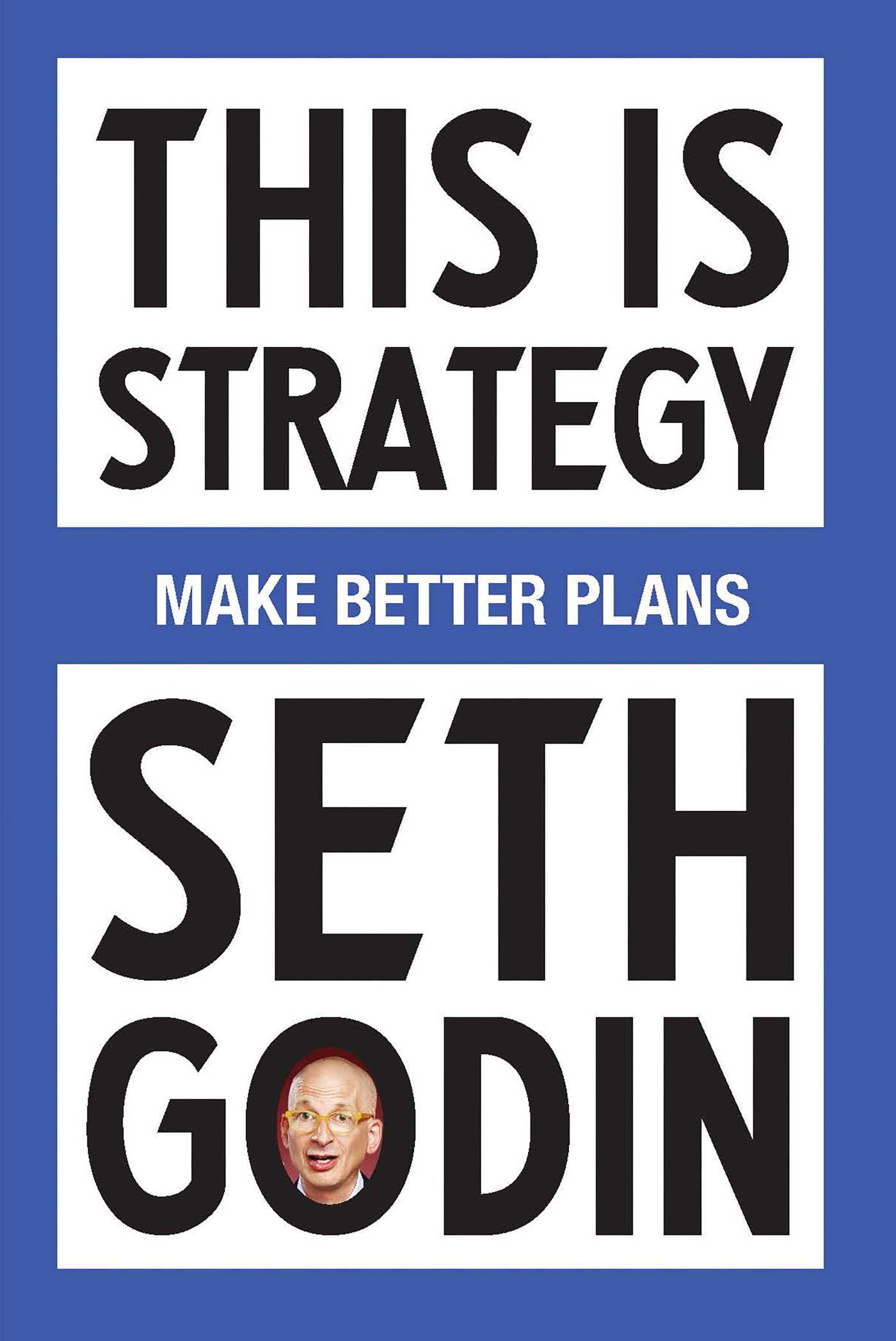
This Is Strategy: Make Better Plans (Create a Strategy to Elevate Your Career, Community & Life)
This is Strategy is a modern classic that offers perspectives you'll find yourself returning to again and again. Rather than providing step-by-step formulas, Godin offers something more valuable: a new way of seeing and thinking about the challenges you face.
You’ll discover how to:
Identify your "smallest viable audience" and make remarkable work they can't ignore
Understand and influence the systems shaping our world
Prioritize long-term thinking over instant gratification
Make smart, purposeful choices that shape a better tomorrow
Who this book is for:
- Leaders who want to think more deeply about their impact
- Entrepreneurs tired of conventional business advice
- Change-makers seeking lasting transformation in their career and community
- Anyone feeling stuck in outdated systems and looking for a fresh perspective
Resources
-
- Seth’s Blog: Mel Robbins and The Knot
- Harvard Business Review: Know Your Customers’ “Jobs to Be Done”
- Seth Said What: "Who's It For?" The Question Seth Godin Keeps Bringing Us Back To
- Forbes: The Best Business Advice These 10 Entrepreneurs Have Ever Received
- MIT Sloan: A strategic playbook for entrepreneurs: 4 paths to success
- U.S. Small Business Administration: 10 steps to start your business
- Big Think: 10,000 years of branding explained in 6 minutes | Debbie Millman
- Greater Good Magazine: Seven Ways to Find Your Purpose in Life
- Journal of Research in Personality: Do mindful people set better goals? Investigating the relation between trait mindfulness, self-concordance, and goal progress
- Forbes: The Power Of Storytelling In Modern Marketing
- Seth’s Blog: A branding exercise
- Inc: Behind the Brand: ‘This Is Strategy’ by Seth Godin
- Entrepreneur: 3 Steps to Creating a Company That Aligns With What You Love
- European Journal of Personality: A Meta-analytic and Conceptual Update on the Associations Between Procrastination and Multidimensional Perfectionism
- Harvard Business School: Reviews, Reputation, and Revenue: The Case of Yelp.com
2 Million Readers.
1 Life-Changing Newsletter
Simple and Straight-to-the-Point...
Just Like Mel.