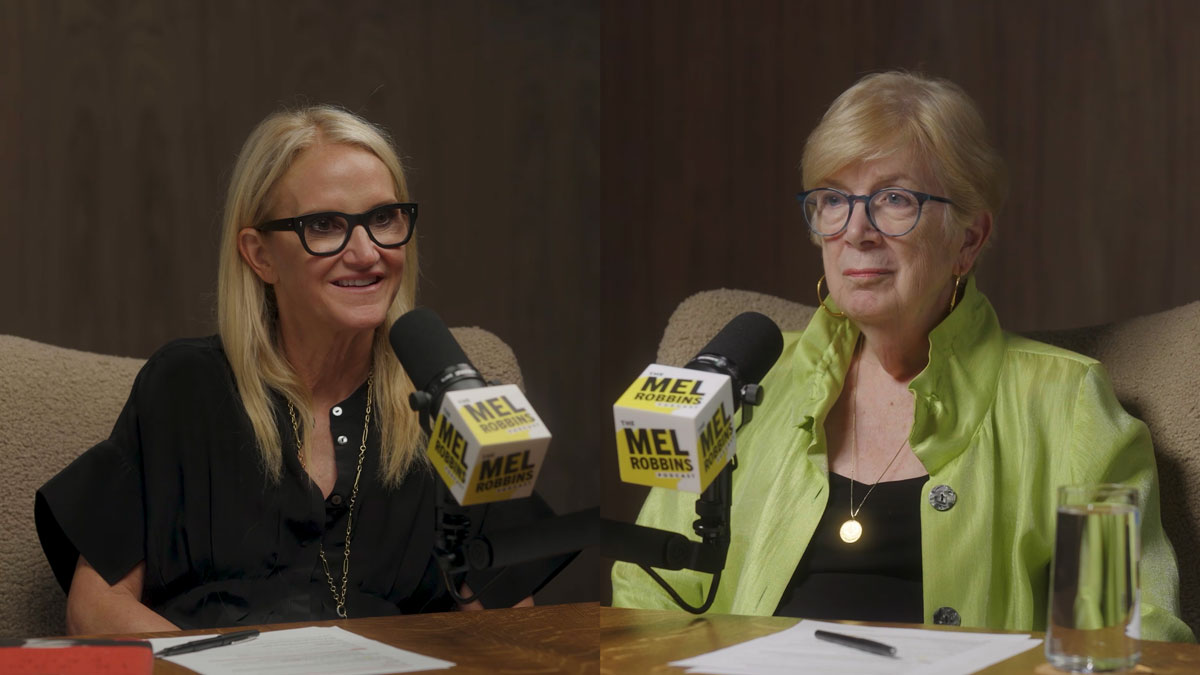
Episode: 425
Former CIA Spy: How to Read Anyone, Think Clearly, and Protect Yourself
Jonna Mendez
Today, a former spy and the former Chief of Disguise for the CIA is taking you inside the heart-pounding world of espionage and the secret life she lived working undercover for 30 years.
Jonna will share the tactics and strategies you need to read anyone and spot a liar, offer a powerful warning about the state of the world today, and give you practical wisdom to find courage and face life’s hardest moments.
For decades, Jonna helped intelligence officers assume new identities, disappear in plain sight, and carry out high-risk operations.
But what makes this conversation so powerful is not just the spy stories. It is Jonna’s deeply personal reflection on courage, reinvention, trust, loss, and what it means to keep going when life feels scary or uncertain.
After today, you'll understand how to build confidence, trust yourself under pressure, and have the courage to reinvent your life… at any age.
Change is the most refreshing thing any of us can do. You get good at what you do. You love what you do. You do it well. And you could keep doing it for the rest of your life... But you could say, 'Let me take a look around. What else is there?
Jonna Mendez
All Clips
Transcript
Mel Robbins (00:00:00):
Today on the Mel Robbins Podcast, a former CIA spy shares the secret life she lived working undercover for 30 years.
Jonna Mendez (00:00:10):
I went to the White House and briefed the president and he didn't know.
Mel Robbins (00:00:13):
Hold on. You tricked the President of the United States
Jonna Mendez (00:00:17):
And the Secret Service.
Mel Robbins (00:00:19):
She'll teach you the tactics and strategies to read anyone and spot a liar. Powerful wisdom to help you find courage and overcome life's hardest moments.
Jonna Mendez (00:00:29):
There's something I've never really talked about publicly. He got out of the car and he opened his vest and he was a human bomb.
Mel Robbins (00:00:38):
And the former Chief of Disguise for the CIA also has a profound warning on the state of the world today. Please help me welcome former CIA Chief of Disguise, Johna Mendez to the Mel Robbins Podcast.
Jonna Mendez (00:00:53):
Thank you so much.
Mel Robbins (00:00:54):
I am so excited to talk to you. The office has been a buzz waiting for you to arrive. And you have the coolest life and the most interesting job of anybody I think I have ever met. The chief of disguise at the CIA. If somebody who's listening right now takes everything to heart that you're about to share with us from your extraordinary life, what might they change about how they see themselves or the world at large?
Jonna Mendez (00:01:31):
It's hard to sum it up, but I came out of Wichita, Kansas. My expectation of what my life was going to look like was very much like all my friends. We were going to get married. We were going to have kids. Our husbands were probably going to work at Boeing because Boeing was a big part of Wichita, Kansas back then. We kind of though it was cast in stone a little bit. I always knew I would get a job, but I always thought that my work was going to be something to do with books, either teaching, librarian. And then bam, everything blew up. My friend went to Europe. I went to Europe with her and I basically never went home.
Mel Robbins (00:02:16):
It's interesting that you say you thought your life was cast in stone.
Jonna Mendez (00:02:20):
Yeah.
Mel Robbins (00:02:20):
I think a lot of us do.
Jonna Mendez (00:02:22):
Yeah.
Mel Robbins (00:02:23):
But your remarkable story and a lot of the wisdom that you're about to share is going to say whatever it is that you think is set about your life could change almost in an instant.
Jonna Mendez (00:02:37):
It's your life. Nobody else is going to do it but you. You get to live it how you want.
Mel Robbins (00:02:44):
Well, I'm excited to unpack some of these stories and lessons from your remarkable life. You were the chief of disguise for the CIA. What did that job entail?
Jonna Mendez (00:02:55):
Well, I didn't start out as chief of disguise at the CIA. It was an interesting story of how I ended up in that position.
Mel Robbins (00:03:06):
How did you end up at the CIA?
Jonna Mendez (00:03:10):
Well, I came out of Wichita, Kansas. I had a sister 13 months older than me. She fled to Aspen, which I thought was brilliant. And then two years later, my best friend told me she was going to get married in Germany to a military, an American military guy. And would I come be in the wedding? I said, yes. I was in college paying my own tuition. I stepped out of college so fast. You'd think it was my mother's money. I went to Germany. I was in the wedding and then they went to Italy and I was there. So I didn't want to go home. So instead I took a train to Frankfurt, Germany, and they had phone books back then in the Bonhoff. And I started calling American banks because this big banking town. I made four phone calls. They all said the same thing.
(00:04:08):
Oh, you're looking for a job. Do you speak German? No. Have you ever worked in a bank? No.
(00:04:17):
Do you have a work permit? No. And three of them said, "Well, thank you very much." And the fourth one said, "Well, why don't you just come on down and talk to us?" That was Chase Manhattan Bank. And they hired me. So I got my toe hold there. I had a job. Then I got an apartment. And then I got a boyfriend who turns out was CIA. But he couldn't tell me that he was CIA because he was undercover. And the way the CIA rules were written, he proposed to me on the subway in Vienna, Austria. And I said, "Yes." And it was all very romantic. Then he told me he worked for CIA. He said, "You're going to love it." And when we were assigned to another foreign posting, I went looking for a job with CIA and they hired me as a secretary because that's what CIA did always.
(00:05:20):
That was what they did.
Mel Robbins (00:05:22):
What was it like working in the CIA as a woman?
Jonna Mendez (00:05:29):
Initially, I was the secretary and I was a very, very good secretary. So I became the boss's secretary. A thousand people. He was the director. I was his secretary. The joke was on me because that's a dead end. There's nowhere to go. It was the highest level you could get to. It was no up. So I told him that I though I'd go to work for the Smithsonian. I'd go talk to them. He said, "Well, that would be interesting." But he said, "Why don't you consider taking some of our photography classes? I know you're an avid photographer and I'll get you in those classes and maybe you can explore that." And I ended up back in Europe working for the CIA in the dark rooms. And they discovered that I was really good at it. I used to say to myself, "You cannot be excellent.
(00:06:25):
I am excellent at this job. I am good." And they know it.
Mel Robbins (00:06:29):
I'm starting to read between the lines because you said he said, "Take a photography class." And now I'm realizing, wait a minute. He didn't mean go down to the local community college and take a photography class. You got trained to do something.
Mel Robbins (00:06:42):
So what specifically does being a photographer for the CIA entail?
Jonna Mendez (00:06:48):
When you say photography at CIA, you're talking stuff you never dreamed of. You're talking fake pregnancy bellies with a camera in it for women. Camera in the bra, camera in men's tie, camera in purse, cameras everywhere. Big cameras, small cameras. We had cameras that looked a lot like this. It was a Mont Blanc pen. A Mont Blanc would take a hundred pictures the size of a pen. If you were standing in front of Putin's desk and he looked over towards Lavarov, who he was talking to, you can just take your pen because you're making notes. You just take it and go and take a picture of plans and intentions of the Soviet Union. You wanted the agenda for the meeting. You wanted the minutes of the meeting. We had satellites up there doing today. We knew where everything was that day, but that's not what we wanted to know.
(00:07:46):
We wanted to know what are they going to do? Like their nuclear program, what are they going to do? That little camera was amazing. And that was very much my account when that film came in. I developed, that was one of the hardest things I ever did developing that film. But in addition to using pins and cameras in strange places, we made micro dots. And I brought one in today. A
Mel Robbins (00:08:10):
Microdot? What is that?
Jonna Mendez (00:08:12):
A micro dot is a photograph of a page of text.
Mel Robbins (00:08:17):
It looks like a stamp.
Jonna Mendez (00:08:19):
Well, that's because the dot is hidden in it. It's a picture of that reduced 800 times.
Mel Robbins (00:08:27):
Whoa.
Jonna Mendez (00:08:29):
Photographically. And you end up with, there are two here.
Mel Robbins (00:08:34):
Oh my gosh, it's on the back. It literally looks like a pinprick.
Jonna Mendez (00:08:38):
It does. It looks like the period at the end of a set. That is that
Mel Robbins (00:08:40):
Document?
Jonna Mendez (00:08:41):
Yep. So you can mail it to your foreign agent, maybe in China. Let's say China. He already has a lens, looks like a grain of rice. And then he'd get some spit and he'd pick up the dot and he'd put it on the end of that lens, hold it up to the sun and read an eigh and a half by 10 page of text.
Mel Robbins (00:09:07):
That's incredible.
Jonna Mendez (00:09:08):
It was incredible.
Mel Robbins (00:09:10):
It's amazing to me that human beings can be this innovative and come up with such extraordinary solutions.
Jonna Mendez (00:09:18):
I agree. But photography at CIA was not like photography anywhere else. It was really exciting. I started traveling, training foreign agents to use some of our very small, interesting, useful cameras. So I developed a skill with photography. And the guys, it was always guys, would let me do it because they knew I could do it. Again, it's excellence. If you can do the work in an excellent manner, they will let you do the work.
Mel Robbins (00:09:55):
There's a couple things about your story that I think are really interesting and they provide a lot of wisdom and advice. One being that you found yourself in this job as a secretary and you were excellent at it and it had a ceiling. And for somebody who feels like they've hit the ceiling of their potential or their role, what would your advice be?
Jonna Mendez (00:10:19):
Make a change. I changed more than once. I went in and did the photo thing and I loved it. But I did a trip out to India along the way, filling in for somebody doing photo work in India. I fell in love with India, just adored it. So I came back to Washington, found my career person. I said, "I would like an assignment there." He said, "There is no photo job coming up. The only thing coming up is disguise." And this was a turning point in my career, but I didn't know it then. It's like, "Well, how badly do you want to go to India?" And this is probably not a smart thing to do to change your career track in the middle of your career, but it was a smart thing to do. I ended up being a person who could do all this photography stuff.
(00:11:17):
I could also do all of this disguise stuff and a little bit of counterfeiting forging over here. And that's how I ended up with the disguise piece of it.
Mel Robbins (00:11:34):
For the person who's listening, who's afraid to make a change, what would you say?
Jonna Mendez (00:11:43):
Some changes are really, really hard. I mean, if it's going to cost you a salary and you have to start again, or if you have to move. Some changes involve more than just changing your workday. They changed other things. But I think change is the most refreshing thing any of us can do. You get good at what you do. You love what you do. You do it well. Okay. And you could keep doing it for the rest of your life, and a lot of people do. And there's not a thing wrong with that. But you could say, "Let me take a look around. What else is there? Is there something as interesting? Something I'd like to fill around with?"
Mel Robbins (00:12:30):
Well, what's interesting about your story is it illustrates something that I've always found to be true, which is yes, the change feels scary. And yes, it can be hard. And yes, it can feel overwhelming because you think you're starting over, but your story proves a truth, which is you took absolutely everything with you. You're never starting over. You're building on that experience. You took your excellence as the right-hand person to the chief. Then you took all this skill from photography, and then you ended up in this role in India. And it was all the experience and the pivots that positioned you to become the chief of disguise. But we don't think about that fact when we're making the change, that we're starting over, so to speak, but we're actually not because we're doing it with experience.
Jonna Mendez (00:13:28):
True.
Mel Robbins (00:13:29):
What do you say to a woman who's really feeling underestimated?
Jonna Mendez (00:13:35):
I say aim high.
(00:13:38):
Aim high. Don't underestimate yourself. The others might do that. You know yourself better than anyone else. Aim higher even than you think you might be able to accomplish. But that's how you climb. One step at a time, reaching. Maybe you can do it, maybe you can't, but try it. There's something I've never really talked about publicly. In the middle of my career,
Jonna Mendez (00:14:06):
When I was 46, I got married again to Tony Mendez. We want to talk about change. And when I was 47, I had my one and only child when I was 47. Changed my life, changed a couple of other lives too. My husband, Tony Mendez, a lot of people know about him from Argo. A lot of people saw the movie Argo.
Mel Robbins (00:14:39):
For the person who's listening or watching who hasn't, it's extraordinary. And you co-wrote the book that led to the movie.
Jonna Mendez (00:14:45):
Right.
Mel Robbins (00:14:45):
Could you share for the person listening who doesn't know the story a little bit of the background about you and your husband and what led to that?
Jonna Mendez (00:14:53):
How much time do we have?
Mel Robbins (00:14:55):
Whatever you got to give us.
Jonna Mendez (00:14:57):
I had known Tony for years and years. I never knew about Argo. He never talked about Argo. It was something that he had done in the past and we all moved on and were doing other things. And then George Tennant, a very popular head of CIA, he slipped a. There was a memo under our screened door. We live 40 miles outside of DC, down a one mile dirt road, and the CIA delivers a memo under our door. And it said, "We've been thinking it's a very quiet moment in America. Things are settled. I've been thinking this would be a good time to tell America one good story about the CIA because no one has ever done that. All they ever hear are suspicions of this or maybe somebody did misbehave over here. There's never been a good story out there. I want to do that.
(00:15:54):
I want you to do that. I want you to tell the story of Argo." And this was like 19 years after it happened. And Tony said, "It's classified." And George Tennant said, "Not anymore." There was a purpose to it. And I think it was very clever of George Tennant to do that, to show him that there's a human side and that there's a lot of goodwill at the CIA.
(00:16:19):
So Tony told the story and then Wired Magazine picked it up and George Clooney saw it. So we're asleep in bed one night. It's black dark out in the country and the phone rang and it was our agent, somebody out in LA that said, "George Clooney wants to buy the rights to your story." And Tony says, "Sell it to him." And then the phone rang again. Same person who said Brad Pitt is interested in it too. Tony said, "Raise the price." Hung up. And the next morning, George Clooney bought it.
Mel Robbins (00:17:00):
And for the person who hasn't seen the movie, what is the story?
Jonna Mendez (00:17:05):
It was about the American Embassy in Tehran. It was when the Ayatollah Khomeini came back from Paris. The Shah had left the country. The Shah was in Washington DC in the White House with Jimmy Carter looking for treatment for his cancer. And their Iranian population went out of their minds that the Shah was in the United States. And it was a revolution. Up until that point, Iran had been kind of a docile, interesting place. And the people I knew that were assigned there, they loved it. They loved the people, they loved the country, they loved everything about it. Well, all of a sudden it's a revolution. And they came over the walls and they went into all the buildings. This was a huge compound.
Mel Robbins (00:17:57):
The American Embassy.
Jonna Mendez (00:17:58):
Yeah, the American Embassy. Multiple buildings. And they took everybody prisoner except for one small building. It was the only one that had an exit door onto the street in the back of this huge piece of land. So six of them got away. Six Americans got away. And they ended up at the Canadian ambassador's residence. Ken Taylor, the Canadian ambassador said, "We will protect you. You're practically Canadian. We're practically American. Come on in." And you have to give the Canadians great credit. We did. Never enough, but we did. So there they were. They were trapped inside of Iran, a landlocked country. The airports, everything was full of revolutionary guards. The borders, it was all revolutionary guards. And there were all these efforts to get them out. They tried flying Jimmy Carter, sent helicopters to land in the desert. We disguised trucks to carry fake Iranian troops.
(00:19:02):
We made Iranian military uniforms to put on our soldiers so they could go in. What happened was those six people ended up stuck in the Canadian ambassador's house with no way out. So Tony went to Canada and did the obvious, you have to get passports for these people. Tony was kind of a specialist in exfiltrating people that were in trouble that needed to leave the country. So he went to Canada, he said, "We need genuine passports for this one. We could make them, but we'd really like to have real ones." And the Canadians said, "Yes." I would point out that America would never give another country our blank passports ever, but the Canadians did.
(00:19:50):
Tony put in new pictures, gave them fake names, stamped the passports so that it showed them leaving Canada. They stopped in LA, they went to Hong Kong, and they ended up in Tehran. They were supposed to be the six people, a location scouting party, looking for a place to do a movie. That was the backstory. So Tony went out to LA where we had worked for years with the makeup people, also with the magic community, the magic builders. Tony had lunch with one of them and said, "How many people are in a location scouting party?" And John said, "About six." And Tony said, "What would their titles be?" And he went down the list, a location manager, a finance guy, the logistics guy, the script writer, the photographer. And Tony put a program. He named the fake movie that they were supposed to be going to make.
(00:20:47):
He named it Argo.
Mel Robbins (00:20:50):
As part of the disguise
Jonna Mendez (00:20:52):
Of
Mel Robbins (00:20:52):
The whole thing to be able to extract these American hostages.
Jonna Mendez (00:20:55):
The whole thing was a disguise. Tony had set up an office out in LA. It was staffed. He had taken out advertisements in the Hollywood Reporter and Variety, full page ads. Argo, a cosmic confrigation. It's going to be a great movie. It turns out when it was all over, the Iranians wanted to check. There were phone numbers. They could call that office, that fake office, and some fake employee would answer and say in a fake voice, oh no, they're on a location scout. They had to understand that no matter how the Iranians came at this, they would find a genuine bonafide office with posters up and people with the phones. And they even carried some of those magazines with the. What Tony did with Argo was he created this fake reality. We had never done like that before. He created a whole fake world, a universe where everybody was doing their thing in front of the professionals out in Hollywood.
(00:22:05):
And it was just so brilliant.
Mel Robbins (00:22:08):
It's fascinating just to hear about your world because part of me is sitting here thinking, wait, this is actually happening? This is crazy. Given that I'm not in the CIA, although I could be lying to you. I don't think coming right out and saying something that you're not is probably an effective way of disguising yourself, although maybe it is. I'm on the outside, so I can only imagine, okay, what does the chief of disguise do? Is this like Mission Impossible Born Identity? I'm running into an apartment and there's five passports and money. Is that what this is?
Jonna Mendez (00:22:46):
The passports and money would be my husband. I would be the mustache and the beard. In what? In the little vault in the bank that he opens up and he goes flipping through. We gave James whatever he needed. We called them all James. It was not very kind of us. We were the Office of Technical Service. We were the technical people supporting operations. James and his friends, they had a job that I couldn't have done, which was to be so charming and so well-spoken and so that they could convince people to betray their government. I mean, that's a tall order. Sometimes we were looking for charisma when we hired James. We wanted him to be the guy you meet at the bar. And when you walk out, oh my God, you're like his best friend. And you've got each other's numbers and you're going to stay in touch and all of that.
(00:23:44):
That's the James that we wanted. But we discovered somewhere along the line that that James wasn't going to flourish in our environment because that James needed attention and he needed praise and he needed applause and he needed feedback constantly. And in the real CIA, none of that happened. There were no attaboys. There were no stars putting on paper for you. There was no thank you. There was, okay, the next job now we're going to go and do this. There was no applause.
Mel Robbins (00:24:21):
Oh, wow.
Mel Robbins (00:24:23):
What does it take to be a good spy? Or James, if you will?
Jonna Mendez (00:24:28):
Well, if you're going to be James -
Mel Robbins (00:24:30):
That's the code word for a spy because you don't want to call him by their first name?
Jonna Mendez (00:24:33):
That's James Bond. That's the operational guy.
Mel Robbins (00:24:37):
Okay.
Jonna Mendez (00:24:38):
The way it works is CIA says, "Here's our program for next year in descending order." Maybe the top of the list, we want to know about somebody's nuclear program. That's the thing we want to know the most. Okay. So around the world we all go, "Does anybody know anybody in that program?" If they don't, we go find someone. And our James's, their job, which I could never do, is to find those people, meet those people, and convince those people that they want to work for us. So I always ask new friends, I say, "What would it take for someone to come up to you, I don't know, at a friend's house and say, I used to live in Russia and I have friends there who are really interested in oil production figures out of this particular field here in America. And I know you work closely with them." And all of us would say, "Get out of here.
(00:25:31):
We're not going to do that." James' job was to walk up to a Russian and make the same kind of pitch. But James had to find a niche first. He had to find a flaw. He had to find something that would engage them. So around the world, the reasons that people will betray their government, it boils down to four things. And it spells the word mice, M-I-C-E. The M is for money. And Americans will do it for money. If you pay us enough, that makes me so mad, but it's true. Pay us enough. We will betray our country. The Russians will do it for ideology. Typically, and this may not still apply, but typically the people we recruited, they had families that were taken apart by Stalin. They had families that were imprisoned by the Russian government. They had all these terrible things that happened to people they knew and they wanted to pay them back.
(00:26:35):
And for those reasons, they would work for us. MI C as compromise. Maybe they had a secret and they didn't want anyone to know the secret. And maybe we knew the secret so we could use that as a. But we didn't actually do that too much because it didn't really work very well, but it was always there as a possibility. And then E is for ego, and that's the big one. People that are passed over at work for promotions. People that think their boss is stupider than anybody. People that just have these grudges. They walk around with them. Life is not fair. They're not making their way forward. Oh, when we could find those people, we could talk them into spine for us.
Mel Robbins (00:27:16):
So when you look at mice, money, ideology, compromised, or ego, are those all present in terms of how you convince most people to do anything?
Jonna Mendez (00:27:28):
Usually when you see a spy case and you read the history of it, you find those things are in there very, very frequently. People don't just randomly say, "I think I'm going to take all the secrets I know and give them to another government." They need a reason, and they filter down into those reasons most of the time.
Mel Robbins (00:27:48):
What are your biggest takeaways and life lessons after spending 30 plus years in the CIA?
Jonna Mendez (00:27:57):
Wow. Well, one of the first ones would be that you don't do anything by yourself. You don't do anything alone. You form teams, you form loose-knit groups. You are always working with others. It's never a one-off. You're always part of something bigger than yourself if you're going to accomplish anything.
Mel Robbins (00:28:28):
Let me tell you about Verizon's brand new simplicity plan. It's one plan, one price, $30 a line per month, even for a single line, with their best 5G network for all. That's it. That's the plan. And when it comes to your phone, you can do what works for you. Already love your phone? Great, keep it. Or it's easy to buy a new one. Or you could upgrade to the newest phone every year for a monthly charge. So let's get this straight. One plan, one price, $30 a line per month, plus your phone, your way and their best 5G network. I guess the simplicity plan is just that. Super simple. Maybe that's why they named it that. One plan, one price, and the best network for everyone. Switch to Verizon today. For new customers, $30 a line includes autopay and switch discount. Additional taxes, fees and terms apply.
(00:29:20):
Unlimited data is restricted to on-device smartphone usage, domestic data roaming at 2G speeds.
Mel Robbins (00:29:28):
You said earlier that when I mentioned, okay, is this really mission impossible and born identity? And you said, "Well, my husband, Tony, does the passports, but I do the wigs." So how do you transform someone into someone else?
Jonna Mendez (00:29:47):
It's all very specific to a person, a place, a time, what they need, what would actually solve the problem. A lot of the time we wanted people to be Less seen. And so we would make them older. Nobody looks at old people too much.
Mel Robbins (00:30:11):
Do you use wigs? Are those masks real? Because you always see somebody pulling off a mask and they're not, and you're like, whoa, was that actually a mask? I mean, is that how you do it?
Jonna Mendez (00:30:22):
Where we ended up was they were so real that I could be sitting here wearing it right now and you wouldn't know.
Mel Robbins (00:30:29):
No way.
Jonna Mendez (00:30:30):
I went to the White House and briefed the president and he didn't know.
Mel Robbins (00:30:33):
Hold on. You tricked the President of the United States?
Jonna Mendez (00:30:37):
And the Secret Service.
Mel Robbins (00:30:39):
What was your disguise?
Jonna Mendez (00:30:41):
A full face mask with hair attached. It was actually a girl that worked with me. Her name was Becky. But I wore her face very nicely and I dropped 20 years in a heartbeat and I thought I looked really good. Anyway, went in and briefed the president. Now the president back then was George H.W. Bush, who had been director of CIA at one point. And we had done some disguises for him, mostly for entertainment. He wasn't out on the streets doing work, but mostly, I don't know, for a conference or something. He had a couple of disguises. So I took him some 8x10 glossies of himself in disguise because now I'm in my salesperson mode. I'm softening him up because I want him to love this thing. I'm going to show him next. And it's going to be a really expensive program and I want his support for that program.
(00:31:39):
So he's looking at the pictures of himself and he's laughing. I had never seen George H.W. Bush laugh before. I was impressed. And I said, "Well, I'm here today to show you the best new thing we've got. You are going to love it." And he's behind the resolute desk and he's saying, "Well, where is it?" He's looking, "Are there bags down on the floor by me?" No, there's nothing. I said, "Well, I'm wearing it. And what I'm going to do is just take it off and show it to you." And he said, "No, no." And he got up and he walked to my chair and walked around my chair. Now he didn't know it was a full face mask. I don't know what he was looking for, but he knew that I had on a disguise. And he couldn't find it. So he sat down and he said, "Okay, take it off." And I did that Tom Cruise thing, which this was before Tom Cruise got famous for it.
(00:32:38):
I did that. Bush loved it. Everybody loved it. It's a great new capability.
Mel Robbins (00:32:47):
Can you show me the photos? I think you have photos here from this.
Jonna Mendez (00:32:51):
Well, I don't go far without these photos because this was a moment. Oh, so that's you? That's me on the far right. That's Bush looking at the pictures of himself. Everybody is very calm.
Mel Robbins (00:33:14):
That's you in that disguise?
Jonna Mendez (00:33:15):
Yeah. Totally animates.
Mel Robbins (00:33:19):
The mask animates?
Jonna Mendez (00:33:20):
Yeah. That was the hard thing. It's not hard to make it look like you, but to get it to move where you can. I mean, I got through the Secret Service with it.
Mel Robbins (00:33:32):
Wow.
Jonna Mendez (00:33:32):
I know. All
Mel Robbins (00:33:33):
Right, let's see this one.
Jonna Mendez (00:33:35):
This one, I'm holding it up in the air. It now lives in the basement of the CIA. Every once in a while they bring it up.
Mel Robbins (00:33:42):
The mask.
Jonna Mendez (00:33:44):
And there's a big exhibit about this mask and the International Spy Museum. So the mask has gotten its own little bit of fame.
Mel Robbins (00:33:52):
More importantly, did he fund the program?
Jonna Mendez (00:33:55):
Oh, yeah. Because with this program, once we can take a face, any face, your face, and put it on someone else, we can make your twin. We could absolutely make your twin. And we made twins at places where we needed them, like Russia, where we had so much surveillance. We couldn't walk out of our embassy without a team just coming out of smokey tunnels and following us down the street. But if you planned it right, they'd follow you down the street. You'd step into a kiosk to get cigarettes, I don't know, gum. You'd come back out and go on down the street and they'd fall in behind you, keep going with you. But it wasn't you. It was your twin they were following. You are still in the kiosk. So once that parade is on the next block, you can go do what you needed to do that day.
(00:34:55):
We could also, besides making your twin, we could change your ethnicity and we could change your gender with these masks. We could do anything.
Mel Robbins (00:35:04):
That's incredible.
Jonna Mendez (00:35:05):
It was incredible.
Mel Robbins (00:35:06):
Can you show me the other disguise items that you brought with you?
Jonna Mendez (00:35:11):
Just a few of the things that we would do. This is a store-bought wig. For our own officers, we usually didn't use store-bought wig. We had the ability to hand make exquisite wigs, one hair at a time. They didn't look like wigs at all. So this is kind of a stand-in, a mustache, if you ever wondered what a good fake mustache looks like. I don't know what these cost, but they were good.
Mel Robbins (00:35:39):
Yeah, because they have almost a mesh underneath them, so it looked a little bit
Jonna Mendez (00:35:43):
More -
(00:35:44):
It's all about that mesh. These things are like feathers. If you had terrible teeth, we would take a mouth impression and we would make your teeth pearly whites. Wow. If you had pearly whites, we could make them all messed up. We could change your teeth. When we changed your teeth, we would change your gum line. When we changed your gum line, we would change your profile. If you look from the side, it's quite different. We could do all of these things. We'd throw some glasses on you. If we needed to change color of your eyes, we'd put some contact lenses in. If I met you, Mel, and had to go back to my people and say, "I met a woman named Mel, and this is what she looked like. She's got long, beautiful blonde hair. She wears striking glasses. She doesn't wear a lot of makeup.
(00:36:36):
She's not wearing a lot of jewelry. She doesn't seem to have on a wedding ring. She wears a watch like this." I would just describe you in such fine detail. Then for the disguise, we would change every piece of that that we could. Wow. You would end up with short, a little pixie wig, dark wig, lots of makeup, no glasses. We'd just go on and on and on. Pretty soon you're not there anymore, and this other person is there. We wanted everything that we could change. With men, it was harder.
Mel Robbins (00:37:12):
Why was it harder?
Jonna Mendez (00:37:13):
It was harder because men don't fool around with all that stuff so much. We'd put cologne on a man who would never wear cologne. It would be noticeable. A woman would notice it and she probably wouldn't like it. We put a gold chain on a man who would never wear a gold chain. We'd unbutton his shirt one too many. So all of a sudden that guy is taking a turn here. He's a different guy. If he had a wedding ring, we'd take it off. Usually you'd be able to see kind of the impression like, oh, he's married, but he took his wing. Look at that. We'd change his watch out. I'm not even talking about wigs and hair and stuff there. I'm talking about all the little things. And pretty soon it's another guy. It's just another guy. We would tell our men when we were doing them, we said, "Someone in your family gave you a shirt in the last 10 years that you just hate.
(00:38:08):
It's in the back of your closet. That's your shirt for your disguise." And we'd write up a little character sketch of this guy. This is your guy. This is you in disguise. Everything about him, does he smoke? What does he smoke? Does he drink? What does he like? We'd just make a new character so that when you had to wear your disguise, in your mind, you had the whole thing. And after we did that, then we'd send you to the CIA cafeteria for a lunch where all your friends were. Everybody, your boss, your boss's boss, everybody who knows you is down there having lunch. And we'd send you into the storm and they'd come back and say, "Oh my God, I was sitting next to them. Nobody knew." And then you thought, okay, yeah, he'll use it.
Mel Robbins (00:38:53):
That's really cool.
Mel Robbins (00:38:55):
What did 30 years in the CIA teach you about body language and projecting confidence?
Jonna Mendez (00:39:03):
Well, it kind of depends on who you're projecting it to and what the occasion is. If you're talking to the foreigners who were our, that was our whole goal, is to make them comfortable, to make them believe in what we could do to kind of lessen some of their fear. We would be as positive as we could be. We would praise what they were doing. We would encourage them to do even more of it. We would take pictures and show them, look how good you look. Look how good this is. It's like in Argo, we built that whole backstory and then we said to them, look at that. Who's going to challenge that? Nobody's going to challenge that. It depend on what you were trying to do. If you were trying to sneak somebody across a border, that was really hard. And you start role-playing with people who have never role played before.
(00:40:06):
I'm thinking of one event where we took somebody out over a border. It was a man, a really important man, and his wife, and their five-year-old daughter.
Mel Robbins (00:40:19):
Oh boy.
Jonna Mendez (00:40:20):
And they were going across the border. We hadn't done that before. This was a very controlled border. And we hired a smuggler, a guy who was back and forth all the time. That was his job. We hired him. We modified his car. We modified the back seat so you could put somebody underneath it, a husband and a kid. And we did. That's where they were. In the front seat, it had a bench seat, old style. And the woman had the girlfriend position, which is not by the door, but it's in the middle. And the smuggler was back and forth across that border all the time. This was really important. Getting this man out was really important. And so this was such a funny story.
(00:41:12):
They pulled up to the gate with the arms down and there's the guy in the uniform and he's got the clipboard and he's like, and they know each other. Oh, hey, good to see you. When will you be back? What's going on? Blah, blah, blah. And there was a tape playing. It was Billy Joel. This is the part of the story that I just couldn't believe. It was the latest Billy Joel tape that was not available over there. And the guard says, "Oh, I like that. What is that?" The driver says, "Oh, it's Billy Joel." And the guard says, "Oh, my girlfriend loves him. Loves him. Where'd you get that?" And the driver says, "Oh, I have a connection." The driver says, "I'll tell you what. Next time I come through, I'll bring you one. I'll give you one." And the guard says, "I'll tell you what.
(00:42:01):
You give me this one and you keep the one you get next time for yourself. But I want this from my girlfriend." So he takes the tape out, gives it to the guard, and they drive through the border. So this idea, every one of them is different. Every time you do one of these things, it's different and it's scary.
Mel Robbins (00:42:26):
What was the scariest moment in your 30 years in the CIA?
Jonna Mendez (00:42:33):
It was in Latin America down where the cartels were working. Still are working. It's still all going on. I was down there doing some work at the embassy and they said, "We'll pick you up in the morning." They put me in a hotel. They said, "We'll be here in the morning. We'll be here at 9:03." I said, "Okay." They said, "We'll wait for two minutes and we'll leave. And if that doesn't work out, we'll get in touch in the afternoon." So I was out there at 9:03. I wasn't going to be left behind. They said, "You have to be very, very careful in this country. It's dangerous here." Just randomly dangerous because of drugs.
(00:43:12):
So I did the work in the embassy that I went down to do, and I went back to the hotel and I discovered, oh, I'm out of cigarettes. It was back when I used to smoke almost two at a time. I had to go get cigarettes. So I went out down the street around the corner to a kiosk and got some cigarettes. And then I'm walking back to the hotel and I see there's a shortcut. This is stupid. So I took the shortcut and I come around kind of a corner and there's like 20 young, drunk, local guys armed. You could just smell the beer. And I look wrong. I look wrong. The women down there in that part of the world dress like a million bucks in a red lipstick. And they just look fabulous. And I was not looking fabulous and I wasn't looking like them.
(00:44:03):
And you could just see that they all turned and they were like. And I figured later, I said, I don't think they though I was CIA. I bet they thought I was narcotics person, American narcotics down there checking on them. I really thought that they might shoot me. That's one of the few times that I just held my breath and I'd had all this training and my training said to me, "You cannot turn around and go back. You have to walk through these guys."
Mel Robbins (00:44:33):
Really? Why walk through them?
Jonna Mendez (00:44:36):
Because to turn around and go back would reaffirm that something was wrong here. You just had to show confidence and keep going. So I did. And they kind of separated and I walked through them. And then I had to keep going to get out of that alley. And I couldn't turn around and look at them. And I thought maybe someone's going to shoot me. And they didn't. So I went in the lobby of the hotel and opened that package and got a cigarette. I couldn't even smoke it. I was just like this.
Mel Robbins (00:45:08):
I'm sitting here thinking, I am not built for this. I'm holding my breath when you're telling the story about the Billy Joel tape. I'm just sitting here listening and I not even breathing. I recognize that I wasn't breathing as you were in the alley telling me the story. How did you learn to do that? And how can I and the person listening learn to tap into some bravery when life is scary or challenging?
Jonna Mendez (00:45:38):
I think it's preparation.
(00:45:42):
I think it's a confidence that comes out of thinking it through knowing what you should do, knowing how to do what you should do. And then in these kinds of moments, you kind of have to forget you and you have to go through these motions. It's not bravery. This is born out of experience and out of training. We trained for this stuff all the time. If you read my book, you'll say, "My God, were you ever not training?" Because they trained us all the time. They put me through a hostile interrogation course at the CIA's farm. It was one of the worst things that ever happened to me in my life. And in the middle of it, I know it's just a training exercise. I mean, I know that I'm not going to get hurt. I know that nobody's going to let anything happen to me, but I was scared to death.
(00:46:47):
I'm claustrophobic. So they put me in boxes. They put me in a box that I though of as a mattress box because you could only go in sideways and you couldn't turn your shoulders. You could barely turn your head and standing in there for some long time. And I though, I mean, I know this is just a training course, but I was supposed to be learning something here, but I don't think I can do this any longer. And I remembered, I learned something. I remembered that we had talked to some POWs from Vietnam and the POWs had said, "We got through years of this stuff. And you get through it in your mind. You have to find your happy place. You have to build a car, rewire your engine and your whatever. You need a project."
Mel Robbins (00:47:38):
Where did you go in your mind?
Jonna Mendez (00:47:39):
That's the funniest thing. There's a place back in Kansas called the Flint Hills. It's a tall grass area. It's just beautiful. And I went there and it was like I had on infrared goggles. So everything was green and it was just gorgeous and it was kind of moving. And I was just so happy. And I did that. I didn't think that would ever work for me, but that's how I got through it.
Mel Robbins (00:48:12):
Do you have any advice for how the person listening could find a place like that for themselves? Where their happy place to go to in their mind if their current reality is really scary or challenging?
Jonna Mendez (00:48:28):
I think anybody could do that. I don't think you have to be scared to death or in a really bad place. I think sometimes just the day-to-day you need an escape hatch, a place that gives you that kind of warm, rosy glow. We all have those places. I know at one point in that box I thought, okay, we'll do a sandy beach and there'll be some waves and I'll be walking barefoot and the sand will be really warm. So it didn't happen.
Mel Robbins (00:49:11):
You couldn't go there.
Jonna Mendez (00:49:12):
Couldn't go there. It didn't work. But it dried.
Mel Robbins (00:49:15):
How long were you in the box?
Jonna Mendez (00:49:17):
I don't know. I was in that course for three days and three nights. And they fed us a half a cup of rice and a cup of water each day. We were in prison and learned, want to know what it's like to be really miserable? Well, here, we're going to show you.
Mel Robbins (00:49:40):
What are verbal cues that someone is lying?
Jonna Mendez (00:49:46):
I think in general, people fall apart a little bit when they're lying. They get nervous because they know they're lying. They want you to believe it, so they're trying a little too hard. I think direct eye contact is one of the first things that kind of falls apart. I think watching their facial expression. The people who are bouncing around in their story, who are nervous, who are uneasy, who are trying to convince you of this thing and who sometimes won't let it go. That's what I would look for.
Mel Robbins (00:50:32):
I would imagine after 30 years in the CIA, you have a pretty keen intuition. How do you decipher those moments when it's your intuition warning you versus just anxiety and fear?
Jonna Mendez (00:50:51):
Your intuition, for me, it kind of has a beginning and it sort of has an ending. When I have an intuition about something, I stick with it. I follow it. I track it like it's a newspaper story. See if I was right, especially if it's about people.
Mel Robbins (00:51:10):
Well, what's interesting is if your intuition is kind of saying, do this or believe this, the fear and the questioning comes right after it. But what if this happened?That's the fear and the anxiety that stops you from trusting it. But the direction that your instincts are telling you is pretty clear.
Jonna Mendez (00:51:32):
Yeah. I think over time you go through enough scenarios like that that you develop a trust in your intuition.
Mel Robbins (00:51:45):
Here's the way that I think about it. So if I start having a feeling, if it's my deep intuition, it's a pretty clear statement. If it's fear or anxiety, there's a lot of questioning or what if, or just noise this way.
Jonna Mendez (00:52:08):
Scattered.
Mel Robbins (00:52:08):
Yeah, it's like a statement. It pulls you, intuition does. And for me anyway, if the alarm that's going off is what if this and what if that and what if the other thing? I know that the questioning is more fear and anxiety. And if it is a very clear direction, move away. Speak up.
Jonna Mendez (00:52:30):
Yeah.
Mel Robbins (00:52:30):
That's intuition.
Jonna Mendez (00:52:31):
Yeah, you're right.
Mel Robbins (00:52:34):
You've given us a story that illustrates intuition versus fear. When you were in that alley, your fear told you to turn around and get out of there.
Jonna Mendez (00:52:43):
Yeah.
Mel Robbins (00:52:43):
And your intuition said walk.
Jonna Mendez (00:52:46):
Yeah. I think it was right.
Mel Robbins (00:52:49):
This message is brought to you by Apple Card. Ice cream by the beach. Going to mini golf with the family. Checking out a new restaurant in town. They're more than just items to check off the summer bucket list. There are also opportunities to earn 2% daily cash back when you use your Apple Card with Apple Pay. Apply for Apple Card now and use In Minutes with Apple Pay. Subject to credit approval. Apple Card is issued by Goldman Sachs Bank USA, Salt Lake City Branch. Terms and more at applecard.com.
Mel Robbins (00:53:26):
What did being in the CIA, especially as the chief of disguise, teach you about reinvention and even just changing who you are personally?
Jonna Mendez (00:53:39):
I was just huge. When I was in school, when I was in college, I was introverted and quite the reader. And I really thought that my career and my life was going to be spent as a librarian or an English teacher. And that sounded good to me. I thought that'll be an interesting place to park myself. That was the beginning. And then I could not have stepped further away from it unless I joined the circus and become an acrobat. You develop confidence in yourself. You develop confidence in your own ideas. You follow them. And there's no map. There's nothing saying you should end up here. You should end up there. You end up, I think, where you're supposed to end up.
Mel Robbins (00:54:36):
Jonna, given the fact that you were a leader at the CIA for almost 30 years, you have so many colleagues that were killed in the line of service. You have built friendship and allies with people that are citizens of other countries around the world. What are your thoughts on the state of things right now?
Jonna Mendez (00:54:58):
I'm not sure that this planet is in a good place. Not politics, just this planet. And I worry about the next generation and what it is they're going to be facing.
Mel Robbins (00:55:13):
In terms of the health of the planet and global warming and just -
Jonna Mendez (00:55:17):
All of that.
Mel Robbins (00:55:17):
The fact that we're not taking care of the planet?
Jonna Mendez (00:55:19):
I think we've wrecked it. And I don't know how you fix the planet. I mean, I don't know.
Mel Robbins (00:55:26):
Well, here's what I know. I know that if decades ago you could figure out how to use a pen to take a photo and then shrink it down to a pinprick and then create a lens the size of a grain of rice to be able to magnify that back up 800 times. If we were to put our attention on it, I would bet in human ingenuity and the imagination to figure it out.
Jonna Mendez (00:55:59):
The ingenuity is there and the imagination is there, but the will, the will is not there. As a matter of fact, the will is pushing things the other direction. It's cutting off what I used to think of as lifelines. We're not funding those lifelines anymore.
Mel Robbins (00:56:19):
I think a lot of people feel overwhelmed and scared and sad. What is one thing you would recommend that somebody do?
Jonna Mendez (00:56:29):
Well, I'm thinking of them and of me. Take a breath is the first thing. It's probably in order. Secondly is taking small steps to fix what you can. Can't fix it all. But if enough people take small steps, you can fix big pieces of it.
Mel Robbins (00:56:48):
What do you think the biggest threat that people aren't paying enough attention to is right now?
Jonna Mendez (00:56:56):
There are so many. There are so many. It's the political tension. It's not just here. It's around the world. The nature of these states and what they're doing and how they're doing it. And an individual can't keep track of it. We used to rely on our government to keep track of it for us. We've lost that. There is nobody calling balls and strikes right now. Nobody cares about doing that. So I guess we have to call our own. So you have to pick the piece, probably pick your fight. What is it do you want to support?
Mel Robbins (00:57:38):
One of the things that's interesting about listening to your story is I keep thinking about the knock on the Canadian ambassador's door and the relationships that it seems like we used to have and the allies that we prioritized. And both on a global scale and an individual scale, one of the things that I worry about, because I remember a time, I'm only 57, when there wasn't this divisiveness, there wasn't this othering. There was a lot more working together and collaborating even if we didn't see eye to eye. And I worry a lot that we have lost our ability to do that to me.
Jonna Mendez (00:58:22):
Yeah. Now I don't know how you get that back, but it'd be worth working on it.
Mel Robbins (00:58:28):
I innately believe in the endless potential for change and in people's capacity to grow and learn from their mistakes and to become better versions of themselves. And whether you're thinking about it on an individual scale or you're thinking about it on a global scale, I still think as dark as things can feel, there is so much more light out there. And there are more people that believe what you believe and that want what you want than not. I believe that the vast majority of people are good and they want the best for themselves and their families and their neighbors, and that we all miss being able to work together to solve our problems because we can.
Jonna Mendez (00:59:20):
That's a wonderful way of summing it up.
Mel Robbins (00:59:21):
So if there's one skill, if you think back through your remarkable career at the CIA, that myself and the person who's listening really needs in order to navigate the world today, what is it?
Jonna Mendez (00:59:37):
I think the idea of courage is misunderstood. I think a lot of people think that courage is something that you walk around with, that it's inherent in us, and I think it is not. I think courage comes from confidence. Confidence comes from knowledge. I From knowing what you're doing, understanding how you can impact a thing. I think that's the important. You don't just become courageous. You don't come around a corner and there's a bear. It's not like that at all. You don't come around that corner at all. There could always be a bear waiting for you there, but courage is a lot more complicated than a lot of people think, but it's something that everyone can develop. Everyone can have. If I can have courage, anyone can have courage.
Mel Robbins (01:00:35):
How could the person who doesn't feel like they have a lot of courage, how could you start practicing that in your everyday life?
Jonna Mendez (01:00:44):
You could start confronting things that are on your list, things that scare you. It might even be people. You might start having a conversation with someone that you weren't sure. You could have that conversation with them. You have to approach it. You have to exercise it. You have to learn courage.
Mel Robbins (01:01:09):
There was a story near the end of the book that was really hard to read.
Jonna Mendez (01:01:16):
I'm describing this operational base out in Afghanistan. At the end of my book, I was talking about women. I was kind of summing up about women in the workplace and what wonderful strides we, they have been making. And then I called out this operational base that the chief of the base was a CIA woman. The deputy was a woman. There were like six people there. And a car pulled in and they were bringing in an Afghan who, oh, they were so excited that they could bring him in because he was going to tell them everything. And he got out of the car and he opened his vest and he was a human bomb. And he pulled the cord and he blew everybody up. The women, the men. The chief of the base had three kids. The other woman had two, blew them up. And I said, "Is this the definition that I've always talked about women working the same as men, living the same as men, having careers the same as men?
(01:02:32):
Is this the proof that now we're dying the same as men?" It's really sad.
Mel Robbins (01:02:43):
It's really sad.
Jonna Mendez (01:02:48):
Yeah. But it speaks volumes. There they were. Two gals. They are now stars carved in the marble, CIA.
Mel Robbins (01:03:05):
Jonna Mendez, what are your parting words?
Jonna Mendez (01:03:10):
I loved coming here and talking to you. I liked very much having this conversation. You make me think through things that some of them I know viscerally, but I don't talk about maybe some things that I didn't really even know. So I've been learning while I've been talking to you. It's always a wonderful experience.
Mel Robbins (01:03:33):
Well, I've been learning as I've been talking to you.
Jonna Mendez (01:03:35):
There you go. We're so smart.
Mel Robbins (01:03:38):
We're smarter now. I just want to say first of all, thank you for your decades of service.
Jonna Mendez (01:03:44):
Thank you. Thank you for that.
Mel Robbins (01:03:46):
And thank you for coming and sharing stories and wisdom from your remarkable life. And I know, and I'm sure as you're listening, you know, that Jonna Mendez is far from Dawn, that whether you like it or not, there is another chapter to be written.
Jonna Mendez (01:04:10):
Well, I kind of hope you're right. I'm ready for one. One final crescendo. My son is watching and his girlfriend. They're like, "Mom, aren't you done with this yet?"
Mel Robbins (01:04:25):
Well, you did work for the CIA, so I don't expect you to tell me everything.
Jonna Mendez (01:04:29):
Well, this is true. Some things have to remain undercover.
Mel Robbins (01:04:35):
Jonah, you are a national treasure. Oh man, thank you. Thank you. Thank you. Thank you for your service. And thank you for being here. And thank you. Thank you for spending this time with us. Wasn't she amazing? I loved every minute of it, and I loved being here together with you. And in case no one else tells you this today, as your friend, I want to tell you that I love you and I believe in you. And I believe in your ability to create a better life. And I also believe in our ability to do what we can where we are to start to create a better world together. Alrighty, I'll see you in the very next episode. I'll welcome you in the moment you hit play. Alrighty, and thank you for watching all the way to the end here on YouTube. And thank you for sharing this episode with the people in your life.
(01:05:29):
I know you want to watch another episode and you are going to love this one. I'll welcome you in the moment you hit play.
Key takeaways
Courage is not something you're born with. It grows from preparation, knowledge, and experience, so the more you practice facing difficult things, the more confident and brave you become.
If you're facing something frightening, create a “happy place” you can return to, because focusing your mind on a deeply personal memory can help you endure even the hardest moments.
Your life is never as fixed as you think it is, because one bold decision can change everything, and every pivot builds on your experience instead of forcing you to start over.
When you feel you've hit your ceiling, don't stay there out of comfort—make the change, keep pursuing excellence, and trust that your existing skills will open unexpected doors.
When life feels overwhelming, trust your intuition over anxious "what if" thoughts, because intuition gives you a clear direction, while fear creates noise, doubt, and hesitation.
Guests Appearing in this Episode
Jonna Mendez
Jonna Mendez is a former CIA intelligence officer who spent nearly three decades at the agency and ultimately served as Chief of Disguise.
She is the author of 6 bestselling books, including Argo and In True Face: A Woman’s Life in the CIA, Unmasked, and a founding member of the Board of Advisors at the International Spy Museum.
- Visit Jonna’s Website
- Check out Jonna’s Profile with the International Spy Museum
- Follow Jonna on Instagram
-
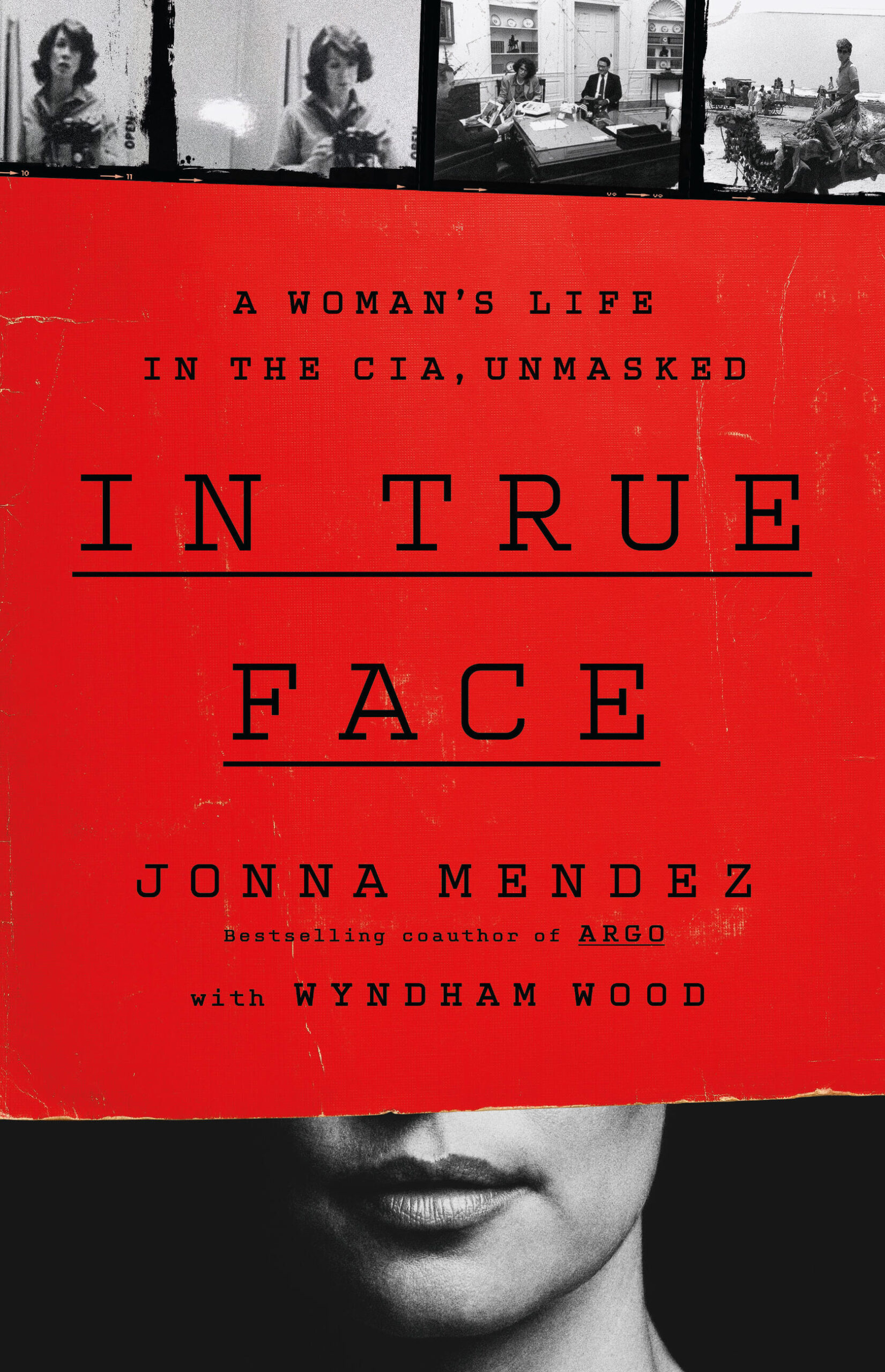
In True Face: A Woman's Life in the CIA, Unmasked
Jonna Hiestand Mendez began her CIA career as a “contract wife” performing secretarial duties for the CIA as a convenience to her husband, a young officer stationed in Europe. She needed his permission to open a bank account or shut off the gas to their apartment. Yet Mendez had a talent for espionage, too, and she soon took on bigger and more significant roles at the Agency. She parlayed her interest in photography into an operational role overseas, an unlikely area for a woman in the CIA. Often underestimated, occasionally undermined, she lived under cover and served tours of duty all over the globe, rising first to become an international spy and ultimately to Chief of Disguise at CIA’s Office of Technical Service.
In True Face recounts not only the drama of Mendez’s high-stakes work—how this savvy operator parlayed her “everywoman” appeal into incredible subterfuge—but also the grit and good fortune it took for her to navigate a misogynistic world. This is the story of an incredible spy career and what it took to achieve it.
-
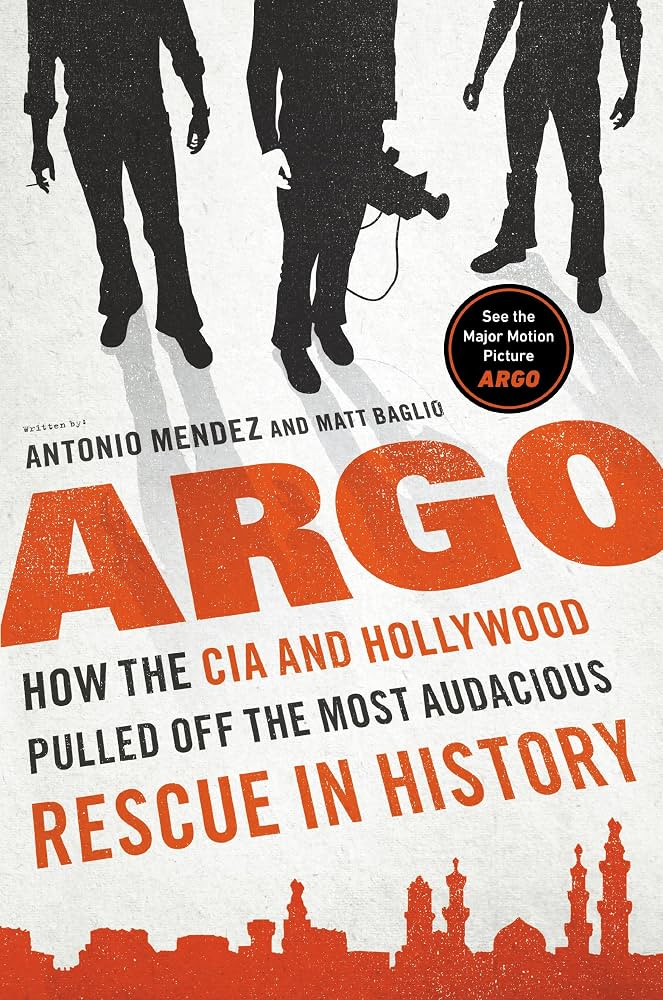
Argo: How the CIA and Hollywood Pulled Off the Most Audacious Rescue in History
The true account of the 1979 rescue of six American hostages from Iran. On November 4, 1979, Iranian militants stormed the American embassy in Tehran and captured dozens of American hostages, sparking a 444-day ordeal and a quake in global politics still reverberating today. But there’s a little-known footnote to the crisis: six Americans escaped. And a midlevel agent named Antonio Mendez devised an ingenious yet incredibly risky plan to rescue them.
Armed with foreign film visas, Mendez and an unlikely team of CIA agents and Hollywood insiders, directors, producers, actors, traveled to Tehran under the guise of scouting locations for a fake film called Argo. While pretending to find the perfect scenery and backdrops, the team succeeded in contacting the escapees and smuggling them out of Iran without a single shot being fired.
-
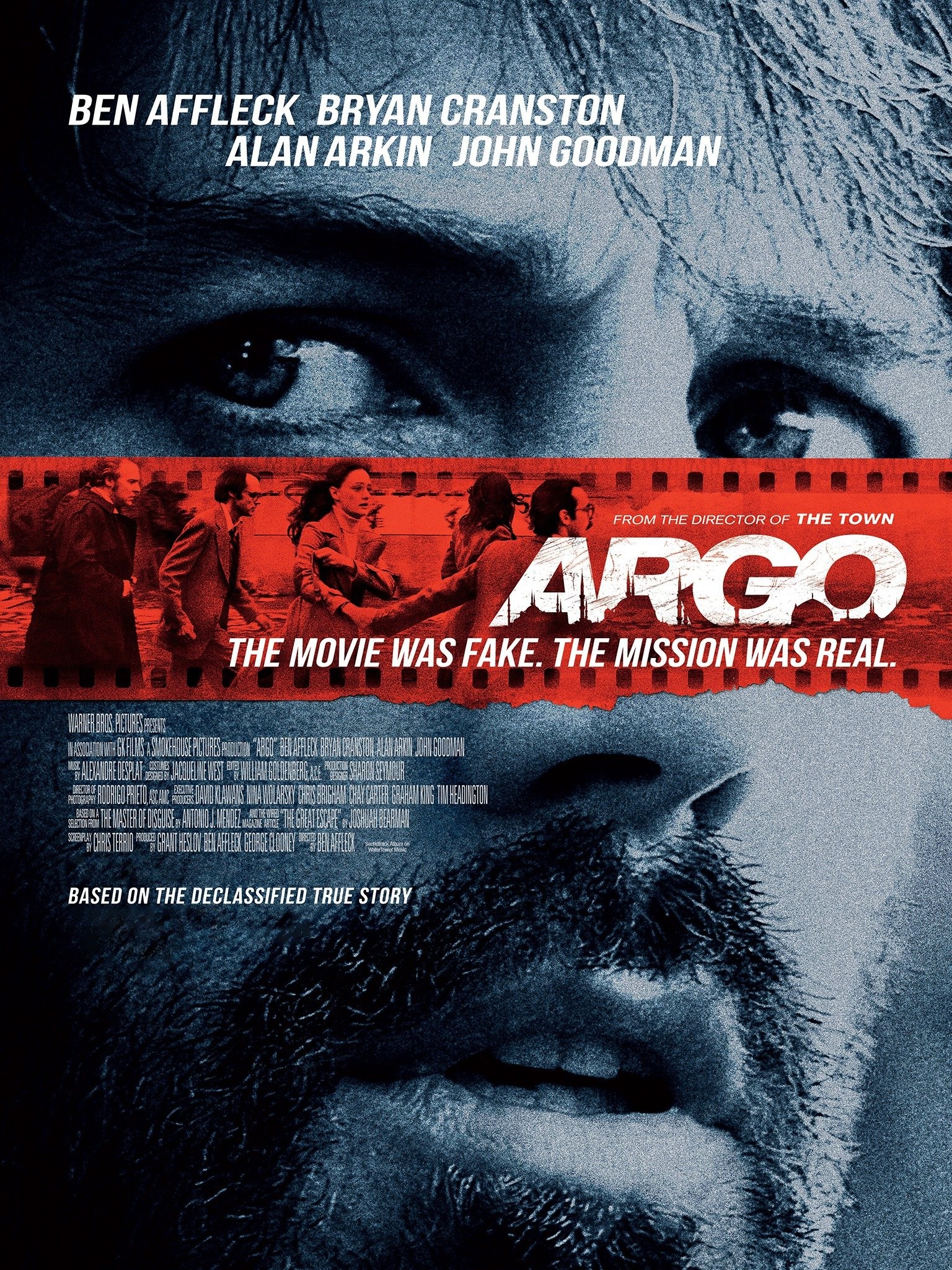
Movie: Argo (2012)
On Nov. 4, 1979, militants storm the U.S. embassy in Tehran, Iran, taking 66 American hostages. Amid the chaos, six Americans manage to slip away and find refuge with the Canadian ambassador. Knowing that it's just a matter of time before the refugees are found and likely executed, the U.S. government calls on extractor Tony Mendez (Ben Affleck) to rescue them. Mendez's plan is to pose as a Hollywood producer scouting locations in Iran and train the refugees to act as his "film" crew.
-
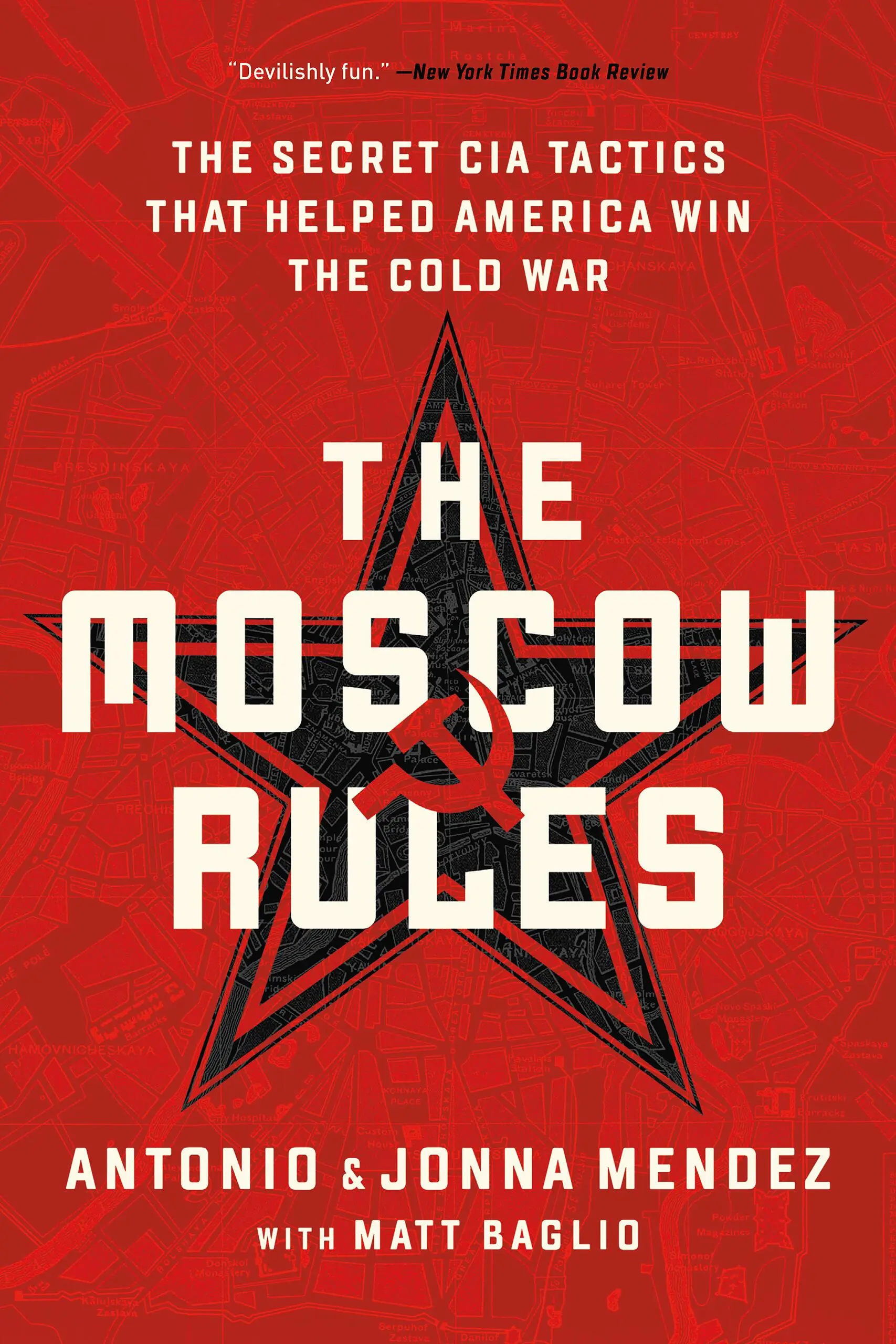
The Moscow Rules: The Secret CIA Tactics That Helped America Win the Cold War
Antonio and Jonna Mendez were CIA technical operations officers in Moscow during the dangerous final years of the Cold War. Soviets kept files on all foreigners, studied their patterns, and tapped their phones. Intelligence work was effectively impossible. The Soviet threat loomed larger than ever.
A vivid exposé that reads like a le Carré novel, The Moscow Rules sheds light on the brave collaborations between CIA operatives and Russian informants, and the innovative ways they avoided Soviet surveillance. As experts in disguise, Antonio and Jonna were instrumental in developing a series of tactics—from Hollywood-inspired identity swaps to an armory of James Bond–style gadgets—that allowed CIA officers to outmaneuver the KGB.
The Moscow Rules is the remarkable story of the undercover spies who risked everything for their country, and a tribute to the ingenuity that allowed them to succeed.
Resources
-
- The Wall Street Journal: The CIA’s Former Chief of Disguise Drops Her Mask
- CIA: Argo: The Ingenious Exfiltration of the "Canadian Six"
- FBI: Aldrich Ames
- International Spy Museum: Espionage Facts
- CIA: Intelligence Photography
- The New York Times: Reinventing Yourself
- Forbes: Courage Is A Habit: Practice It Daily Until It Becomes The Norm
- Harvard Business Review: Building Everyday Bravery
- Verywell Mind: 7 Ways to Feel More Courageous
- Healthline: A Beginner's Guide to Reading Body Language
- PsychCentral: Lips, Eyes, and All That: Reading and Understanding Body Language
- Business Insider: 19 science-backed tricks for reading body language so you can avoid awkward situations
- The Watson Institute: Social Skills to Read Body Language
- Verywell Mind: How to Understand Body Language and Facial Expressions
- BBC Science Focus: How to actually catch a liar, according to the new science of lie detection
- FBI Law Enforcement Bulletin: Evaluating Truthfulness and Detecting Deception
- American Psychological Association: Detecting deception
- Federal Probation: Lies, Liars, and Lie Detection
- Frontiers in Psychology: The Science of Lie Detection by Verbal Cues: What Are the Prospects for Its Practical Applicability?
- Wharton: Recognizing Deception: How to Spot a Lie
- Forbes: How To Build Your Confidence And Conquer Self-Doubt
- Forbes: Self-Confidence: How To Find It, How To Keep It
- New York Times: How to - Literally - Sound More Confident and Persuasive
- NHS: Raising low self-esteem
- Harvard Extension School: 5 Tips for Changing Careers
- Forbes: How To Change Careers, According To 50 People Who Made A Pivot
- Financial Times: Dressed to Disappear
2 Million Readers.
1 Life-Changing Newsletter
Simple and Straight-to-the-Point...
Just Like Mel.