Episode: 451
3 Signs You’re With the Right Person or if You Are Settling (Best Relationship Advice)
with Sawyer Robbins

How do you know if someone is the right person for you? When is it time to walk away? And how do you make a relationship work without losing yourself?
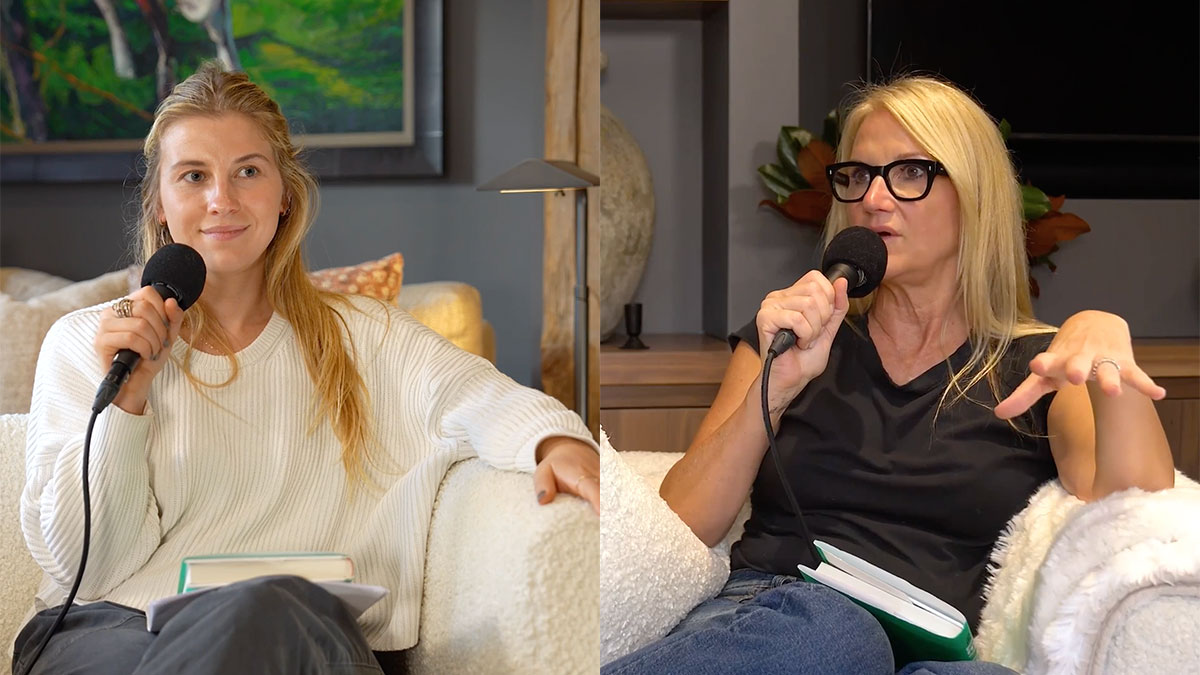
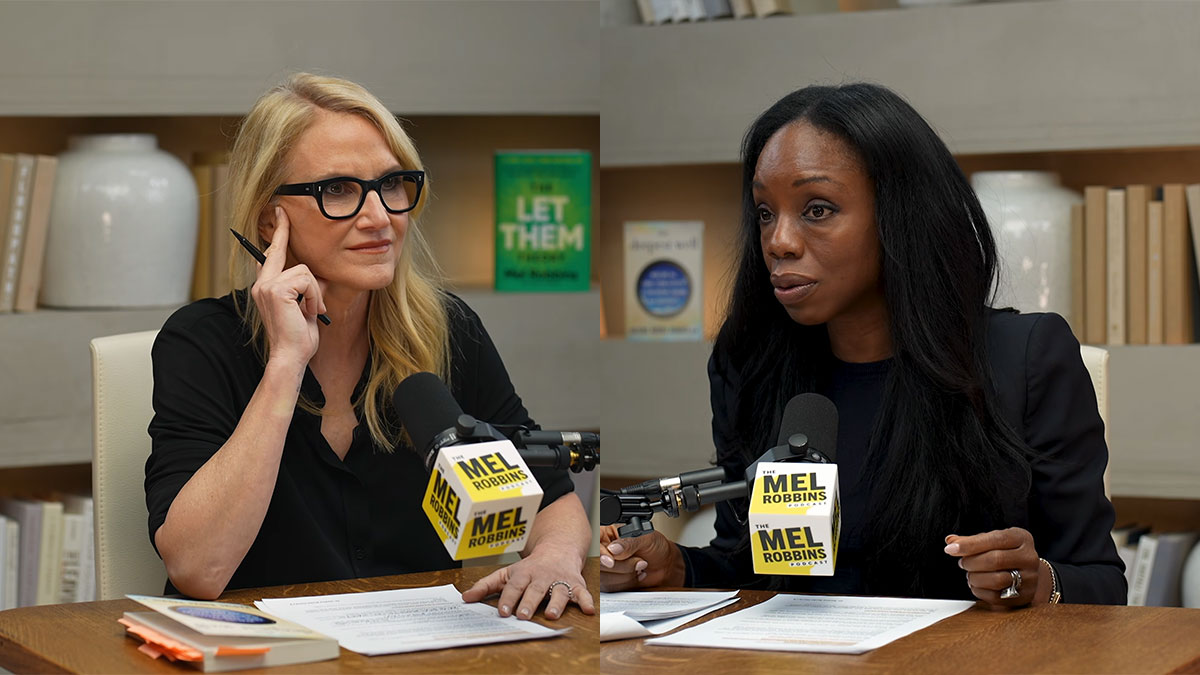
In this personal, funny, and honest conversation, Mel sits down with her daughter, Sawyer Robbins, to answer the hardest questions about love, dating, and relationships.
After 30 years of marriage, Mel shares what she wishes she'd known sooner, the mistakes she's made, the relationships she regrets, and what she's learned about making love last.
You'll learn:
- The 3 signs someone is an incredible person but not the right person for you
- How to know when to stay or leave
- Why you keep repeating the same relationship patterns
- How to navigate disagreements and compromises
- What to do when you're struggling to find love or get over a breakup
Whether you're single, dating, married, or starting over, this conversation will help you understand how to have more healthy, loving relationships in your life.
Listen on:




You cannot outrun your past, you cannot outdate your bad habits in relationships, and you cannot marry yourself into healing.
Mel Robbins
All Clips
Transcript
Sawyer Robbins (00:00):
My name is Sawyer. I'm 27 years old and I need advice.
Mel Robbins (00:04):
Sawyer is my co-author of The Let Them Theory. She produced our global tour and she was both in it, oversaw the entire creative direction of it. We basically turned our mother-daughter issues into comedy sketches to illustrate the lessons that we have learned the hard way.
Sawyer Robbins (00:23):
What's the single most important piece of advice you would give someone who's going through a breakup and feels like their entire future just fell apart?
Mel Robbins (00:31):
Your future did just fall apart. It was supposed to. And there's nothing wrong with you. You have not met a person that deserves you yet. Hey, it's your friend Mel, and welcome to the Mel Robbins Podcast. I am so thrilled that you're here with me today. If you're new, if somebody shared this with you, I also just want to take a moment and welcome you to the Mel Robbins Podcast family. Today, we are doing something that I've never done before. I am sitting here with our daughter, Sawyer. Sawyer is our oldest, oldest of three. If you're a new listener, my husband and I have been married 30 years. We have three kids. How old are you?
Sawyer Robbins (01:16):
27? I am 27.
Mel Robbins (01:17):
- Kendall who's 26. Oakley, who's 21. We are sitting in the TV room here in our Vermont house and our rescue cat, Mr. Noodle, has jumped on my lap and his eyes are open, but he's got that sort of dead weight of an animal that's sleeping. Anybody that has a cat understands what a precarious position I'm in right now because my legs are crossed and I already feel my foot falling asleep. But we are doing something that I've never done before. I have no idea what we're talking about. Sawyer has a clipboard in front of her. What are we doing?
Sawyer Robbins (01:52):
Hi, my name is Sawyer Robbins and today I have the pleasure of asking Mel, my mom, tons of questions about love, dating and relationships that I myself have had for a really long time. I've pulled from listener and audience questions I've gathered from my sister, my friends, all of who are in the same age group.
Mel Robbins (02:12):
Questions about love and relationships.
Sawyer Robbins (02:14):
Yep.
Mel Robbins (02:14):
Are these just questions you have about your relationship or are these random questions?
Sawyer Robbins (02:18):
These are random questions.
Mel Robbins (02:20):
Okay, because I know Gavin, your boyfriend listens to this show.
Sawyer Robbins (02:23):
Yes, he does.
Mel Robbins (02:23):
So do you want to say something to Gavin?
Sawyer Robbins (02:26):
Gavin, I love you so much and any of these questions I've probably already brought up with you, so you have nothing to worry about.
Mel Robbins (02:34):
I love that. Okay, good. So we can both weigh in and we can go straight for boom.
Sawyer Robbins (02:39):
The jugular.
Mel Robbins (02:40):
Okay. Well, you can go for the jugular. I'm just going to tell you what I think.
Sawyer Robbins (02:43):
Great. Okay. Let me start with the first one.
Mel Robbins (02:46):
All right.
Sawyer Robbins (02:47):
How do you know if someone is the right person for you versus an incredible person who just isn't the right fit?
Mel Robbins (02:58):
I'm going to give you three things.
Sawyer Robbins (02:59):
Perfect.
Mel Robbins (03:01):
Number one, you know. There is a deep, just awful dread when you have a sense that the person that you're with is amazing, but there is just something that's not quite right. And I know this dread because I have felt it with two people in my lifetime before I met your father, absolutely amazing human beings. And the truth is I probably could have had a really beautiful marriage and life with either one of them, but I was not in a place where I was healthy enough to be in a relationship.
Sawyer Robbins (03:49):
Do you feel like if you were healthy enough, you would end up marrying them?
Mel Robbins (03:52):
The first guy, yeah.
Sawyer Robbins (03:53):
Okay.
Mel Robbins (03:54):
Yeah. And we would've had a beautiful life together, but I was in my early 20s and I had undiagnosed ADHD and dyslexia. I was unaware of trauma that I experienced when I was in the fourth grade, and I was a walking anxiety attack. I was on edge or drunk most of the time. And it's very hard to be in a healthy relationship when you're not healthy. And it's not fair to the other person because they can try to make you okay. And new relationships are so distracting. Oh my gosh, it's intoxicating when you are falling in love with somebody. And it seems to wipe away all your problems because the, I don't even know what the neurochemicals are that are flooding your body, but goddamn do they feel good. And it's better than a Zoloft, let me tell you that. But what happens is when the relationship goes from lift off to cruising -
Sawyer Robbins (05:09):
Yeah, that's when all bets are off.
Mel Robbins (05:12):
Well, what happens is all of the flood of falling in love starts to disappear, which means all of the issues that you haven't dealt with in yourself come back. And then you make the mistake that I made, which is you think the problem is the other person. You think the problem is the relationship. Actually, no, you're the problem because you're not healthy. So there is a deep dread that you feel when you know that you are with the right person, but it's the wrong time.
Sawyer Robbins (05:46):
Okay.
Mel Robbins (05:47):
Or you're with the right person, but you're not right.
Sawyer Robbins (05:52):
Or you're with the wrong person.
Mel Robbins (05:54):
Or you're with a really, really good person, but they're the wrong person for you. And it begins with this deep knowing and you can sit with it for months. You can sit with that for years and you start to question whether or not you're a good person, you start to wonder what's wrong, you start to poke holes at this person who's wonderful and they don't deserve it. And that's because deep down, you're not in integrity with yourself. And it's easier to pick at somebody else than to look in the mirror and go, okay, what is wrong in terms of the things that I need to deal with so that I'm healthy and what are the things that I really want in life and is this person truly someone that can build that life with me? And so that's number one. I think you do know, and it's just a very, very difficult thing to tease out and to start admitting to yourself that you are with an extraordinary human being and a really kind person and a loving person and they're just not the right person for you right now.
(07:12):
That's number one. Second is that you have to give up something that matters to you deeply in order to be with this person.
(07:28):
And this one comes from research. The Gottmans, as you're listening or watching, are probably the most legendary relationship researchers on the planet. They've also been married for like 40 some years. They've been doing this for five decades and their relationship is very conclusive that it will not work if you have to give up on your dreams or you have to go against your values in order to be with this person. Let's just say that you've always dreamt of going to graduate school and owning your own business and you fall for somebody who's incredible, but they want you to be a stay at home person that never ever has a job. But they're a great person, but they're wonderful, but they make a lot of money, but oh my God, that's a part of my life.
Sawyer Robbins (08:16):
That's a no.
Mel Robbins (08:17):
That's a no because when you think about your life, you've always had a dream of having your own money. When you think about your life, you've always dreamt of building something that's your own. When you think about your life, you've always thought about having four kids and a supportive partner and they're supporting you in your business and you're modeling this thing. And for you to give up something that you dream about or you to go against your values, it will never work and you'll start resenting the other person because you made a choice to prioritize them over the vision that you had for your life.
Sawyer Robbins (08:55):
The wheels are spinning in my mind.
Mel Robbins (08:57):
The third reason is you cannot accept them for who they are. The Gottmans also say that 69% of the things that you bicker about that drive you crazy about your partner, never going anywhere, never. And it is an act of violence against somebody else and an act of violence against yourself to be in a relationship where you are constantly criticizing and nitpicking something about this person that's always been there. I mean, just stop and think about that. Would you want to be in a relationship with some guy who thinks you're amazing and yet when you're not there, he's bitching about the fact that you're not skinny enough or complaining that you're too... I love Sawyer, but God, she's just too ambitious.
(09:49):
If I could just get her to stop working, being in a relationship with somebody that you fundamentally want to change who they are, that's not fair to the other person. It's not fair to you either. And I think that's most relationships by the way. And there's a difference between having things that annoy you, that's normal marital hatred. There are things about your father that drive me crazy, crazy. He is the world's slowest processor. The man, it's like the wheels are turning and, thank God, he's a deep thinker. He chooses his words carefully, and it's something that I have come to love about him and cherish about him, but it drove me crazy. And what I realize now is that if I had been in a relationship with somebody like me, we would've killed each other in a matter of a year. And so again, those things are, number one, you know deep down and you haven't been willing to admit that you're not healthy and you got work to do.
(10:58):
Number two, you got to give up on dreams or
Sawyer Robbins (11:00):
Values
Mel Robbins (11:01):
To stay with the person. Or number three, you fundamentally cannot accept the things that haven't changed.
Sawyer Robbins (11:11):
So I feel like there needs to be a clarification. I was talking to one of my sister's friends who's going through, should I get back with my ex? Should I not? What she's experiencing is not traits in which someone can learn how to do. She's experiencing this person is boring, this person is not funny. These are fundamental things about who they are versus things that someone can eventually learn, but you still want to change that about them.
Mel Robbins (11:44):
Well, there's a big difference between skills and habits and somebody's underlying personality and what they're motivated by in life.
Sawyer Robbins (11:55):
Okay. Speak more about that.
Mel Robbins (11:56):
So skills and habits are things people can learn. Learning how to pick up after yourself, especially, and I'm going to go on the record and piss a lot of people off, but there's a lot of guys out there who were just smothered by their mothers. They're used to somebody else picking up after them, and now you've handed over a giant man child to a young woman who's like, "I don't even know if I want to marry you because you are missing some skills." And so there are skills that people can learn, and there's also habits that people can learn to be in a healthy relationship. And participating in the maintenance and the upkeep of the home you live in is not a fricking gender role. It is part of being in an adult relationship. And so building those skills and building habits that have you be a person that is contributing to a relationship in a healthy way are very, very important.
(12:56):
What you're talking about is does somebody have underlying traits or issues that are a problem for me? And if I'm with somebody who's not interested in other people, you're out. If I'm with somebody who's not fun, why the hell do I want to spend my life with you? If I'm with somebody who's mean to other people, I am leaving the date. If I am with somebody who is not an intellectual person, who's intellectually curious, I can't be with somebody who, for example, doesn't care about the environment or earth. I can't be with somebody who isn't committed to making the community that we live in better. I can't be with somebody who's not kind. Do I have to be with somebody who's hilarious? No, I don't. I can bring the fun, but I really need in my partner traits around kindness, around curiosity, around partnership, around adventure.
(13:57):
Those are the things that I value, and those are hard things to teach in someone.
Sawyer Robbins (14:01):
Yeah. And that's what I feel like for those of you listening, you need to distinguish. Is it a habit or a skill that this person can learn or is it a fundamental trait of this person?
Mel Robbins (14:12):
Yes. If you're with somebody that's boring, they're going to get more boring.
Sawyer Robbins (14:16):
Yes. Okay.
Mel Robbins (14:17):
People -
Sawyer Robbins (14:17):
Phenomenal.
Mel Robbins (14:18):
But also, here's the thing, you may be with somebody who makes a lot of money right now. Guess what? They can also lose a lot of money. And what I've always told you guys is you want to be with somebody who feels like home base. You want to be with somebody who is an exhale, a smile, and a hug, because life is long and life is hard, and it's easy to be with people when things are great. It's easy. You could date a lot of people. You could even be married to a lot of different people if you've got a lot of money. You can be dating somebody and married to somebody when you look fantastic and so do they. You can be dating or married to somebody when everything's going well and no one's parent is dying and no one's kid is going through lots of problems at school.
(15:05):
Oh, that's easy. What you want is somebody that you can do the hard things with. What you want is somebody that after a really stressful day at work and an hour and a half commute home, oh my God. And you don't even know what you're going to have for dinner because you haven't been to the grocery store in 10 days, but when you walk in the door, can you exhale? Do you smile when you see this person? Are you happy when they give you a hug? If you have those three things at the end of a stressful day, you have everything that matters. You really do.
Sawyer Robbins (15:45):
Period. Love that.
Mel Robbins (15:47):
Yeah. And everybody gets fat. Everybody loses hair. Shit, you should have seen the amount of hair that came off my head in the shower this morning.
Sawyer Robbins (15:54):
Same.
Mel Robbins (15:55):
What is happening? Everybody's bodies change. Life changes. Are you with somebody that you're like, again, it's the James Sexton advice that he shared on the Mel Robbins podcast. You're my favorite person. Even when you're fat, you're my favorite person. Even when you're struggling because one of your parents is dying, you're my favorite person. Even when you're unemployed and you're down in the dumps because it's a really terrible job market, now you feel like a piece of shit because you're not earning money, you're still my favorite person.
Sawyer Robbins (16:29):
Yeah, I love that. That's really helpful. Okay.
Sawyer Robbin (16:33):
How do you know when it's time to be single?
Mel Robbins (16:36):
If you have been in a series of relationships and you have never taken a break, you're an overlapper. And if you're an overlapper, you know what I mean. You're sort of like somebody doing the trapeze where before you let go of this one, you're grabbing the next one. You need to be single because you have been using relationships as a way to regulate yourself instead of dealing with the issues and patterns in your life that are making you unhappy. Another person does not solve the deeper issues in your life. Another person is a distraction that keeps you from healing and growing and fixing the things that you need to fix longer.
Sawyer Robbins (17:21):
I cannot wait to send that to so many people I know.
Mel Robbins (17:23):
No, it's true because I was that person. I was that person that from the age of 13 all the way until meeting your father, I was always in a relationship.
Sawyer Robbins (17:36):
So you never had a single moment.
Mel Robbins (17:38):
I have never been single since I was 13, and it cost me a lot.
Sawyer Robbins (17:43):
Yeah. Wow.
Mel Robbins (17:44):
I don't have the group of girlfriends that I see you and your sister having from college because I was always in a relationship, always. I was that girl that was always in a relationship and I really regret it. And it delayed my healing by at least 15 years.
Sawyer Robbins (18:02):
And I think we need to clarify because today's day and age, there's so many people who are "not in relationships," but they're still dating. But when you are dating, you are in a relationship. And so if you are continuing to see someone consistently, even if you don't have the title of boyfriend-girlfriend, you are still not having that single era.
Mel Robbins (18:21):
Correct, because you're putting a ton of energy into what this other person is thinking and how do I spend time with this person and what should I be looking like for this person versus really having time by yourself.
Sawyer Robbins (18:40):
I think that was the best thing I ever did was be single for six years.
Mel Robbins (18:45):
I'm so jealous, honestly. It's one of the biggest regrets of my life that I was always in a relationship when I was young. If I could go back and wave a magic wand, I would make myself single for my entire college and law school years, and that would've also saved these two wonderful men the headache and heartache of having to deal with me during a very self-destructive period of my life.
Sawyer Robbins (19:12):
And I feel like I was, during those six years, which was college and the two years after, I was also in such a destructive anxiety ridden place that I can now look back and see, and I can't even imagine having a boy to point that at. Instead, it was just all internal. I can't imagine constantly having a man. I wanted one. A distraction. I wanted one, but -
Mel Robbins (19:38):
Of course you do, because when you're in a relationship, you gaslight yourself into believing that because somebody's choosing you, you're okay.
Sawyer Robbins (19:44):
Yes.
Mel Robbins (19:46):
And the relationship is a sign that you're functioning.
Sawyer Robbins (19:48):
Yes.
Mel Robbins (19:49):
And for many people, myself included, the relationship was a distraction, and it allowed me to avoid dealing with myself and the things about myself that I needed to change.
Sawyer Robbins (20:06):
Totally.
Mel Robbins (20:07):
Somebody else's acceptance made up for the fact that I didn't accept myself.
Sawyer Robbins (20:14):
Yes. That's so powerful.
Mel Robbins (20:16):
And here's another reason why it's really important to understand when you need to be single. So if you're in a situation also where you have been in one or two relationships where things ended poorly or you're devastated and now you're doing that thing where you're like, "Well, they were a freak and what a nightmare and you're blaming it on the person." There's very important research that I learned about when we were writing the Let Them Theory book Together, Sawyer. If you don't take a period of time to be single and to take a look at the patterns in the last two or three relationships you've been in, you will repeat the pattern with the new person over and over and over again. You cannot outrun your past, you cannot outdate your bad habits in relationships, and you cannot marry yourself into healing. Those are individual things that you need to do.
(21:27):
And so if you have a friend or a daughter or a mother or a brother or anybody in your life, you're like, "Why do they just keep dating these losers? What is wrong with this person? They're amazing. Why do they end up with people that treat them like this? I just don't get it." What's happening is there is a pattern from their past that is getting repeated and they are subconsciously choosing people and that pattern gets recreated. And until you stop and you are single and you work with somebody, you worked with a licensed mental health counselor to understand what are the things in these relationships that all connect, and it probably connects to your childhood too, and what are the patterns I need to see in myself that I also need to break and replace with new patterns? And you will just keep on doing it.
(22:24):
And if you are used to being in a relationship where you're constantly chasing this person and you're being disrespected and you're not feeling empowered and you feel kind of devalued and you start to tell yourself, "Well, if I can just get this person to like me and to leave their girlfriend, then I'm going to feel good about myself." It's not the person, it's the pattern. And you can't break that pattern while you're in a new relationship.
Sawyer Robbins (22:49):
Phenomenal.
Mel Robbins (22:51):
I am so excited that Hyundai is a new sponsor of the Mel Robbins podcast because winning an award over and over again takes a real commitment to being the best, and that's exactly what Hyundai has done. Hyundai has been named America's Best SUV brand for 2026 by US News and World Report. Now that's the fifth time in six years. So they're on a roll and they're award-winning and they're consistent at doing it. So whether you're driving the kids around town or heading out on a road trip, Hyundai has an SUV for you. There's the Tucson Hybrid packed with technology for your everyday life, the Santa Fe hybrid built for that fun adventure that you want to go on, and the Palisade hybrid with premium features and class leading interior space. Plus, with available H-Track all-wheel drive up to an EPA estimated 619 miles of range, view US News best cars at cars.usnews.com and call 562-314-4603 for complete details.
Sawyer Robbins (23:51):
This comes from someone in Kendall's network, my sister. "My partner is incredibly ambitious and pursuing their dreams heavily, but I feel like I've taken a backseat in the relationship. How do you make sure both people's dreams matter equally?"
Mel Robbins (24:08):
So you have taken a backseat and you should.
Sawyer Robbins (24:12):
Okay.
Mel Robbins (24:13):
There are periods in life where focusing on your ambition and the thing that you want to create comes first. You cannot build a massive business and also be there all the time for your kids. You cannot write a book and pour yourself into it and pour the exact same amount of time and energy into your relationship. That's just the truth. And understanding that there are periods of your life where your ambition should come first, because if you don't put in the time and you don't put in the energy, you will live with that regret for the rest of your life. I think about your sister right now. She is meant to be out in the world singing. It is so obvious to everybody that knows her. And she said to me the other day, "I'm so happy I'm single right now," because the period of my career that I'm in right now needs all of my attention.
(25:21):
And if you're in a relationship with somebody who is wildly ambitious and you're starting to feel like you're not as important, number one, you're not as important, and number two, that's a huge wake-up call for you to figure out what is the purpose for your life. What are the things that make you feel like what you're doing matters? Because there is more to life than being somebody's girlfriend or wife. There is more to life than being somebody's mother. There is a contribution that you are here to make, and if you're in a relationship with somebody who has massive ambitions, you should take time to figure out what are your ambitions. And here's the twist on this. Ambition doesn't have anything to do with money. Ambition is the drive that you have to create and experience things. I happen to be a person that is extraordinarily ambitious.
(26:23):
I love building things. I love the creative process. I wake up every day excited because it creates meaning and drive and a sense of purpose for me. Your father is extraordinarily ambitious, and the last thing he is ever thinking about is money. You can be ambitious in the way that you support your partner and the way that you raise kids. You can be ambitious in how you volunteer in the road races that you run, but you need to have something that's yours.
Sawyer Robbins (26:59):
Right. So let me ask a follow-up question. I know a lot of people who feel like their partner's career and their partner's ambition is driving every decision in the relationship and their decisions don't matter. So is your advice to basically say, screw what your partner's doing, don't move to the city because you don't want to?
Mel Robbins (27:18):
It's a yes and.
Sawyer Robbins (27:19):
Okay.
Mel Robbins (27:19):
So here is the truth, and I don't like this, but it's the truth.
Sawyer Robbins (27:25):
Okay.
Mel Robbins (27:27):
The person who typically makes more money drives the decisions. That's one of the reasons why I have been adamant with you and your sister that you need to make your own money because money is power. Money is freedom. Money gives you choices. And if you're in a relationship with somebody whose career is driving every decision, that's okay. If you're married to somebody who's in a residency program, you have two choices. You either move with the person because this is the phase of the career that they're in, and this is the life that you're building together, and you supporting them by going with them, that's the right decision.
(28:09):
Or you do a yes and, "How are we going to figure this out?" And these are very, very personal things for you to figure out, and maybe it's going to be like a relay race. There are going to be periods where your partner's career and ambition comes first because they're in the build mode or they're in the graduate school mode or they're the one making the money and you've been raising kids or you've been on a different track. You're a teacher, you're a nurse, you're somebody doing a really important job that unfortunately society does not value and is not paying you what you deserve. What you're doing has worth and it matters. Supporting somebody you love through something that they care deeply about matters. When your dad was getting his master's degree, his MBA at Babson, and it took him seven years, Andy was working full-time and I'm working full-time.
Sawyer Robbins (29:06):
And you moved to Boston for that.
Mel Robbins (29:08):
I moved to Boston for that. I left a job that I loved. I wanted to kill him, but I chose to do that because I loved him and it mattered to me that we were together. It was more important to be with him than to stay in a job and be in a city alone without him. That's a choice I made and I wanted to make it, and I'm glad I did. So the important thing is that you and your partner are talking about this stuff and you're talking about the timeline of it, and you're talking about what each of you are going to have to do in order to make this work. And if you're the one that's agreeing to the move, if you are the one that is alone a lot because they're off at graduate school, you have to ask yourself, "What do I need in return?" And you need to be clear about that.
(30:00):
And you need to communicate that clearly. And when it changes, I need more time from you. I need us to have Saturdays, just us, not any of your stupid friends at graduate school because I don't care about them. I need time with you. You need to be responsible for what you need in return for all of the things that you're giving and all of the things that you're giving up. And if you can't communicate that, you're going to start to resent the person.
Sawyer Robbins (30:27):
No, I love that. That's really, really helpful. Really helpful.
Mel Robbins (30:31):
Because it is a give and take. I'm a realist when it comes to the fact that you can't do everything and be everything for everybody at every moment. And the answers are when you get quiet and you ask yourself the important questions. What do I want? Not, what does Sally have? What does Susie have? What are those people doing on their bachelorette part? No, what do I want? What do I want? What do I care about as a person? If you can't answer those questions, you will always be lost in life.
Sawyer Robbins (31:06):
That is the constant status of how we all feel is paralyzed and unable to make a decision.
Mel Robbins (31:12):
Well, so there's no right decision, by the way. There's just a decision. And then what you do after you make the decision to make it right. I want you to really hear that. All of the effort and time and energy that gets put into making the right decision, the perfect decision, there is no perfect decision. There are just decisions that you make and then you figure it out. And most decisions are not permanent. Even a tattoo you can get off. There are very few decisions in life that are like a bell you can't unring.
Sawyer Robbins (31:54):
I have a lot of thoughts, but we'll get there.
Mel Robbins (31:56):
Okay.
Sawyer Robbins (31:56):
How do you support a partner who's struggling to find a job or figure out their career without becoming controlling, critical, or feeling responsible for their success?
Mel Robbins (32:06):
This is a really hard one because your dad, I believe was laved off from seven jobs in nine years. You cannot force somebody to be motivated. You cannot force somebody to be ambitious. You cannot force somebody to be successful in a career they don't like. It takes some of us a very, very long time to find our way. And it's extremely difficult to watch somebody that you care deeply about and that you believe in slowly lose belief in themselves. And right now it's important to understand that we are in an extremely difficult job market and we are in very weird times, at least in this country and scary times. And there's so much change that's happening, it's very easy to feel paralyzed. And I think the most important thing that you can do if this is a person who you see is making the effort is to allow them to borrow your belief and optimism that this will all work out.
(33:30):
You being able to authentically say, "I trust the timing of your life. I trust that you are going to figure this out. I trust that even if it takes you a year before you find a job, that you will look back and you will see the reason why it took a year and you will understand that all of this, as Oprah says, is happening for you." And so here's what I've learned the hard way. The person that's looking for a job already feels like shit about it. They're already beating themselves up. They already feel bad.
(34:13):
Do not make them feel bad because they're making themselves feel so bad. They're doing it as if 10 people are putting pressure on them. They're putting so much pressure on themselves. You think they want to be unemployed? Of course not. Do you think they feel good not making money? Of course not. So you adding more pressure, you adding concern just makes that weight heavier. It's critical even when you don't believe to continue to say, "I know this is all going to work out. I know it's going to be tough. I know it's going to take longer than you and I want it to, and I see how hard you're working at this. And I know it's not easy. And I believe that you didn't get that job because you weren't supposed to. You are not succeeding at this because you're not supposed to be succeeding at this.
(35:04):
You're supposed to be a teacher. You're supposed to be a therapist. You're supposed to be a golf pro. You're supposed to be somebody that buys a small business with your dad and you own a small business in a community. You're not meant to be a person doing... You know what your dad was trying to do? He was trying to do tech sales. He hated it, but he was trying to be good at something he hated. You will never be good at something you hate. You just have something different that's meant for you. And some people need 11 layoffs to figure it out. Some people need to be unemployed for a year to realize, well, this isn't working. Maybe I need to make a radical change. It is critical if you're looking for a job that you create something that you can control that makes you proud of yourself.
(35:55):
And I would highly recommend that you structure a physical thing. This would be a perfect time to train for a marathon. This would be a perfect time to do a challenge like 75 hard. This would be a perfect time to take on a project that gives your day-to-day life structure. Now, here's the caveat. If you're with somebody that's looking for a job and they're slowly starting to disengage and they are sleeping in and they're drinking more and they're spending a ton of time online -
Sawyer Robbins (36:28):
Or watching TV.
Mel Robbins (36:29):
Or watching TV nonstop, you've got to really watch that. And when we had Dr. Jonathan Height on the Mel Robbins podcast, he is a professor at NYU. He wrote that blockbuster bestselling book, The Anxious Generation, and his research also became some of the foundational research in the big landmark settlement cases. He came on our podcast and said, after doing all this research where a lot of the research and a lot of the attention was on how social media impacts girls and women through comparison, isolation, amplifying self-doubt, self-criticism, he believes they have completely underestimated the impact on boys and men. And that if you spend too much time online consuming short form content, porn, gambling sites and betting and social media, the cheap dopamine really screws up the reward center in the brain and you will start to see the guy in your life withdrawing, you'll start to see a lack of motivation.
(37:40):
And it's not because they don't want to be motivated, it's the way that this cheap short form content and being online is screwing with their brain. That you really have to watch out for.
Sawyer Robbins (37:54):
And the solution is to take the phone away, right?
Mel Robbins (37:57):
Well, the solution is to sit down and have a constructive conversation, basically saying, "How are you feeling about the job search? How are you feeling about how much time you're spending online? I'm noticing that you're withdrawing a lot and do you experience that? What do you think you might want to do about this?" You have to be with them. If you bark orders, they're not going to do it and you're going to shove them in their corner. And then I would highly recommend you send them the episode that we did with Jonathan Hite. We'll link to it in the show notes because let them hear it from the expert. It's not you. It's how being online is screwing the reward center of your brain and that's what's causing the lack of motivation. And the good news is you can fix it. You got to get off your phone for two weeks, but your brain can pretty quickly reset.
(38:46):
That was what he said.
Sawyer Robbins (38:48):
Incredible.
Sawyer Robbins (38:50):
How do you encourage your partner to get outside of their comfort zone?
Mel Robbins (38:54):
Well, why do you want them to get out of their comfort zone?
Sawyer Robbins (38:59):
Because I know that a lot of growth can come by trying new experiences and pushing yourself out of your comfort zone. In my own experience and in my own life, that is the best way I have learned how to grow. And I have had some of the best experiences of my entire life by pushing myself out of my comfort zone, but I don't know how to properly push my partner or motivate my partner or ask my partner to push them out of their comfort zone without them feeling attacked.
Mel Robbins (39:31):
It is important when you say push someone out of their comfort zone to first honor who you're dealing with, because your idea of what a risk is and pushing yourself out of is terrifying to most of us. And learning that you need to first accept the person that's in front of you and understand, and I love this analogy, I've been sharing it a lot, that Oprah Winfrey learned from Pastor TD Jenks, that there are 10 gallon people and there are pint-sized people. There are people who need 10 gallons of love, attention, risk, adventure, growth, deep conversations, and then there are pint-sized people who only want a pint size of risk and growth and deep conversations. And it doesn't mean that 10-gallon people are better than pint-sized people or pint-sized people are better than 10-gallon people. We're all just a little bit different.
Sawyer Robbins (40:27):
But can 10-gallon people only be with 10-gallon people?
Mel Robbins (40:31):
No. 10-gallon people can be very happy if they recognize they're with a pint-sized person, and they can lovingly accept that when a pint-sized person gives you the entire pint that they have to give, or they take a pint-sized risk in your mind, that they have done the impossible. And learning how to celebrate and truly acknowledge when a pint-sized person takes what feels like a 10-gallon risk, but because you're a 10-gallon person, it just looks like a tiny... Come on, you can do more. You just invalidated something that they did that was a big deal. And not celebrating the small moves on somebody that's not naturally like you is the fastest way to shove them back in the corner and make them never take a risk again. And so yes, you can be very happy if you stop trying to make somebody they aren't and you celebrate every small little bit of growth, even though it's not enough for you.
Sawyer Robbins (41:40):
Incredible.
Mel Robbins (41:42):
Is that helpful?
Sawyer Robbins (41:42):
Yes, very.
Sawyer Robbins (41:44):
I don't want to change my last name when I get married, but my partner who's very traditional feels strongly that I should and feels they would be deeply offended if I did not change my last name. How do we navigate a disagreement where neither person wants to budge?
Mel Robbins (42:02):
Okay. Go a layer deeper. Why does this matter? What does it mean to you if I am introduced to somebody you work with or somebody from your childhood and I have a different last name? For me, I kept my name initially. I don't know why, because it was Melanie Schneiberger. Who keeps that name? You would've thought I would've dropped that sucker like a hot potato when I met Christopher Robbins. And I just kept it, honestly, because it was kind of a hassle to change everything. And then we had you. And I remember we were booking plane tickets and something happened with the plane changing and us getting moved to a different plane and they separated me from you and dad. You had dad's last name. And it was the first time I though, oh, wait a minute. I want to be a unit. And so when life changed, I started to feel a change in my identity.
(43:08):
If you are in a stalemate with your partner
Sawyer Robbins (43:11):
In
Mel Robbins (43:11):
Something, go a layer deeper. Help me understand why this matters so much to you. Help me understand if I'm introduced, let's just say as Melanie Schneiberger, what happens for you? What does that mean? And what happens if they introduce me as Melanie Robbins, and what does that mean to you? And then you explain, well, I want to keep my name because I have a huge career. Couples navigate this kind of stuff all the time. What religion are we going to raise our kids? How about both? What name am I going to go by? How about both? I keep my name professionally and on our marriage license and my driver's license, it's fine. You can introduce me as Mel Robbins, not Melanie Schneiberger, which now seems absurd because I have not had that name for 25 years. What's the next question?
Sawyer Robbins (44:06):
I don't feel desirable or confident in dating anymore. How do I rebuild my confidence when I feel like nobody is choosing me?
Mel Robbins (44:18):
It is so easy, especially in today's world, to feel like you're just reduced to a piece of meat. And this is going to sound like the cheesiest and dumbest eye roll advice, but if nobody's choosing you, you have to make some changes in your daily habits that make you feel like you're choosing yourself. And that is a wind chime that you're probably hearing in the background. And that's a wind chime, by the way, that was given to me when our dog Amigo died. And whenever it rings like that, I feel like Amigo's saying, "Yep, that's true. That's true." So Amigo liked the cheesy advice, but it's true.
(45:02):
This is so disheartening when you feel like nobody's choosing you because you wonder what's wrong with you, and there's nothing wrong with you. You have not met a person that deserves you yet. That's it. And it doesn't mean you're never going to meet them. It means you haven't met them yet. And what I would recommend that you do during this period of time where you're still single is what change, what habit, what hobby, what class could you take? What thing could you change that makes you feel really good about yourself? And I would highly recommend it's something physical. If you've always wanted to learn how to shuffle dance, go take a class. If you've always wanted to learn how to be really good at jump roping, I see a lot of people doing that online, I'm like, "I kind of would like to be really good at that." Go take a class.
(46:02):
Stop putting your life on hold, waiting for the right person, and start filling your life now with the things that you've been putting on a shelf for when you find the one. Get in the best shape of your life. I can't tell you how important it is to understand that you change your mentality by changing your physicality, that when you move yourself physically, it changes your mindset. Physicality shifts spirituality, physicality shifts your mentality, physicality shifts your emotions, and that is something you can control. Getting stronger in your body. If you've never gone to a gym and you've never lifted weights, march into a gym, spend your extra money, not on dating apps, spend it hiring a trainer once or twice to work with you so that you can learn how to walk into a gym and lift weights. Physicality changes your mentality and something will shift.
(47:05):
And I know it sounds dumb and I know you don't believe it, and I know you feel beaten down by life, and I know you're tired of going to weddings and engagement parties and bachelorette parties. I know you're tired of seeing everybody else live out the dreams that you want. I am telling you, you haven't met the right person yet. You haven't met a person who deserves to be in your life. And instead of succumbing to sadness, I want you to pull up your big girl panties and I want you to choose a couple changes, even just one.
Sawyer Robbins (47:39):
I love that.
Mel Robbins (47:40):
Because the more time you spend trying to find somebody, chasing somebody, the worse you're going to feel. Stop looking and start looking to yourself. That's what I would say.
Sawyer Robbins (47:53):
Okay.
Sawyer Robbins (47:55):
So I have a few friends who just broke up with their significant other last week.
Mel Robbins (48:02):
Wow.
Sawyer Robbins (48:03):
I have sent all of them the breakup episode that you and I both did because there's so much good advice and tools in the episode that we did right here. But right now, what's the single most important piece of advice, one piece of advice you would give someone who's going through a breakup and feels like their entire future just fell apart?
Mel Robbins (48:23):
You're right. Your future did just fall apart and it was supposed to. The reason why you're breaking up is because you are not supposed to build a future with this person, and that's why the relationship ended, and it hurts because it mattered. And so the number one piece of advice that I want to give you is to understand that you're grieving and it's okay to feel scared and uncertain and also somewhat excited because everything that you've been thinking about, all of the things that you've been imagining, all of the role playing and fantasies that you have had in your mind about how this turns out is dead and you're now faced with a brand new reality. And the number one piece of advice is honor that it's a big change and that it's going to take time. That's it.
Sawyer Robbins (49:22):
Great.
Mel Robbins (49:22):
And the hardest part about a breakup is not the breakup. It's tolerating the three months that come next. Even if you're the one that broke up with the person and ended the relationship, you're still grieving this future that you had, and your body is having to unlearn life with this person. Your mind is having to unlearn the fantasy that you are projecting over and over in your imagination, and it takes time. You will feel better in three months. Do not fill the next three months with a new relationship or sex with your ex, because it takes you right back to day one.
Sawyer Robbins (50:01):
Incredible. Thank you so much.
Mel Robbins (50:03):
Sawyer, those were excellent questions about love and relationships. What's your big takeaway?
Sawyer Robbins (50:09):
What is my big takeaway?
Mel Robbins (50:20):
Well, I can see you're a slow processor like your father.
Sawyer Robbins (50:28):
I think that my biggest takeaway and what seems like a really big thread throughout all of your answers, even if you didn't say this, is just that communication wins every single time.
Mel Robbins (50:40):
Terry Real, who is a very famous couple's therapist, came on the Mel Robbins podcast and said the most important thing to remember about relationships, you can be right or you can be connected, but you can't be both. And every disagreement, every standoff, every thing that drives you crazy, every skill that you wish your partner would learn or habit you wish they would change is an opportunity for you to go a layer deeper than the thing on the surface and truly get connected to the person that you care about and understand what's really going on or what is the thing that is the deeper reason why something matters to them. And when you go and are able to get deeper beneath the surface, you will now have a deeply meaningful and lasting and supportive relationship. All that stuff you want to... Nothing's changing, but you can be more connected.
(51:48):
You can truly support one another as you grow throughout your lifetimes. That's the best relationship is a relationship where you both grow.
Sawyer Robbins (51:59):
Yeah.
Mel Robbins (52:00):
You really want to be a soft landing for each other and you're not going to create that by feeling like you're right and it's got to be this way and I'm going to boss this person around. That's not going to lead to a relationship where either one of you are happy. That's what leads to people's drinking problems and cheating and the passive aggressive behavior and feeling like you're living on different planets. It really comes down to you can be right or connected. And when you look at this person, even though they're wearing a pair of stained sweatpants and they fell asleep with the remote in their hand and the NFL games on and the dishes are in the sink, can you still look at them and be like, "You're still my favorite person. I wish you'd lose a few pounds, but you're still my favorite person." If you can say that, you have a winner.
(52:59):
You did a great job.
Sawyer Robbins (53:00):
Thanks.
Mel Robbins (53:02):
I love you. I'm so proud of you.
Sawyer Robbins (53:04):
Thanks, mom.
Mel Robbins (53:04):
I love working with you.
Sawyer Robbins (53:05):
I love working with you too. Thank you for being so vulnerable and answering all these questions.
Mel Robbins (53:10):
Well, thank you for doing all this research, and I also want to thank you. Thank you for being here with us. Let me know if you liked this format because I want to answer your questions. I want to know what you and the people in your life, particularly mother-daughter stuff, particularly parent-child stuff, sibling stuff. I would love to do more casual episodes like this where you can participate. And if you're wondering how do you ask a question, get on the newsletter list. Just go to Melrobbins.com/newsletter. There are more than two million people a week that read it. It's free, and it's really hilarious and entertaining, and I think you're going to love it too. But that's it. I just appreciate you. I love you, and I love you too, Soy. And in case no one else tells you this today, I wanted to be sure to tell you as your friend that I do love you, and I believe in you, and I believe in your ability to create a better life.
(54:04):
And I hope that something that you heard today gives you something to do or a different way to think about a relationship in your life, because when your relationships are just cooking and you feel more connected to the people that you care about, boy, does your life get better, and I really want that for you. Alrighty, and thank you for watching all the way to the end here on
Sawyer Robbins (54:25):
YouTube.
Mel Robbins (54:26):
I love being here with you. I cannot wait to read all of your comments, and thank you for hitting subscribe. If that's lit up like a Christmas tree, please hit subscribe. It's the best way to say thank you, Mel. Thank you for putting out the Mel Robbins podcast and making it available for free here on YouTube. Speaking of YouTube, I know you want to watch another episode. You're going to love this one, and I'm going to welcome you in the moment you hit play.
Key takeaways
If you have to give up dreams or go against values to stay with someone, you will eventually resent the person because you chose them over the vision for your life.
If you keep jumping from one relationship to the next, you may be using relationships to regulate yourself instead of facing the patterns, healing, and growth you need.
If you cannot accept a partner’s underlying personality, values, or motivation, stop trying to change them; skills and habits can be learned, but core traits are harder to teach.
If you want a relationship that lasts through hard seasons, choose someone who feels like home base: an exhale, a smile, and a hug when life is stressful and everything else is going wrong.
If you keep repeating painful relationship patterns, being with someone new will not fix them; you cannot outrun your past, outdate bad habits, or marry yourself into healing.
Guests Appearing in this Episode
Sawyer Robbins
Sawyer Robbins is the New York Times bestselling co-author of The Let Them Theory, the global phenomenon she wrote with her mother, Mel Robbins, which has sold 11 million copies worldwide and been translated into more than 66 languages. Sawyer is Head of Brand Marketing and Partnerships at 143 Studios and co-headlined and produced The Let Them Tour, bringing candid conversations on personal growth to more than 120,000 people across five countries.
Resources
-
- Listen to Dr. Jonathan Haidt’s Episode
- Listen to the Breakups Episode
- Listen to Terry Real’s Episode
- The Gottman Institute: Support Each Other’s Dreams
- The Gottman Institute: Marriage and Couples
- University of Alberta: Changing partners doesn't change relationship dynamics, study shows
- UCLA: Should I marry him?
- American Psychological Association: Happy couples: How to keep your relationship healthy
- Family Process: What predicts change in marital interaction over time? A study of alternative models
- Journal of Family Psychology: (Eventual) stability and change across partnership
- PNAS Nexus: Blocking mobile internet on smartphones improves sustained attention, mental health, and subjective well-being
- Mass.gov: AG Campbell Reaches Landmark Settlement With Meta That Requires Design Changes To Protect Massachusetts Young People From Social Media Harms
- UT Austin: To Be Happier, Take a Vacation … From Your Smartphone
- US Department of Health and Human Services: Social Media and Youth Mental Health
- Emerging Adulthood: Trajectory of depressive symptoms in the context of romantic relationship breakup: Characterizing the “natural course” of response and recovery in young adults
- Behavioral Sciences: Self-Expansion Activities with a Partner as One Path to Well-Being
2 Million Readers.
1 Life-Changing Newsletter
Simple and Straight-to-the-Point...
Just Like Mel.