Episode: 458
Why Boys and Men Are Quietly Struggling & What They Need To Hear
with Chris Robbins
Why do so many men shut down emotionally, struggle to ask for help, or feel like nothing they do is ever enough?
This episode will change the way you see the men in your life – and the way they see themselves.
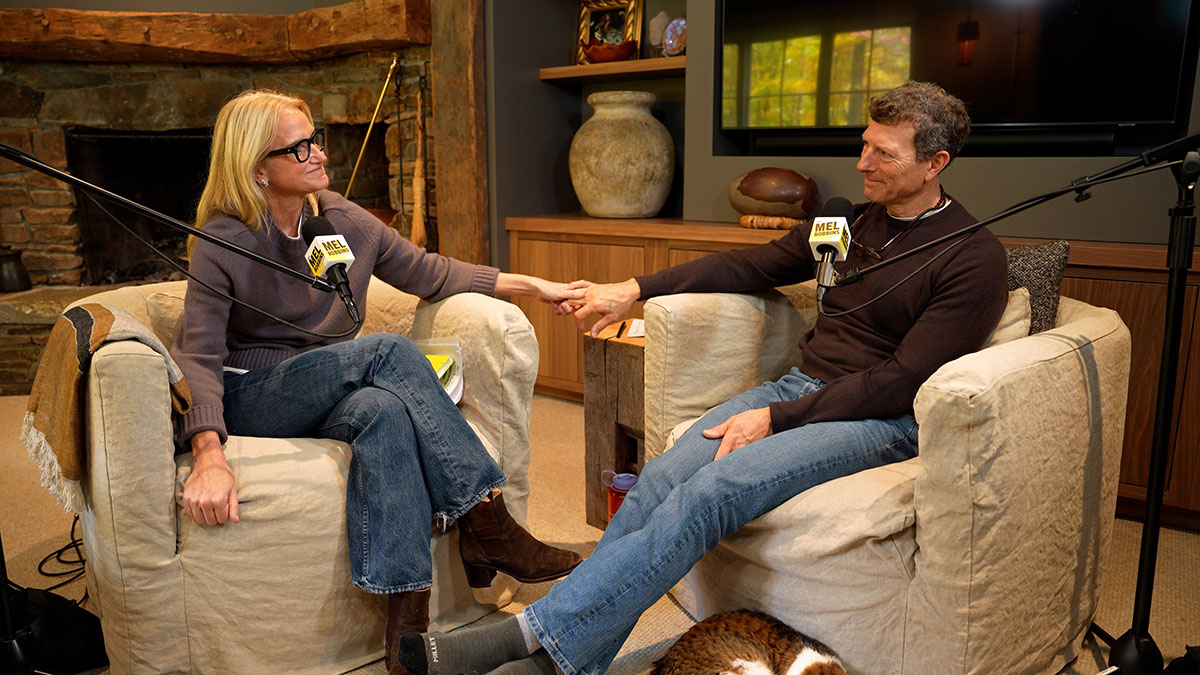
Today, Mel sits down with her husband of 30 years, Christopher Robbins, who has spent the last decade leading Soul Degree men’s retreats and helping men navigate some of the most complicated feelings in life.
Fresh off a five day father-son retreat, Chris is sharing 5 powerful things he's learned about men that everyone needs to hear.
You’ll learn:
- Why so many men struggle to build meaningful friendships
- What men desperately need in their relationships but may not know how to ask for
- What men need but don't know how to ask for
- How loneliness sneaks up on men as they get older
- The #1 pressure men feel that keeps them from enjoying life
- Why men struggle when it comes to giving and receiving love
- How to support a man without trying to fix him
Whether you're a man who feels overwhelmed and disconnected, or a woman who wants to better understand the men in her life, this conversation will change the way you see the men you love.


Men need help. But so many of us have no idea how to ask for it.
Chris Robbins
All Clips
Transcript
Chris Robbins (00:00:00):
Men are at war with themselves.
Mel Robbins (00:00:03):
Today on the Mel Robbins Podcast, my husband, Christopher Robbins.
Chris Robbins (00:00:08):
I am the founder of Soul Degree. I've been leading men's retreats for 10 years. It's really quite remarkable to even sit with a guy who on paper looks like he has achieved everything you could ever imagine and hear him rattle off the narrative. I messed up. I failed. I'm a bad friend. I'm a bad husband. I'm a loser. I'm a bad father. We wake up and for the most part, the overarching narrative is I am not good enough. I am not doing enough. I have not lived up. Men need help and we have no idea how to ask.
Mel Robbins (00:01:01):
So the other day I Googled myself. That's always a scary thing to do. And I was so surprised to see the top questions people are asking. Questions like, is Mel Robbins married? What does Mel Robbins' husband do? What happened to Mel's husband? What does Christopher Robbins do now? So today we're going to answer those questions because my husband of 30 years, Christopher Robbins is here. And I'm really excited about this because all joking aside, for the last decade, my husband has been leading transformational and life-changing retreats for men. He is a certified death doula. He's already crying. Oh shit. Okay. Wow. Why are you already crying?
Chris Robbins (00:01:48):
Just me being emotional, I suppose, about just the, I don't want to say the plight of men, but just what men need and what is missing often in our lives. And of course you're catching me just coming off a retreat that actually I led with Oakley.
Mel Robbins (00:02:19):
Our son.
Chris Robbins (00:02:20):
Our son to a group of fathers and sons. And that just had double the impact, if you will, not in the sense that fathers and sons... I mean, they came in for their own individual needs, but to witness what went down between father and son was really extraordinary. Wow. And since I've been in this seat before, you know that I'm a crier, so it's hard to hold back the emotion and the tears.
Mel Robbins (00:03:10):
Well, I love that you're a crier because tears are either liquid love or they're liquid relief or they're liquid stress. And one of the greatest things about you, Chris, is how free you are in sharing your emotions, at least now that you're in your late 50s. And you have been quietly for the last decade making a life-changing impact in the lives of men. And you are 18 hours out of leading a five-day father-son retreat with our 21-year-old son, Oakley. And there are five things that you have discovered in the last decade, working with men, sitting with men, counseling men, leading retreats that you have created for men that you're going to share with us today, because these are the things that men share with you and with one another when they feel safe and supported and they are in a retreat or a program with you.
(00:04:22):
These are the things that your friends, that your son has shared with you. These are the things that your brothers, that your clients as a death doula have shared confidentially with you. And there's no doubt that there's a very consistent theme. And so I really appreciate you coming. And before we get into your background, why don't you share your intention?
Mel Robbins (00:04:46):
What do you hope happens in the life of the person who is listening right now? What's your intention for sharing all this? What do you hope they do?
Chris Robbins (00:05:03):
I really hope that people just take what I have to say and sit down and write a letter to their man, to their father, to their son, honestly, even to their friend or colleague and acknowledge them for just who they are in their lives, just to speak freely about how they make a difference, what they admire, what they appreciate. Just the power of a letter alone can have an unbelievable impact and is a great way to be reminded of who you are and all that you do and the influence that you have because quite frankly, that's what a lot of guys struggle with is losing sight of that. And so my intention is that you take whatever I say and you sit down and pen a heartfelt letter to those people that matter to you.
Mel Robbins (00:07:08):
Chris, could you just share a little bit about your background and some of the certifications and trainings that you have?
Chris Robbins (00:07:21):
Well, before I got into the work, I was in the corporate world for 25 years. I got my master's in business. I came out of some of my, well, my latest entrepreneurial endeavor, feeling a little lost, a little afraid, and just started leaning into some of this work that I bring to bear on the retreats themselves. I took a year long course in Buddhism and learned to be a Buddhist meditation guide. I took a certification program through the University of Vermont and became a certified death doula. I trained to be a yoga teacher and got my 200-hour certification, and then got into my master's, which I am just about finishing up in spiritual psychology.
Mel Robbins (00:08:20):
And why did you want to do all that?
Chris Robbins (00:08:25):
A lot of it was born out of the conception of Soul Degree and putting this retreat concept together. And in the conceiving of, and then leaning into the work and leading a few early on, I was recognizing that I needed to call on some of these mindful practices for myself to ground myself, to listen to myself, to hear what was going on inside in order to be a better listener to the people that were coming on retreat and to actually enhance the conversations. Things like death and dying, for example, is one of many that is important in some of these conversations, but also helping guys just slow down and using things like meditation and yoga. And we are just so go, go, go. I mean, the idea of hitting the pause button is foreign to most of us.
Mel Robbins (00:09:51):
Why did you want to start a retreat? Because if we go back to 2016 and you are out of the restaurant business, you are struggling with a sense of...
Chris Robbins (00:10:12):
Sorry. I think that I wanted to start the retreat because I knew I was hurting and I knew I wasn't going to find my way out of my own paper bag alone. And I was sitting on the porch with a friend having a very deep, meaningful conversation and realized that was not only what I needed, but that was kind of my happy place. I mean, I love sports, but I don't really enjoy talking about the score of the game last night. I want to kind of get in there. And not only that, but in the experience over those couple days with that friend, we were just having a lot of fun. We were out in the woods. We were being playful, and it occurred to me that that's what was missing, was just the experience of being a boy and trying to tap back into that because that is at the root of who we are.
(00:11:50):
And being able to get into nature and truly be kind of a nature boy or just tap into wilderness therapy, if you will, and the stillness and quiet and reflection that comes from that, stoking fires, and really just laughing because it was at that stage of my life where laughter was not happening, and I knew I needed that in the company of other men in particular, not just to feed off them, but to understand myself through them and also just be boys and be playful and laugh.
Mel Robbins (00:12:42):
Chris, for the person who maybe got shared this episode and is only just hearing you or me for the first time, can you just give a sentence or two about the things that were going on in your life 10 years ago that were causing you to be really hurting? Because I think they're very, very relatable.
Chris Robbins (00:13:08):
They are relatable and they tie into what's going on still to this day with men is I was coming off an entrepreneurial venture that in my mind failed miserably. I was hating on myself for me not being or having become the provider and protector that I thought I was supposed to be. And so there was a lot of internal strife, let's call it self-hatred, and also just the need to just that, like hit the pause button, slow down, figure out me before I could rise up and do something new and different.
Mel Robbins (00:14:05):
Can you talk a little bit also about how you had not realized how much your father's death was also underneath this at this moment too?
Chris Robbins (00:14:16):
Yeah. The truth is that I grew up with a father who was a wonderful man, who I loved, but who just didn't have the capacity to be there both physically or emotionally. So there's no trauma or abuse, just not enough, at least in my interpretation. And I didn't realize that for the better part of my life, I was chasing that and I was taking action in life, particularly in my career to try to get him to take notice. And even my choice to go into the restaurant business, when I look back on it, was not entirely authentic. It was an attempt to try to do something entrepreneurial and to prove something, as we often do guys, just we're out there trying to prove something. And then he died and suddenly this light that I thought I was... Again, I didn't know I was chasing it, but suddenly the light goes out and eight years rolls by and I recognize that I had completely ignored his death, missed out on the grieving pred, no grieving whatsoever.
(00:16:10):
I don't even think I knew what the word grief was. And that really was the beginning of a lot of this. In fact, it sounds odd, but I have my father to thank in his death because I came alive after he left.
(00:16:45):
It's not always so easy to put the puzzle pieces together when you're in the swirl, but losing him forced me to pull out the puzzle and figure out me. But in the process of figuring out me, a lot of that kind of discovery needed to occur through figuring out my dad and in an odd sort of way, even though he wasn't physically present, his life has helped me just learn so much about me. But yes, often these dark moments have a way of creating a catalyst and his death was definitely major for me.
Mel Robbins (00:18:03):
What is the first thing that men are dealing with beneath the surface, but may not be telling us?
Chris Robbins (00:18:14):
Men are at war with themselves. It's really quite remarkable to even sit with a guy who on paper looks like he has achieved everything you could ever imagine and hear him rattle off the narrative.
Mel Robbins (00:18:44):
What does it sound like?
Chris Robbins (00:18:47):
I fucked up. I failed. I'm a bad friend. I'm a bad husband. I'm a bad brother. I'm a loser. I'm a bad father. Neglected my kids, my spouse, or I'm a shitty worker. You don't need to be a perfectionist to still have these thoughts run through our heads. And look, we're sitting here talking about men, but I would argue that a lot of that probably runs through the heads of many women too. It's almost kind of a rite of passage being human. And I don't say that to take it off one or the other gender, but we wake up and for the most part, the overarching narrative is, "I am not good enough. I am not doing enough. I have not lived up." And we all fabricate our own definition or expectation for what is enough, but we are dying inside because we're killing ourselves often.
(00:20:53):
And it makes it really hard to hear anything on the outside when that's what's going on on the inside.
Mel Robbins (00:21:09):
How do you break that open? I mean, is it important to just understand that the men in your life, whether it's your son or your partner or your dad, that even though they may seem at peace on the outside or stoic or quiet on the outside, that they're literally at war with themselves and beating themselves up and focused on where they're not good enough? Is just being aware of that important so that you can be softer and kinder?
Chris Robbins (00:21:39):
Well, when I think about just the format of how I bring men together, it starts with that. Yes.
Mel Robbins (00:21:49):
What do you mean? I don't know what you mean.
Chris Robbins (00:21:50):
Meaning that we'll sit down within... I mean, a dozen of us will come together and we'll sit down within five minutes of shaking one's hand and we'll be in chairs opening up about the truth.
Mel Robbins (00:22:16):
What's the question you ask people? How does that come out so fast? Because a lot of us are also like, for years in our marriage, I'd be like, "What are you thinking about? What do you think about what's on your mind?" You're like, "Nothing like..."
Chris Robbins (00:22:26):
Well, my prompt is what brought you here? Why are you sitting in this circle? And not what'd you do and where are you from and what's your age, but really give us a look under the hood as to what is it that has shaped you and has brought you to this moment. And what's effective mostly about that exercise is that there is no questions. There is only listening and there is no response. I talk a lot about just active listening. That's a big deal on these retreats is how do we dial up our awareness of our own dialogue in our own head, but also how do we listen with more intentionality to the people around us? So people are put on the clock and they're given 12 minutes to tell us anything and everything. And of course, the preamble is this is a safe space and whatever gets said stays with us.
(00:24:01):
It's private, it's confidential, and there's no judgment. There's no that this is safe and you are free to be vulnerable and say whatever comes to mind such that we really get a sense of who's in the room. And some people will take the full 12 minutes, and for those that don't, we sit with them in silence until the 12 minutes is up. And sometimes just taking in that silence and being with that person, even with them saying nothing, gives them the experience of being seen and heard in a way that honestly, so many guys just have sometimes never felt in their entire life.
(00:25:17):
And it's only 12 minutes, so it's not like you get the whole story, but there is a... And look, people are also walking through the door and half of them, they tell stories about how they're driving to a men's retreat and saying to themselves, "What in the fuck am I doing here? Why am I doing this?" And so many have told stories about how literally on the drive up, they're thinking about turning around and going home because it feels kind of... It's out there for a guy to go put himself in this kind of a situation. It feels very vulnerable just signing up for something like this.
Mel Robbins (00:26:08):
Do most of the participants sign themselves up or do they have a partner that is pushing them to do this?
Chris Robbins (00:26:16):
Well, it never works to be pushed, but it does help to be supported.
Mel Robbins (00:26:24):
What is the difference?
Chris Robbins (00:26:29):
For a partner to come to a guy and say, "Hey, you need this, you should do this," that guy will never do it. But for a partner to come to a guy and say, "Hey, I heard about this thing and maybe you should take a look at it. Maybe you would get value out of it, and I just want you to know that I will fully support you if this were something that you'd ever want to do," and leave it at that.
Mel Robbins (00:26:54):
And that goes with everything because the thing is that this is not some big enterprise. You do four of these a year and there's just 12 guys, and so this is not like there's lots of things that are in your local community or that you'd like to see your brother or your partner or your father or somebody in your life that you're kind of thinking about right now participate in, whether it's getting involved in a hockey team or something else that the need for connection.
Chris Robbins (00:27:29):
Yeah, doesn't need to be a men's retreat. You're absolutely right. Whether it's -
Mel Robbins (00:27:34):
Re-engaging in life. Yes.
Chris Robbins (00:27:36):
Plugging in some way, shape, or form. Yes.
Mel Robbins (00:27:41):
Now you know I am a loyal Verizon customer, and now Verizon is rewarding my loyalty. Verizon gives customers money back, epic experiences and incredible deals all year round. And what better time to switch to Verizon than the holidays when Verizon Shine is dropping epic fan moments with NFL and NHL stars, chances to meet Hollywood icons and unique shopping experiences. On top of these unreal events, every month, you also get 3% cash back just for paying your bill. This holiday season, switch to Verizon and snag yourself a once in a lifetime experience, plus cash back every month. Find out what you can get just for being a Verizon customer on verizon.com or the Verizon app. Must be 18 plus, no purchase necessary. Additional terms apply. See Verizon Shine for details.
Mel Robbins (00:28:36):
So the first thing that you've heard is that men are at war with themselves and why it's really important to understand that no matter what's going on on the surface, that beneath that, what you've experienced for the last decade in this work is that they're slowly killing themselves with criticism.
(00:28:59):
What's a second theme that's come up?
Chris Robbins (00:29:03):
Just the experience of being seen and being heard without retribution.
Mel Robbins (00:29:22):
What do you mean?
Chris Robbins (00:29:24):
I think it's human nature. This is what we seek in life, I think all of us, is the desire to just feel seen and feel heard. And look, guys, not to make sweeping generalizations, but at least in my experience, we are horrible at being able to see and hear ourselves. We can't hear. We don't have the capacity or the muscle to listen to what's going on on the inside. And therefore we have no agency in sometimes even just receiving that from the outside.
Mel Robbins (00:30:26):
So if it's something that if the second big theme is wanting to be seen and heard, this experience that somebody actually cares that they see you, is there something that you would recommend?
Chris Robbins (00:30:42):
Well, this is the power of a lot of these mindful practices. I mean, it's the reason why people come on my retreats and I'm throwing the kitchen sink of mindfulness at people to help them slow down and to unpack for themselves what's on the inside, to have the experience of feeling seen and heard, to practice what it really means to not just sit there with another guy and let him say whatever he needs to say and listen to him to the end, but not be so quick to solve it because we're just like problem solving machines or at least that's what we like. That's how we often try to express our love is just solve the problem. Let's fix it. You got issue? Son, let's fix it. Honey, there's an issue, let's go solve it. And so I think that just giving ourselves the freedom to slow down a little bit in that regard so that we can hear more.
Mel Robbins (00:32:06):
What would you say to a guy who's listening? Maybe he was shared this episode. What would you say to him about the importance of hearing yourself and learning how to do that?
Chris Robbins (00:32:22):
Well, it makes me think of just this whole conversation around brotherhood and the importance of cultivating brother. I mean, there's so many guys that show up who look around and their friends are gone. They're friendless. And of course there's a lot of talk about loneliness and the epidemic of loneliness and of course, obviously just the depression and addiction and suicide and all that stuff that people speak of with men, which I think honestly has a lot to do with the fact that we are not spending the time first to see and hear ourselves, but then to do that with other men. And that's like a lost art almost.
(00:33:23):
It's like even the concept of toxic masculinity is something that's often brought up in the context of men and women, whereas it's that competitive bro culture that is really fucking us up with regards to us cultivating male friendships because we don't have a way to, or we haven't yet figured out how we can sit with the guy. And it's not like, "Hey, what was the score of the game?" It's like, "What's going on? And how are you feeling?" And just to let that go and to even be good at being a good interviewer or question asker, not for the point of solving, but for the point of extracting and giving that man the experience from another man of what it looks like to just have that be the connection alone.
Mel Robbins (00:34:34):
You're actually making me think about my dad because when you talked about brotherhood and friendships, when I think about the last couple years, my dad's in his mid - 80s, he's talking a lot about how a lot of his friends are gone. And if I think about various chapters of life where you're either trying to climb the ladder at work or you've got little kids or you are now an empty nester and everybody works remote and how guys typically are terrible at maintaining friendships.
Chris Robbins (00:35:05):
The isolation that has occurred in the last five years since the pandemic has poured gasoline on this fire for sure. But yes, for the career-minded guy who wakes up at 60 and realizes, "Holy shit, where did all my friends go?" It's not because he's not a great guy and could be friendly, he's been plowing his time and attention into family, spouse, moneymaking, whatever. And then yeah, your dad's circumstance, talk about being able to get in there with your aging parent and just recognizing that friendship and brotherhood is literally and figuratively dying off. And it really takes something. Some people are just like, "Oh, screw it. I'm just going to go it alone." But because it takes energy and effort to cultivate friendships, we talk about it all the time with guys. It's just the level to which you need to take responsibility of yourself for yourself to be a good friend with no expectation for what you might receive.
(00:36:21):
And yes, that is the kiss of death in friendship because if you put out and put out and put out and you're not getting back, your choice probably is to move on and find somebody who is going to give back. But it starts with here.
Mel Robbins (00:36:39):
Well, I know who I'm writing my letter to because that last thing you said makes me think of my dad.
Mel Robbins (00:36:45):
What's the third theme that keeps coming up?
Chris Robbins (00:36:49):
I would say the third thing is around, particularly as relates to, this is not so much in friendship, but certainly in married couple life, just there is such a burning desire to want to feel like you matter most.
Mel Robbins (00:37:19):
What do you mean?
Chris Robbins (00:37:20):
Meaning that you are first regardless of the 50 things you need to do for the kids, the dog you need to walk, the job that now so many husbands and wives are sharing responsibility for the economics of a household, the aging parents, the I got to take care of my body and go to yoga or go for the run or all of these things hijack our attention and our time, but they also hijack our experience. And you said it yourself, sometimes the experience of the woman too, that we are not first. We are like third or fifth, or honestly, sometimes just taken for granted and last because actions, maybe we often misinterpret actions as feeling like we're last. And just whether it's the simple act of stopping someone, and we've talked about this, just some eye contact, touch of the hand. I mean, yes, there are different love languages and people, maybe it's words, maybe it's touch, maybe it's acts of service, but really understanding that we just want to feel that.
(00:39:01):
We want to feel like we matter. And some of that is on us to get better at being able to receive that because often I do think that women are trying to give that and we are not always able to receive that. In fact, on this latest father-son retreat, we talked so much about giving and receiving and how, again, guys are programmed to provide, protect, give, give, give, give, give, and just completely ignore our own needs and then find ourselves kind of curled up in a ball of shame or guilt or whatever, and losing complete sight of what it takes to actually receive love from people around us. And because one of the questions that we were asking, we sent fathers and son pairs out each day with a set of different questions, some focused on the past, some focused on the present, and some focused on the future.
(00:40:29):
And I think the first question was, are you better at giving or receiving love? And it was like a hundred percent like, oh yeah, I can give it, but I'm not so good at receiving it. And again, we think the way we're giving is by bringing home the bacon or the diamond ring or whatever the things are that are external to us. And even there was just an amazing story, makes me cry, this father who literally, oh God, his story is just unbelievable. Talk about generational trauma. He watched his own father get shot and killed right in front of him and came into this country and made a life for himself, a beautiful life, and has been incredibly successful and has three beautiful children. And all he has thought about is just wanting to give and give and give. And his son and he together realized that there was a line almost at which his belief that he was giving everything he could couldn't be crossed because he himself as a father had not sort of stopped and recognized that he needed to give himself some of these support efforts, if you will, to himself and that he just couldn't, until he could actually turn the mirror back on himself and do the work for himself and figure out what he needs and what it looks like to not criticize himself as not providing enough for his kids, but seeing who he is and what he's done and all these things, he was never going to get there with his kid.
(00:43:15):
It didn't matter how hard he was going to try. And so just by the son being a witness to his father discovering this was the unlock because it had nothing to do with his father giving the kid anything. H didn't need his money, he didn't need his guidance, his counsel, all these things that are external to us. He needed to see his dad tap into himself and find that acceptance and forgiveness of himself. And that's all the kid needed and literally set him free.
Mel Robbins (00:43:56):
If you are somebody who can give love but can't receive it, is there one recommendation that you have after hearing this over and over for a decade from people?
Chris Robbins (00:44:11):
Well, I think one thing, and I was thinking about it also in the context of you and I, is asking the people around you what they need. It sounds so simple, but it gets back to just identifying... I mean, you and I were talking about homecomings and how do we receive each other into the house after we've been away for a while.
Mel Robbins (00:44:46):
That's right, because I blew this yesterday. Chris was coming home from retreat. He's been gone for six days and as usual, things were sliding sideways with work. And so I greeted you in the garage, gave you a hug, helped you carry one thing in and then said, "Can I complete something for 20 minutes and then we'll have dinner?" And two hours later you had finished dinner with our daughter and I was coming downstairs. And so we were talking just this morning about what that left you feeling like and us not realizing, wait, neither one of us stop and consider what do we need. And so say more about that.
Chris Robbins (00:45:23):
Yeah, just even once again, I think it takes a certain degree of work to develop the self-awareness to even have the conversation, "Hey, what do you need when you come home and what would support you?" And so that's almost inviting the other person to give something that you need, but then it's like being able to get strong in your receipt of those things. And look, often they're tangible, maybe they're materialistic, but it's as simple as the acknowledgement. I really have recognized of late how horrible I am at receiving any sort of compliment or acknowledgement. I'm just like, "Yeah, whatever. Next." It's like you said it earlier, "Hey, come on, give us your real credentials and tell us all the things you've done." It's not at all in my nature to want to, "Oh yeah, I'm a hospice volunteer," or, "Oh yeah, I'm a breath work instructor." All these things like, "No.
(00:46:56):
Next, what do you need?" If it's outside of me, it's almost easier to deal with, but the receipt of people being grateful for who I am or what I offer, that takes, seems like a lot more work.
Mel Robbins (00:47:19):
Well, I'm grateful that you're here.
Chris Robbins (00:47:22):
Thank you. I'm glad you're grateful that I'm here.
Mel Robbins (00:47:25):
Can you receive that?
Chris Robbins (00:47:27):
Thousand percent.
Mel Robbins (00:47:29):
You know how when you find an amazing new show, you cannot wait to tell someone to watch it. Well, let me tell you about this new Peacock original limited series, The Good Daughter. It's a thriller wrapped in suspense and an emotional story about love, family, and resilience. Rose Byrne and Megan Fahy love them, right? Star's sisters who have spent the last 20 years trying to piece together their lives after a violent night. Then another attack tears apart their small town and the sisters who are lawyers like their father now end up in the middle of the case. The Good Daughter is a story of survival, the relationship between a father and his daughters, and the complicated bond between sisters. Now, this is exactly my type of show, and I bet it's your kind of show too. Rose Byrne and Megan Faye are so good together.
(00:48:19):
In fact, the entire cast is incredible. And if you're like me, you'll be on the edge of your seat for all six episodes based on the bestseller by Karen Slaughter. The Good Daughter is streaming now only on Peacock. I am so excited that Hyundai is a new sponsor of the Mel Robbins Podcast because winning an award over and over again takes a real commitment to being the best, and that's exactly what Hyundai has done. Hyundai has been named America's Best SUV brand for 2026 by US News and World Report. Now, that's the fifth time in six years. So they're on a roll and they're award-winning and they're consistent at doing it. So whether you're driving the kids around town or heading out on a road trip, Hyundai has an SUV for you. There's the Tucson Hybrid packed with technology for your everyday life, the Santa Fe hybrid built for that fun adventure that you want to go on, and the Palisade hybrid with premium features and class leading interior space.
(00:49:16):
Plus, with available H-Track all-wheel drive up to an EPA estimated 619 miles of range, view US News best cars at cars.usnews.com and call 562-314-4603 for complete details.
Mel Robbins (00:49:34):
What's the fourth theme?
Chris Robbins (00:49:37):
We've talked about it a little bit, but I think that we're just so busy doing. Do, do, do, complete, complete, achieve, accomplish.
Mel Robbins (00:49:57):
Turn on the TV, zone out, do this, do that, place the online bet.
Chris Robbins (00:50:00):
Well, it's a perfect example. Speaking of homecomings, I clean the house, I set the fire, I make your drink, I cook the dinner, I get the kids excited to receive you in the driveway and all these... But never is there any kind of moment where I'm giving myself the gift of just slowing down and not feeling like it's my job to do or achieve or prove something. And so I think that the key is to, at least in my experience and over the last decade, how I have, I think, found a lot of peace internally is slowing down and almost to the point of, I don't want to say doing nothing because nothing is something, but some of these mindful endeavors that I have taken on, of which there are countless examples of different things that one can do. If you like to, I don't know, paint, go paint something, it's a form of slowing.
Mel Robbins (00:51:29):
It reminds me of our friend, the extraordinary New York Times bestselling author, Jason Wilson, who is world renowned for his work with men and boys. And he talks about how men are so programmed to only feel worthy when they're working and when they're doing, that learning how to lay down on the couch and rest is an act of resistance in a world that's telling you only matter if you are productive. And it reminds me of that. And it also is yet again another example of something that you are feeling as a guy that I think I'm the one that's feeling it as a woman and how universal these themes are.
Chris Robbins (00:52:26):
I just want to share one quick story about a gentleman who was on this last retreat, and it was so ironic because I often ask people to pick a word, like a guiding word for themselves coming into the retreat.
Mel Robbins (00:52:42):
What was yours?
Chris Robbins (00:52:43):
Mine was levity.
Mel Robbins (00:52:45):
Levity. I love that for you.
Chris Robbins (00:52:47):
Yeah, because I just think of myself... I mean, sometimes it can feel serious and heavy, and I'm not that guy, but I need to be reminded that, "Hey man, we're here to have some fun. We don't need to take ourselves that seriously." And so anyway, one guy's word was presence. And we went through the week and then we're finishing up on the last day, and he reveals that what he realized is that he stated that word for the intention of being present to everyone around him. So once again, it was outside of himself. It was a form of -
Mel Robbins (00:53:31):
Performance.
Chris Robbins (00:53:32):
Yeah, performance or giving. And he recognized, "Wow, the only thing I need is to be present with me." And that's what I mean by kind of just slowing and giving yourself access to things that even just a walk in the woods or walk down the sidewalk or even a slower walk. We do walking meditations on retreat and slowing your... We say, "Oh, today I'm going to go for a walk. Let me get my 45 minutes in. I haven't got my 10,000 steps in yet. Holy shit." And to actually go do a walking meditation for 20 minutes where the pace at which you're moving can just be so helpful.
Mel Robbins (00:54:26):
When you try to make men walk slowly, what are some of the things that come up in your mind? The resistance, the make wrong, the, "I need to be doing something." You know what I'm saying? What's the narrative that comes up if you were to take on, if you're a guy listening, just go take a walk and make your pace 50% of what it normally is?
Chris Robbins (00:54:47):
Well, I think as soon as you introduce the word meditation, most people misperceive that as a requirement to shut your mind down, don't think, turn it all off, and that's just a bunch of bullshit. Our brains are wired to just move as they do and think like they do, so you can't shut it down. But I think slowing the idea of something like a walking meditation, I think opens the door to being able to maybe hear your thoughts, but hear your breath or hear the wind.
Mel Robbins (00:55:34):
How do you do it?
Chris Robbins (00:55:35):
Whistling through the trees or hear the birds or... How you do it is to... I mean, if you have a grassy spot, it's nice to pull your shoes off so that you can walk in such a way that you're feeling that much more connected to the earth underfoot, but it can be done with shoes on. And as one of these Buddhist monks shared with me, their feeling is that with each step we take on planet Earth, it's us massaging the earth, that we're actively giving Mother Earth a massage with each step. And I think that may be another way to force us to just be more mindful of each step, and even the way in which our feet are moving from heel to toe and from heel to our bodies are moving. And so it slow rolls the whole thing, not just what you're thinking about, but what you're doing, and also then subsequently what you're taking in.
(00:57:05):
And of course, naturally, we don't always do that because we were joking about it this past retreat about how if you stepped out into your neighborhood and you started to walk down the sidewalk at that pace, that people are going to look at you and think you need to be checked into the loony tune bin, right? It's like, "Who's this guy? What's he doing? Why is he moving so slow?" And yet that's, I think, what many of us men need more of.
Mel Robbins (00:57:37):
And what's the final theme?
Chris Robbins (00:57:40):
I think the final thing is that men need help, and we have no idea how to ask.
Mel Robbins (00:57:57):
I got it.
Chris Robbins (00:57:58):
We're hopeless at asking for help. I mean, it's like we go out on a drive, we're looking for direction, we drive around, we look at the map, "Oh no, I think it's a left turn. No, it's right. Drive around and look at the map again." It kills us to stop and pull over. "Hey, can you give me some help here? Where am I going? "So we don't know how, and it's because we're programmed that asking for help is a sign of weakness or you're incapable, we're supposed to have all the answers. And I think that that's a big deal for so many men that we want to do the right thing, but we often don't know how, and we definitely are not going to ask for help. We're going to figure it out. We're going to tough it out. All the things that," Oh yeah, be tough, be strong.
(00:59:14):
"Fuck that. We need to learn how to reach out and be thoughtful in not only what we need, which of course we're good at forgetting those things, but calling others in to be supportive in that path.
Mel Robbins (00:59:37):
When's the last time you asked for help?
Chris Robbins (00:59:43):
I mean, I came home from the retreat. I didn't ask anybody to help me unpack the car, but on this retreat, I asked for help. To remind me to bring levity and fun. It's like I recognize I'm here to have fun just like everyone else, and I could also use the reminder. Let's bring the fun. So of course I was lucky to have our son Oakley there and I just tasked him with, okay, your job is to bring the fun and to remind me to bring the fun. And so -
Mel Robbins (01:00:28):
What do you need help with right now?
Chris Robbins (01:00:32):
I need help getting my ass into the writing chair every day for at least three hours a day.
Mel Robbins (01:00:47):
Three hours?
Chris Robbins (01:00:48):
Three hours. That is my commitment to finish this manuscript of my book that I have been working, yes, diligently on, but it is - You've been working
Mel Robbins (01:01:00):
On this for three and a half years.
Chris Robbins (01:01:01):
It is time to birth this baby. And I have got... The only way it's going to happen is to sit in the chair and do the work. And so the help I need is for you to encourage me. I can't write in this. I mean, I love our house, but I can't write in the house. I need to get into the cafe, the library.
Mel Robbins (01:01:28):
Where there's life.
Chris Robbins (01:01:29):
And that's where I need to go. And so I need somebody, I need help kicking my ass out the door on time and doing the three hours, no if, ands, or buts, which also means saying no to other things. So I also need help in you or others around me being okay with me saying no or no, I won't just because I got to tow my own line.
Mel Robbins (01:02:00):
Here's what I could use help with. You ready? Tell me when we're going to bed at night what time tomorrow you need to be out the door.
Chris Robbins (01:02:08):
Okay.
Mel Robbins (01:02:08):
Because it'll change every day.
Chris Robbins (01:02:11):
Yeah, it does. But my promise to myself is that I'll get those three hours in before 1:00 PM.
Mel Robbins (01:02:16):
Okay. But that would help me really make sure I'm effective in helping you.
Chris Robbins (01:02:21):
Yeah.
Mel Robbins (01:02:21):
Talk to me about the letter because at the beginning of the conversation, you said that your intention in sharing these five themes that for the past decade you've seen all the men in your work struggling with and grappling with and not knowing how to talk about or have a breakthrough in. And your intention in sharing this was to make us wiser about what we all are silently carrying. And you also said that your desire was that we would take this and write a letter to a guy in our life, whether it's your partner or your dad or your brother or your son, colleague, friend. Give me the structure of what I'm doing.
Chris Robbins (01:03:16):
I think that the, and we were talking about just men being at war with themselves and also just even just that intergenerational trauma that passed down, whether it be through things like slavery or going off to war and even just the stories about men at war receiving letters from their family and how impactful, how meaningful those are. And the letter is not about what you're doing. It's not that. It's about specifically acknowledging this man for who he is, what he represents, not necessarily even what he has provided, but the character of his being and what you see and all the things we just talked about, giving that man or brother or father or son the experience of just being loved and being seen, being heard.What are you proud of?
(01:04:44):
What have you witnessed? What has made you feel? Because at the end of the day, what we're working on as men is giving ourselves permission to feel and learning how we can feel. It's funny, you go to a woman, you say, "So how do you feel?" And you get an hour of, "Oh, I feel this, I feel that." It's like you go to a guy, "How do you feel?" "Well, angry. "Yes, we need to learn that from women is how to, yes, emote, how to express ourselves, but also just how to feel. And so that would be also my encouragement around this letter writing exercise is that if you are a guy out there and you receive a letter, that you take the time to sit down with the writer of that letter and do your damnedest to try to recognize how that letter made you feel and to share that with the writer, not only to acknowledge them for having gone through that act, but to take your relationship to the next level because that's...
(01:06:16):
Look, at the end of the day, we're on this planet to, yes, as I said, feel seen and heard, but that just means feel love and feel loved. That's what we want. That's all we want. We are one and love is the answer, full stop. And so to receive this letter and then acknowledge receipt by way of feeling all the feels and doing your best to communicate those feels will move the needle on the connections and relationships you have in your life, whether you're receiving this letter from your best guy friend or whomever.
Mel Robbins (01:07:12):
Well, I didn't expect to be inspired to write a letter because I've written a ton of letters to you and to our son, but I'm going to write one to my father and to my brother. And I truly hope deep in my heart that as you've been listening to Chris and really taking in all of this wisdom, that as certain people that you care about come to mind that you will sit down and write a letter because it will be deeply touching and life-changing and affirming for the man in your life, the guy in your life who receives it. And I know that it will be deeply touching and affirming and life changing for you to write it. I do feel a little like... Is it normal to feel a little like writing a letter like that?
Chris Robbins (01:08:15):
I think so because -
Mel Robbins (01:08:17):
I didn't feel writing about you and Oak because we're so emotive in this family, but my dad and brother are a little bit more stoic, a little bit like they're pulled back.
Chris Robbins (01:08:29):
Yeah, but I think, again, the reminder would be don't think about them and what they need or what you want them to hear. Think about how that person has influenced you or made a difference in your life or what you love about them, period. And they will receive it however they receive it and they will respond however they respond. Some people might just say, "Hey, thanks for the letter." And some people might go the distance to really speak eloquently about the effect of your letter.
Chris Robbins (01:09:11):
And I guess the other thing about the letter is it also doesn't need to be that deep -
Mel Robbins (01:09:16):
Or that long.
Chris Robbins (01:09:17):
Or that long. Some people receive... Some people who just like, "Your letter that you wrote to me a little while back and you just had a little photograph in it and it was just a short note and it meant the world to me." And it's like we've talked about, even just little notes that -
Mel Robbins (01:09:38):
You do this. Chris has to steal this, everybody. Chris leaves me notes all the time, tucked into my eyeglass case, my wallet, I'll find them in the car. This is a big thing in our family. We put Post-it notes in people's cars and we've done that for our son and I notice he's now taking duct tape and he has a collage of them on the glove box. I mean, if he ever gets pulled over, he's going to have to pull them all off to get in there and get his registration, but it means something. And the note is a surrogate for you physically. It means something because you not only get the beautiful experience of receiving the note, whether it's a post-it note that you tucked into somebody's wallet or put on their steering wheel or a letter that you receive in the mail or a surprise email that somebody has written and sent to you, but you also have this experience of going, "Wow, they thought about me.
(01:10:37):
They thought about me in a way where they wanted to acknowledge me. They took the time to write this and to send this?" It hits you at a deeper level, and so I can see that's why you want us to do it, and I want you to do it, and I want to hear back from you after you do it. And Chris, I just want to thank you. You are my favorite person, and I could acknowledge you for another hour, but the way that you showed up today demonstrates better than words could why you're my favorite person. You care so deeply, you're so wise, you are so committed to supporting people and ending suffering that's unnecessary and to helping people grow and evolve and feel more loved. I am so proud of you and I love you, and I know you're going to get just a wave of positive, loving messages when this airs.
(01:11:47):
My only request, please don't add more retreats. Four is plenty. Well, maybe you can, but the work you're doing is so important. There's so many people out there that are doing great work and you are one of them, and I'm proud to be your partner and your friend and your wife, and I love you.
Chris Robbins (01:12:11):
I love you too. Thank you for that acknowledgement, fully received, and also for just having me on the pod to talk about me and talk about what I'm up to. I don't say that to suggest that I have felt marginalized. I say that as really just true gratitude and appreciation for giving me the floor to share what's been going on for, sure, the better part of my life, but the last decade in particular with this focus and attention on helping men.
Mel Robbins (01:13:00):
And you are. I love you, honey.
Chris Robbins (01:13:02):
I love you too.
Mel Robbins (01:13:03):
We will link all kinds of resources in the show notes. You can find Chris. We'll link to every there because I know everybody's going to want to reach out to you. And so souldegree.com, you can follow you online, you write a newsletter, although you're going to be writing a book. You write a newsletter that people can subscribe to, but I'm so grateful that you came here today. Thank you, thank you, thank you. And I also want to thank you. Thank you for spending this time with us, and thank you for spending time listening to something that is going to make your life better and that will help you show up in a more supportive and understanding and loving way with the men in your life. I really want you to write a letter. I believe that you will be shocked at what happens when you do for yourself, for the person who receives it, and I want to hear what happens.
(01:13:56):
I would love, love, love to create a positive, just avalanche tidal wave of connection and change with you and the people that you love in your life. And in case no one else tells you, I wanted to be sure to tell you as your friend that I love you and I believe in you and your ability to create a better life. And there's no doubt in my mind when we show up in a more loving and understanding way and when we ask for what we need and when we truly acknowledge the people around us that we see them and that we love them, our life does get better. Alrighty, thank you for watching all the way to the end on YouTube, and thank you for sharing this episode with every man in your life that you care about. Together we can create such a positive ripple effect of change and connection and love.
(01:14:47):
And if that subscribe button is lit up, would you hit it? It's the best way to say thank you for all the work that we do here at the Mel Robbins Podcast. I love that this is free because of our advertiser support and every time somebody subscribes because they love this podcast, it really helps us and the team here to keep doing what we're doing for you. Okay, I know you want to watch another video. You're going to love this one next and I'll welcome you in the moment you hit play.
Key takeaways
If you look fine on the outside but keep telling yourself you failed, you are not doing enough, or you have not lived up, that inner war can drown out everything around you.
If you want someone to open up, stop trying to fix what they say; give them your full attention, let silence stay in the room, and allow them to feel seen and heard.
If you keep giving love but struggle to receive it, ask the people around you what you need and practice accepting their care instead of brushing off their acknowledgement.
If you only feel worthy when you are doing, achieving, or proving something, slowing down can help you become present with yourself instead of performing for everyone else.
If asking for help feels like weakness, notice that belief; you can still want to do the right thing and need other people to support you in figuring out what you need.
Guests Appearing in this Episode
Chris Robbins
Chris Robbins is the founder of Soul Degree, a men's retreat leader and death doula dedicated to helping men heal, find purpose, and build deeper connections.
-
Soul Degree
Soul Degree is an invitation to step out of your everyday routine, reconnect with your true self, and build community with like-minded men. Each gathering includes a small group of guys eager to slow down, listen deeply, and re-engage in matters that hold meaning, balance, and purpose.

Resources
-
- Learn more about Soul Degree
- American Psychological Association: A Closer Look at the APA Guidelines for Psychological Practice with Boys and Men
- Scientific American: The Hidden Costs of Men’s Social Isolation
- TIME: Why Men Struggle With Friendship
- TIME: How to Make Friends as a Middle-Aged Man, Even If the Idea Makes You Feel Weird
- Survey Center on American Life: American Men Suffer a Friendship Recession
- US Department of Health and Human Services: Social Connection
- American Psychological Association: Assessing and Treating Emotionally Inexpressive Men
- American Psychological Association: Rethinking masculinity to build healthier outcomes
- Scientific American: The Psychology of Giving Thanks
- TIME: 9 Easy Ways to Get More Grateful
- National Institutes of Health: Mindfulness for Your Health
- University of Toronto: Little evidence linking five 'love languages' to healthy relationships, researchers say
- Journal of Counseling Psychology: Meta-analyses of the relationship between conformity to masculine norms and mental health-related outcomes
- International Journal of Psychology: Traditional Masculinity and Men's Psychological Help-Seeking: A Meta-Analysis
- Communications Psychology: High-quality listening behaviors linked to social connection between strangers
- Personality and Social Psychology Bulletin: Connection Heals Wounds: Feeling Listened to Reduces Speakers' Loneliness Following a Social Rejection Disclosure
- American Psychologist: Positive psychology progress: empirical validation of interventions
- Association for Psychological Science: Popular Psychology Through a Scientific Lens: Evaluating Love Languages From a Relationship Science Perspective
- International Journal of Mental Health Nursing: How Does Nature Exposure Affect Adults With Symptoms of Mental Illness? A Meta-Analysis
2 Million Readers.
1 Life-Changing Newsletter
Simple and Straight-to-the-Point...
Just Like Mel.