Episode: 408
Change Your Body at Any Age: The Diet & Exercise Plan For a Longer Life
with Dr. Rhonda Patrick, PhD
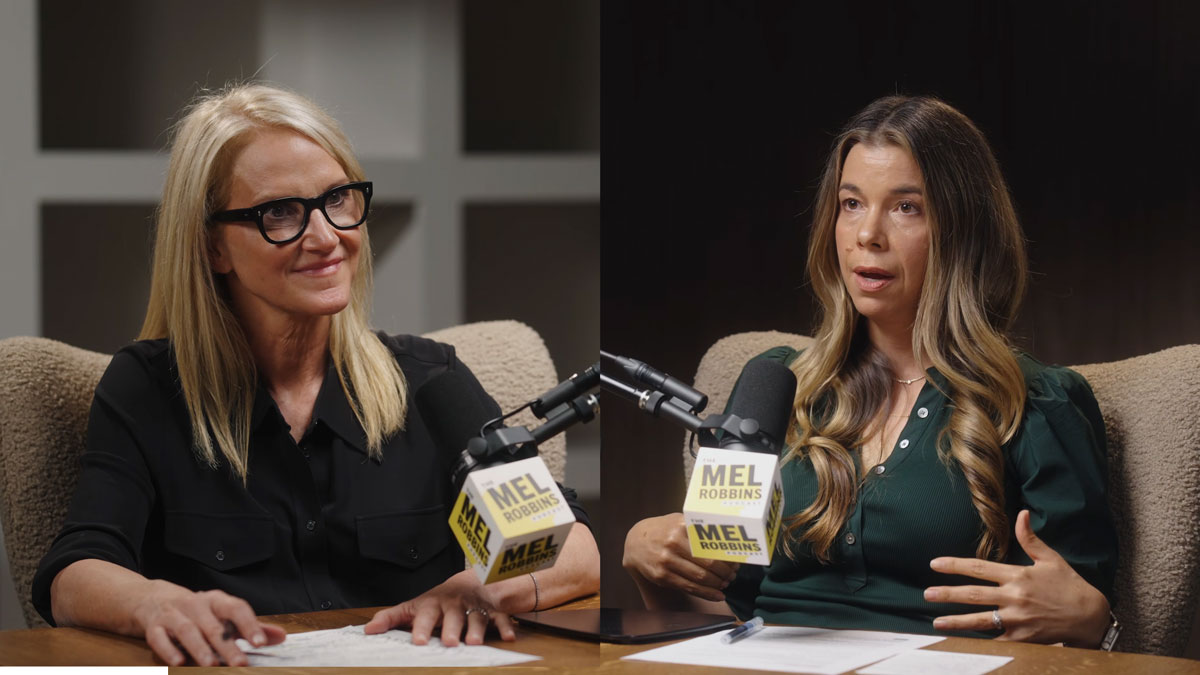
Today’s episode is required listening if you want to feel better, live better, and take your health seriously.
In this powerful episode, you will learn the surprising science of exercise and nutrition, the mistakes you’re making, and the simple changes that lead to better health and longevity.
Mel sits down with Dr. Rhonda Patrick, a PhD-trained biomedical scientist who has spent her career studying nutrition, aging, and disease prevention
Today, Dr. Rhonda Patrick reveals why traditional fitness advice doesn’t work, the fitness mistakes most people are making, and the simple changes that can help you build better health, more energy, and a longer life.
She will break down the science of what really matters for your health and longevity - and the good news is, it’s way simpler than you think.
Listen on:




The same resilience you build in your body becomes resilience you can use in your life.
Dr. Rhonda Patrick, PhD
All Clips
Transcript
Dr. Rhonda Patrick, PhD (00:00:00):
For the person listening, it's really important to understand that they don't have to do 50 different health hacks to improve the way they feel and ultimately the way they age.
Mel Robbins (00:00:11):
Today you and I are here with Dr. Rhonda Patrick and she's teaching you the science of living a longer and healthier life.
Dr. Rhonda Patrick, PhD (00:00:19):
But let's talk about why I want to replace 10,000 steps with 10 breathless minutes.
Mel Robbins (00:00:24):
I live in the old world where in my mind it doesn't count as exercise unless I'm in the exercise clothes and I am doing something for at least a half an hour.
Dr. Rhonda Patrick, PhD (00:00:36):
These moments count. They add up. They're cumulative and we have the research to show that.
Mel Robbins (00:00:43):
There are five supplements that based on the research you recommend that everyone takes.
Dr. Rhonda Patrick, PhD (00:00:49):
So omega-3s are really at the top of the list. The second would be a multivitamin and then you want to take a vitamin D. So the fourth supplement would be magnesium. And then lastly when you are sleeping, so many diferent things are repairing in your body. Your DNA is being damaged every day. When you sleep, that is being repaired. What? Yeah. There's just a few core behaviors that we should be doing that are really not that difficult to do and that are ultimately going to make us feel better and age better.
Mel Robbins (00:01:25):
What do you think the most important thing to do today is?
Dr. Rhonda Patrick, PhD (00:01:29):
You should focus on the ...
Mel Robbins (00:01:31):
Hey, it's Mel. And before we get into this episode, my team was showing me 57% of you who watched the Mel Robbins podcast here on YouTube are not subscribed yet. Could you do me a quick favor? Just hit subscribe so that you don't miss any of the episodes that we post here on YouTube. It lets me know you're enjoying the guests and the content that we're bringing you because I want to make sure you don't miss a thing and I'm so glad you're here for this episode because this is a really good one. All right, let's dive in. Please help me welcome Dr. Rhonda Patrick to the Mel Robbins Podcast. I'm so excited you're here.
Dr. Rhonda Patrick, PhD (00:02:06):
So excited to be here, Mel.
Mel Robbins (00:02:08):
Thank you. I know how busy you are. I really appreciate you hopping on a plane and coming and spending time with us. Here's where I want to start, Dr. Patrick. If the person who's listening is overwhelmed like I'm overwhelmed by all the advice about health and they follow your research back approach that you're about to teach us today, what might change about their life or their health outcomes?
Dr. Rhonda Patrick, PhD (00:02:36):
I think for the person listening, it's really important to understand that they don't have to do 50 different health hacks to improve the way they feel and ultimately the way they age. The way I like to look at health is what are the few behaviors that we can adopt that are going to affect many different underlying biological processes in our body that will affect these things that we care about that's going to improve our mood, reduce inflammation, improve metabolism, ultimately improve cardiovascular health, brain health, and just the way you age. And I think that if we sort of zoom out and take that approach, we realize there's just a few core behaviors that we should be doing that are really not that difficult to do and that are ultimately going to make us feel better and age better. And so what are those behaviors? And I'm sort of going to speak in a sort of just 10,000 feet up big zoom out sort of picture because I think again, they're very easy for people to do.
(00:03:49):
First, top of the list, move every day. And when I say move every day, we want to make sure we're getting some vigorous exercise. We're going to talk about what that means and we're going to challenge our muscles. Very, very important because your body is very resilient. And if you can put a good type of stress on it, which exercise is, it's going to adapt. And when stress is thrown at you later in life or in the day or in the minute, whatever, your body's already dealt with stress. It's adapted. And so when that stress comes, you're going to be stronger and you're going to be able to deal with it. Mental stress as well. By the way, challenging your muscles, doing exercise, vigorous exercise, this is challenging many systems, your lungs, your heart, your brain as well, because it's hard to do hard things.
(00:04:41):
And so again, you want to be resilient and that's what it's doing. Number two, make sure you're just eating a nutritious diet that is giving you the proper nutrients that you need. And we'll talk about that. Not that hard to do. Number three, make sure you're focusing on good sleep. You have to be able to repair, recover, rejuvenate, and that's what sleep is.
Mel Robbins (00:05:04):
Could you just tell the person who's listening based on your expertise why they should trust these recommendations and really just focus on this?
Dr. Rhonda Patrick, PhD (00:05:14):
Yeah. I mean, because there's a lot of research that has been done by amazing scientists all over the world for decades looking at what we can do in our diet and lifestyle to improve things like mood and metabolism and inflammation and the way we age. And so we have the evidence here. We can see what type of robust gains we're going to get. So I just think what people that are, if someone's listening right now, the reality is that we have science and science has done amazing things for our advancing human life expectancy and also in basically helping treat and prevent disease. And so if you look at the data, it's there. You just have to look at it. And I think that's kind of my role. I look at this data and then I help explain it to people. So it really is that easy.
(00:06:09):
It really, really is. And we're going to talk about what kind of gains that you can expect. It's kind of mind-blowing, to be honest.
Mel Robbins (00:06:15):
Well, I'm ready to have my mind blown and my life simplified and the gains made easy.
Mel Robbins (00:06:19):
So let's jump into the first category, which is moving every day. And I think we've all heard this obsession around 10,000 steps that we should be getting every single day. Is that a useful goal? What does the research say, Dr. Patrick?
Dr. Rhonda Patrick, PhD (00:06:37):
So I think that we need to replace 10,000 steps a day with 10 breathless minutes a day.
Mel Robbins (00:06:46):
Breathless?
Dr. Rhonda Patrick, PhD (00:06:46):
Breathless. And what I mean by that is 10 minutes of vigorous intensity exercise, which means you're breathless. I don't want to throw walking out because walking is better than sitting. So what are you comparing it to? Okay, walking is better than being sedentary, not moving. But this 10,000 steps a day originated back in the 1960s from Japan. There was a Japanese group that was trying to sell pedometers and that's where it came from. It didn't come from science, didn't come from medical research. It came from a Japanese company wanting to sell a pedometer and it was very catchy. Now, since the 1960s, of course, there's been a lot of research on walking and moving and not being sedentary. So there are health benefits, but let's talk about why I want to replace 10,000 steps with 10 breathless minutes, 10 minutes of vigorous intensity exercise. And why I say breathless is because it depends on where you're coming from.
(00:07:47):
If you're very already exercising and very fit, breathless for you might be sprinting. It might be running. If you're someone that doesn't really exercise a lot, maybe you only walk. Then breathless for you might just be walking uphill, going up the stairs. So it all depends on our starting point and that's why I like to say breathless instead of heart rate or any other definition because I think we can all relate to if I am at the point where I can only say a few words and then I have to take a breath and then a few words and then I have to take ... You can't talk, you certainly can't sing. Breathless would be that where you're just a couple of words in and then you have to take a breath because you're really working hard. Why is that important and why do I want to replace the 10,000 steps a day?
(00:08:35):
There has been overwhelming research over the years, but even as of most recently within the last few months, a very brand new study came out. Now research is done very differently than it was 20 years ago when we were relying on people's memory and questionnaires. How frequent do you exercise? And they have to think back and remember. Now we can actually measure it. We have these accelerometers on people's wrists where they can measure movement and how fast they're going. And so there was this huge study that was published showing that people that are moving more vigorously, it's exponential in terms of health benefits versus moderately moving. So that would be where you're not breathless but you're not able to sing. So that's kind of like you can kind of talk a little bit, but you're still breathy while you're doing it versus the light activity, which is kind of like just walking around the house maybe.
(00:09:29):
So we know that for every one minute of vigorous exercise, you have to do four minutes of moderate intensity that would be brisk walking, for example, to get the same drop in all cause mortality, dying from cancer, dying from respiratory diseases, dying from cardiovascular disease, right? All non-accidental causes, four minutes. If you're going to do light exercise for every one minute of vigorous, you have to do about 53 minutes of light walking, gentle walking around. Wait,
Mel Robbins (00:09:57):
Hold on a second. I want to make sure I understand this because first of all, I love the idea of replacing the 10,000 steps because that might take me an hour and a half and I don't really have that kind of time to walk five mives, right? Because it feels like this goal that's very hard to achieve if you're somebody that's working and taking care of people and you've got a very busy life, which most people do. So when you say, Dr. Patrick, okay, we really want to look at the research and I want to replace this idea of 10,000 steps with 10 minutes of breathless exercise, which to me, I would love to have you unpack breathless just so that as we're trying to absorb this information, we understand what you mean by that. And I've heard you talk about the talk test. What does that mean?
Dr. Rhonda Patrick, PhD (00:10:50):
Right. Yes. So the talk test is really that test of, okay, I'm talking to you right now. I'm talking to you and I'm not breathles. I'm not breathing heavy. It's easy. I could even sing if I wanted to. So the talk test is you can't sing, but when you're talking, you're a little bit breathy. That is moderate intensity exercise. The talk test means if you can talk a little bit, but you're breathy, that's moderate intensity. That would be like briskly walking. If you are doing vigorous intensity exercise, the breathless type of exercise, this is a little bit more like jogging, running. This is where you are ... Okay, Mel. So yeah, this is a vigorous intensity because you have to take breaths, quite a few breaths in between words. That would be vigorous intensity exercise. So that's the breathless type of exercise I'm talking about.
Mel Robbins (00:11:55):
Got it. Okay. So I'll give an example. So there's a walking loop by my house and I would say for three quarters of it, it's four miles long. Love to walk it with my girlfriends. Shout out to my Wednesday walking group. Three quarters of it, I'm chatting up a storm. We are catching up. We're sharing details about our family. Dogs are running wild. There is a hill where the entire hill, everybody's silent because nobody can talk because we're going up. I'll catch up with you. And that's the vigorous part.
Dr. Rhonda Patrick, PhD (00:12:32):
That is exactly the vigorous type of exercise I'm talking about. That's the breathless moment, the breathless minute or two minutes or three minutes or four, however long it takes you to get up that hill.
Mel Robbins (00:12:44):
Yes. Okay. Now I just want to make sure I'm tracking because that's the breathless part, but you also talked about moderate. And so would moderate be like, this is kind of a long, hard walk, but I'm still able to talk to you and I feel myself sweating and I'm definitely exerting myself, but I can still carry on a conversation.
Dr. Rhonda Patrick, PhD (00:13:02):
That's correct. That would be moderate where you can still carry a conversation, but you're kind of like this. You're just like taking a little ... Your more breath. If you were on the phone, you weren't with someone or if you were recording it and the person listening was listening to it, they could tell that you were walking. Right now, it's obvious we're not walking, right? So that would be the moderate intensity and the vigorous is so much more powerful. So I said for every one minute for all cause mortality reduction, you have to do 53 minutes of light just walking around.
Mel Robbins (00:13:35):
Well, that's the piece I wanted to unpack. So you're basically saying the one minute that I am walking up that hill and I can't actually really talk because I'm exerting effort, I'm getting a 53 minute gain in that one minute against the other 53 minutes and walking the rest of the loop.
Dr. Rhonda Patrick, PhD (00:13:53):
No, the other 53 minutes you're walking the loop would be moderate.
Mel Robbins (00:13:57):
Okay.
Dr. Rhonda Patrick, PhD (00:13:57):
That's moderate. If you were just walking around your house-
Mel Robbins (00:14:01):
Oh, I see.
Dr. Rhonda Patrick, PhD (00:14:02):
That would be more light.
Mel Robbins (00:14:03):
Okay. So this is the thing to understand that you could clock 10,000 steps a day. It might take you an hour and a half to do it. You could be walking around your house, you could be getting out of the car and walking into the grocery store, you could be walking around the office. You're saying one minute walking up a hill is the equivalent to 53 minutes of just kind of walking around.
Dr. Rhonda Patrick, PhD (00:14:22):
That's correct.
Mel Robbins (00:14:23):
That's incredible.
Dr. Rhonda Patrick, PhD (00:14:24):
It's incredible. Listen, there's more, Mel. Okay. We're just talking about all cause mortality. Okay. Let's talk about cardiovascular related mortality. I mean, this is the number one cause of death in the United States and many developed countries. For every one minute of vigorous intensity exercise, you have to do about eight minutes of the moderate intensity and you have to do an hour and a half of the light type of just walking around the house.
Mel Robbins (00:14:52):
All right, break that down again. So you basically just said walking up the hill breathless one minute is the equivalent of eight minutes of the moderate. So you're still cooking, you're still exercising, but you're getting- You're
Dr. Rhonda Patrick, PhD (00:15:05):
Still with your walking group. Yep. You're still with your walking group. And you're catching your breath. You have to do eight times more than you do if you're walking up the hill.
Mel Robbins (00:15:12):
Whoa.
Dr. Rhonda Patrick, PhD (00:15:13):
And if you are just walking around the office, walking around the house, doing some chores, you have to do an hour and a half for every one minute of that walking up the hill.
Mel Robbins (00:15:24):
You know what's so cool about this? And also I slightly hate you a litle bit, Dr. Patrick, is one of my big excuses for not exercising is I don't have time.
Dr. Rhonda Patrick, PhD (00:15:33):
Exactly. You're basically saying you do.
Mel Robbins (00:15:36):
Yes.
Dr. Rhonda Patrick, PhD (00:15:37):
Yes, yes. And not only do you have time, it has to be something that you go, "Oh my gosh, I have to do this. I have to do this and I can do this. " There's other outcomes too. Cancer is another one and this one's really mind blowing. For every one minute of vigorous intensity exercise, you have to do two and a half hours of that light type of exercise walking around the office, walking around your house. What does that do? For cancer mortality reduction, dying from cancer, dying from all types of cancer.
Mel Robbins (00:16:14):
So there is also what you're saying, Dr. Patrick, if I'm listening closely, is this isn't just the gains that you get by doing one minute of breathless walking up that hill versus the 53 of strolling around the house. It's also that there's something powerful about that one minute of walking up the hill and what it does to your immune system, I suspect, or to other aspects of your physiology and biology that have a meaningful impact long-term over things like your ability to fight cancer, your longevity, your longer range health outcomes.
Dr. Rhonda Patrick, PhD (00:16:55):
That's exactly true. So what I'm trying to get at is intensity matters. Your body responds more robustly and adapts more robustly to the more intense exercise. The adaptations to your heart, your cardiovascular system, your lungs, your immune system, your brain, everything the bigger the stress you're putting on it, which happens when you're doing a more intense type of exercise, the better the adaptations are. And so when life happens and you're aging, it's all a stress. Aging itself every day we're being stressed or we can't see it when we look in the mirror, but it's happening at the cellular level. Your body has adapted to that big burst of stress that it is able to handle all the little types of stress that are happening every day so much more robustly. And so that's the point here is that why not just do the more intense exercise and we can talk about, "Well, I've never done that.
(00:17:57):
How do we get there?" And there are definitely ways to do that are very easy, but the point is you have to understand the powerfulness of it. It's like mind blowing. I don't know why more people aren't talking about it. It's so mind blowing. It's almost like I just think it's one of the most important things to talk about right now in health for sure.
Mel Robbins (00:18:17):
Well, what's a really incredible paradigm shift is if you take the example of how 10,000 steps a day got created by a company marketing a pedometer in Japan in 1960 and we all just were like, "Okay, 10,000 steps a day, that sounds like a good marker." I'm sitting here thinking, given that this research has been around for a while and we know, or at least you know as a researcher and a scientist that this has the biggest positive impact on multiple health outcomes for you long term in terms of the breathless exercise I started to think as you were talking, I wonder why. Why do I think I need an hour? Why do I think I need a half an hour? Why do I think it needs to take that long? And I wonder if it's because, especially as women, we've been socialized to go to an aerobics class that lasts an hour or to a certain class and there are certain exercises that it's nice to have a long yoga class, but when you're really thinking about I've got a little bit of time and I want the maximum positive impact in terms of my health, this breathless exercise is a complete shift.
Dr. Rhonda Patrick, PhD (00:19:30):
It's a game changer. For people that don't have a lot of time, that want to get health benefits, that feel overwhelmed when they have to think about getting a gym membership, getting in their car, driving to the gym, working out for an hour, it seems like a lot and they just say, "I can't do it. " And so then they miss out. And yes, there's of course benefits doing that.
Dr. Rhonda Patrick, PhD (00:19:50):
I mean, in these studies that I'm talking about where people are wearing accelerometers, there are also many other studies that are very tangential where they're measuring people doing these types of what are called exercise snacks. So when I'm talking about on breathless minute, perhaps two breathless minutes, maybe three, this is something called an exercise snack, talked about it before, but it's essentially like you can either have it structured where you're getting up and you're doing a minute of body weight squats or you're doing some jumping jacks or high knees or burpees or whatever, fill in the blank you want to do to get your heart rate up and to be able to be in that zone where you can't really talk but a few words or it could be taking advantage of everyday life.
(00:20:37):
I work on the fourth floor of an office building. I am not going to take the elevator. I'm going to walk up the stairs. I'm not only going to walk up the stairs, I'm going to walk fast up the stairs or I work a few blocks from my house. I'm not going to drive there. I'm going to briskly walk or perhaps even jog or bike. So you're basically taking advantage of everyday life. I have a grandkid or I have a child. I'm going to play tag with them for a couple of minutes. I have a new puppy. I'm going to run around with my puppy. These moments count. They add up. They're cumulative and we have the research to show that. So this is called vigorous intermittent lifestyle activity, VILPA for short. It's these people that are taking advantage of everyday life to really get that vigorous minute or two or three in.
(00:21:31):
Multiple studies have shown that if you do this, you actually get the same type of benefits as people that exercise. They've directly compared. When I say people that exercise, I mean people that are identifying as going to the gym, taking some block of time out to go and get the heart rate up. So very different types of ways to get your heart rate up. One is just taking advantage of everyday life and just going for it. I'm playing tag with my grandkids or one is taking time to go to the gym. What do we see? We see that people that do three minutes of it, the three minutes of this breathless ... So it could be walking uphill for three minutes. It could be playing with your cag with your grandkids for three minutes, right? Three minutes, three times a day. So we're at nine minutes a day.
(00:22:13):
This is where I get the 10 from. We're at nine minutes a day. Those individuals have a 40% reduction in cancer related mortality, 40% reduction in all- cause mortality and a 50% reduction in cardiovascular related mortality. This is even in people that are not identifying as going to the gym and exercising. If you were to ask them, "Do you exercise?" They would say no, because they don't count those moments. They don't count when they're playing tag with their kids or grandkids. They don't count when they're going fast up the stairs to get to work, but it does count. Exercise and the way our body adapts to this exercise, it doesn't matter if you go to the gym or not. It just matters that you're doing it. And so I think again, it's like take a breath of relief because ... And when I talk to people about it's like, "Oh, thank God." Some people don't like going to the gym.
(00:23:01):
I love it. I love it, but not everyone does. Some people literally don't have time. They don't have time. But do you have time to do three minutes after breakfast, three minutes after lunch, three minutes after dinner? Yes, you have that time. You just have to take it and do it and it's fast. It goes by very fast. I also have for the exercise snacks, I have a free guide out there, how to train guide according to the experts and essentially talks about the different ways to do exercise snacks, what exercise snacks you can do, how to do them, and also a variety of other training modalities out there that can help improve your brain health, your mood, and also the way you age. It's how to trainguide.com if people are interested in picking that up.
Mel Robbins (00:23:43):
Awesome. And we will link to that in all the show notes with all the resources related to this conversation. Dr. Patrick, a couple things. First of all, I really like the name exercise snack versus the vigorous intermittent lifestyle, whatever the last word was. Exercise snack sounds like I could do it. And I want to make sure as you're listening or you're watching right now that you really got the very simple instructions from Dr. Patrick based on the research that it's just three minutes, three times a day of this vigorous kind of breathless activity. And in fact, you know what I'm realizing? My husband, Chris, will often, first thing in the morning, he drops and does 11 or 20 pushups or whatever he is. He's doing it and I'll see him do it in the kitchen midday. And I never really kind of understood why. I was like, oh, that's kind of interesting and sexy, but I don't feel like doing that right now.
(00:24:45):
But I didn't feel like it counted. I live in the old world where in my mind it doesn't count as exercise unless I'm in the exercise clothes and I am doing something for at least a half an hour and that it is a form of exercise that I tend to not like. And what you're saying is, no, no, no, no. Three minutes, three times a day, whether you're doing squats or kind of jogging up a flight of stairs or you are going up a hill or you're playing tag with your grandkids, anything that gets you in that state, this counts and has massive impacts on all kinds of health outcomes.
Dr. Rhonda Patrick, PhD (00:25:26):
Yeah, absolutely. For
Mel Robbins (00:25:27):
How long do I have to do this? For the rest of my life is what you're going to say.
Dr. Rhonda Patrick, PhD (00:25:31):
When do I feel better? 10 minutes a day. So look, you will feel better after ... I mean, we could get up and do right now one minute and you're going to feel better because you're going to get increased blood flow to your brain.
Mel Robbins (00:25:42):
All right let's
Dr. Rhonda Patrick, PhD (00:25:43):
Do it. I love doing exercise snacks to break up my workday.
Mel Robbins (00:25:45):
Okay.
Dr. Rhonda Patrick, PhD (00:25:46):
You want to do it?
Mel Robbins (00:25:46):
Yes.
Dr. Rhonda Patrick, PhD (00:25:47):
Let's go do it.
Mel Robbins (00:25:48):
Okay. Let's do it. All right. Let's go out to the studio and do it because I don't think we have enough space in here to do it. Sounds good. All right, let's do it.
Mel Robbins (00:25:54):
So we're walking out of the studio right now and we're coming out into the office where everybody's working. Hey, everybody. Okay. Dr. Patrick, what are we doing?
Dr. Rhonda Patrick, PhD (00:26:03):
So I mean, we can choose the kind of structured exercise snack we want to do. I think considering-
Mel Robbins (00:26:08):
Something easy.
Dr. Rhonda Patrick, PhD (00:26:09):
Our clothing. Let's do some body weight squats. Are you thinking you can do body weight squats? I can do that. Okay. Let's- No, again, you want to try to get breathless. I'm going to get close to that because we're kind of talking right. But let me set my timer here. I've got a timer. I'm just on my mind. And
Mel Robbins (00:26:26):
You're in jeans and you're in a really cool top and your hair looks amazing and she's in boots with heels.
Dr. Rhonda Patrick, PhD (00:26:32):
I got boots with heels. I'm not doing it guys.
Mel Robbins (00:26:34):
And I'm in black dress pants and a black dress shirt and heels.
Dr. Rhonda Patrick, PhD (00:26:39):
And your heels are high than mine. I will point that out.
Mel Robbins (00:26:41):
I'm going to try it with the heels, but we'll see. Should I leave the heels on?
Dr. Rhonda Patrick, PhD (00:26:45):
I think you should be okay as long as you have good balance?
Mel Robbins (00:26:48):
I do.
Dr. Rhonda Patrick, PhD (00:26:48):
Okay. Well,
Mel Robbins (00:26:49):
We'll test it.
Dr. Rhonda Patrick, PhD (00:26:49):
All right. Let's test it out. You ready? Yeah. Okay.
Mel Robbins (00:26:51):
One. Let me get on the carpet. Okay.
Dr. Rhonda Patrick, PhD (00:26:53):
Two.
Mel Robbins (00:26:54):
Are we where you guys want us to be?
Dr. Rhonda Patrick, PhD (00:26:55):
Go.
Mel Robbins (00:26:55):
Okay. Oh, okay.
Dr. Rhonda Patrick, PhD (00:26:57):
We'll synchronize here. All the way
Mel Robbins (00:26:58):
Down?
Dr. Rhonda Patrick, PhD (00:26:58):
Okay. Here we go. I'm going to go a little bit faster because I do these a lot, but what you'll notice as we're doing these,
Mel Robbins (00:27:05):
I already can't talk.
Dr. Rhonda Patrick, PhD (00:27:06):
Is one minute is a lot longer than you think it is. And this is why it's important for everyone to be doing this with us right now that's listening because you're going to believe me after I say one minute is impactful because when I'm saying it, you're like, one minute's nothing. Everyone wants to be doing it. Everyone needs it. You
Mel Robbins (00:27:26):
Guys do it. Let's see.
Dr. Rhonda Patrick, PhD (00:27:28):
Some of you have kind of come halfway in. That's okay. This
Mel Robbins (00:27:31):
Is not an
Dr. Rhonda Patrick, PhD (00:27:31):
HR violation. All did it together. We got about 20 seconds left, Mel. 20
Mel Robbins (00:27:35):
More seconds.
Dr. Rhonda Patrick, PhD (00:27:36):
But do you feel the burn? So we're getting a little breathless now. Right? That's the goal. We still have 10 seconds left. Come on.
Mel Robbins (00:27:45):
I'm using my
Dr. Rhonda Patrick, PhD (00:27:45):
Hands. You got it. Don't
Mel Robbins (00:27:46):
Give
Dr. Rhonda Patrick, PhD (00:27:47):
Up. Yeah, hands help. Five. Four, three, two, one. Nice job.
Mel Robbins (00:28:00):
That was a minute.
Dr. Rhonda Patrick, PhD (00:28:01):
How do you feel?
Mel Robbins (00:28:02):
Out of breath.
Dr. Rhonda Patrick, PhD (00:28:03):
Don't you feel great though? It's like a good out of breath.
Mel Robbins (00:28:06):
I feel like a flood of energy.
Dr. Rhonda Patrick, PhD (00:28:09):
Yes.
Mel Robbins (00:28:10):
I all of a sudden feel like is the part where I'm recovering breathless exercise because I can't talk. I feel clearer. I definitely feel a wave of energy. My heart's racing. I can't believe
Dr. Rhonda Patrick, PhD (00:28:31):
That was a minute.
Mel Robbins (00:28:31):
It was
Dr. Rhonda Patrick, PhD (00:28:32):
A minute. Yeah. And so you can do 10 of those, but as you- You can. Well, I mean, as you practice and do it, it becomes easier and then you'll start to do two minutes at a time, three minutes and the other
Mel Robbins (00:28:48):
Three times in it. So if I were to pick a song that I like, that's about three minutes and I were to make my exercise snack ... I'm legit out of breath. I were to make my exercise snack like my favorite song. I go out, I just air squat like that for three minutes. That counts.
Dr. Rhonda Patrick, PhD (00:29:06):
Three times a day.
Mel Robbins (00:29:07):
Wow.
Dr. Rhonda Patrick, PhD (00:29:08):
Yeah.
Mel Robbins (00:29:09):
What's another option for people?
Dr. Rhonda Patrick, PhD (00:29:11):
Walking uphill is a good one. I like that one because it's a good place to start, right? Body weight squats, maybe not everyone has the flexibility, jumping jacks, jumping jacks, right? But I like walking uphill because it's really good for someone who has never gotten breathless like that. That's
Mel Robbins (00:29:32):
True. You could also do if you live in a building or you work in a building that has multiple floors, you could go to staircase
Dr. Rhonda Patrick, PhD (00:29:38):
Counts. Absolutely counts,
(00:29:40):
For sure. And you'll start by going slower and work your way up. You do one minute, you do another minute. Maybe you do one minute a day. You start doing one minute a day for like a week and then you go two minutes a day and you'll start to go a little faster. As your body adapts, it gets easier. And that's the whole point because you want it to get easy Easier because that means it's able to handle stress better. Stress, stress is yes, there's psychological stress. Stress is a pathogen you're exposed to. Stress is an electrical signal going wrong and heart thing. There's lots of stressors in the world and you want your body to handle them with resilience when they're coming at you. And so that's what this exercise is doing. It's making you stronger in every system, your brain, your heart, your lungs, your muscles.
(00:30:33):
And so when I say, why am I saying brain? Because it's not easy to pick up a kettlebell, right?
Mel Robbins (00:30:40):
She's got a 20 pound Kettlebell.
Dr. Rhonda Patrick, PhD (00:30:41):
Whatever you're doing, you have to get over that mental barrier. It's like, this is hard. I don't want to do this.
Mel Robbins (00:30:47):
Yes.
Dr. Rhonda Patrick, PhD (00:30:47):
So it also builds your brain mental toughness and that's huge because then life becomes easier. Life becomes easier.
Mel Robbins (00:30:56):
Well, I also, as you were picking up that 20 pound kettlebell and starting to squat, I also thought that if you're somebody that's caregiving, something like that actually helps you with the physical demands of maybe helping somebody out of a chair or doing some of those things. But I'm really intrigued by how the intentional physical stress that you put your body under during this three minute exercise snack that you should do three times a day, how that impacts your ability to handle stress. And what I would love to have you unpack for us as we go back into the studio is explaining to us, Dr. Patrick, exactly what is happening in our body and the benefit that we're getting in real time when you take those three minutes for yourself and you push yourself to do this breathless exercise. Sounds great. Okay, great. Let's go back in the studio because this is fascinating. Well done, Dr. Patrick. And good job, everybody. Back to work.
Mel Robbins (00:31:55):
Wow, that was unbelievable how stressful that was. And one minute.
Dr. Rhonda Patrick, PhD (00:32:01):
So for people watching, if I look really dewy, now you know why.
Mel Robbins (00:32:07):
So we're back in the studio and I would just love to have you explain how just a minute of air squats like that, which was really hard and took my breath away. What is happening in my body and what is the positive benefit that I'm going to receive, whether it's from a biological standpoint, a mental standpoint, resilience standpoint, physiological standpoint, simply from incorporating these three minute exercise snacks into your day-to-day life?
Dr. Rhonda Patrick, PhD (00:32:39):
Well, the first question you asked me, I talked about finding behaviors that are going to impact multiple systems in your body. That's the key. You don't want to just target one thing. You want it to affect multiple systems in your body. And that is what this type of vigorous intensity exercise is doing. So for one, when you're working hard, you're forcing your heart to work. It has to pump blood. It's beating, your heart's beating faster, your heart rate goes up. What happens is that blood is pumping through your arteries and your veins, your endothelial system as it's called. And it creates this type of stress on your blood vessels called sheer stress. You can kind of think of a difference between just a flowing river and a hurricane. You want the hurricane, you want the big stress because what's happening is the endothelial cells, these are little cells that are lining your veins and your arteries.
(00:33:33):
They're feeling that mechanical force, that stress, and they're adapting. They're going, "Wait a minute, this is like, what is this? I better figure out a way to deal with this so that I don't die." So it's a way of putting that stress on your system and then your system creates more nitric oxide. This is causing vasodilation. It's making your arteries become more malleable and flexible. You want that. That's something you don't want them to be really stiff. Stiffness is what causes cardiovascular disease, heart attacks, things like that. So it's making these adaptations, they're called adaptations because it's adapting to the stress that you put on it. And that's what I mean by the stronger, the stress. Walking does great things. You get your heart rate up more and you are increasing blood flow a litle bit. But when you are running or you're walking uphill, you're getting to that breathless point where you're vigorous.
(00:34:30):
It orders a magnitude more beneficial. It's more stress and the body is adapting to what stress you're putting on. If you're putting a little bit of stress, it's going to adapt a litle bit. You put a lot of stress, it's going to really robustly adapt. Okay. That's why we get the one to eight, the one minute of vigorous to 53 minutes of light, gentle walking, right? Big differences here. It's also affecting your lungs. You're breathing in oxygen, you're breathing in oxygen. So what happens is your body's going, "I need oxygen and I needed to get to my muscles." We were just working our muscles as we were doing these body weight squats. And as you're doing them, your body goes, "Well, I got to find a way to get it there faster or I'm not going to make energy in those muscles." And so you start to improve this cardio spiratory fitness and we can unpack that a litle bit more later, but essentially it's a really important physiologic reserve for your body, for your lungs and your heart and your muscles.
(00:35:29):
And so that's improving as well. Your muscles, right? You're doing mechanical force, whether you're doing jumping jacks or body weight squats or you're walking up the hill or the stairs, you're engaging your muscles. So this mechanical force is now making your muscles adapt, going, "Whoa, I better get bigger and stronger because this is hard." So you're getting that muscle hypertrophy and you're building muscle strength. The muscle cells are getting bigger and stronger. And that happens when you put force, mechanical force on them. So you're doing that, you're building your muscles, right? Muscles are very important as we age. Frailty is a big morbidity, but also loss of independence. We don't want our parents to be immobile, to be dependent on us. We ourselves don't want our kids to have to take care of us like that. So the more you can build up your muscle strength and muscle mass with getting adequate protein and putting that mechanical force on your muscles, you're putting into your retirement fund.
(00:36:34):
This is my retirement fund for my health and you're contributing to it because as you age, you're going to be pulling from it. You start to lose muscle mass more easy. It's not as easy to gain. I mean, all these things happen. So the more you build up that muscle reserve, you're going to have a buffer to get you through the older decades of your life. You're going to make it where you're more independent, where you're not having your kids take care of you and you're not having to take care of your parents. All these things are so important for enjoying life. And it's really not that hard to do. The brain also, when you're doing hard things, you're fighting yourself. You're going, "I don't want to do that. That's hard." There's a little battle, an internal battle in your mind. And I think this for me was one of the biggest, I would say, shocking benefits that I realized I was getting from doing things like exercise snacks, body weight squats, any kind of challenging my muscles, weight training, resistance training.
(00:37:30):
I was like, "This is hard. I'm scared. I don't want to do this. " And the more I did it, I realized the rest of the day was so much easier for me. All the things that were coming at me, whether it's work related, motherhood related, anything coming at me, I was so much more ready to deal with it. And that is because you are building mental toughness when you are doing hard things. When you do hard things, and it doesn't necessarily have to be exercise, there's other hard things, right? Learning people listening right now, you're learning this is hard. It's not always easy to learn. So doing hard things builds mental toughness and that will make the psychological things that come at you easier to deal with for sure. And that in a nutshell is kind of some of the ways that it's helping.
Mel Robbins (00:38:15):
So how does forcing yourself to do something that's hard physically, challenging your muscles, doing breathless exercise vigorously, even for short bursts of time, how exactly in the brain and body does making yourself do something hard help you manage the challenges of life? You know what I mean? I've heard people talk about the, is it the anterior single
Dr. Rhonda Patrick, PhD (00:38:43):
Torque
Mel Robbins (00:38:43):
... I can't even say
Dr. Rhonda Patrick, PhD (00:38:44):
That. Yeah, the anterior singular cortex.
Mel Robbins (00:38:47):
Yes. I don't know if that's kind of what you're referring to in terms of the researcher, but if you could, Dr. Patrick, just explain, when you challenge your muscles, it boosts your ability to handle the challenges of life and the more you force yourself to do hard physical things, the easier your life starts to feel.
Dr. Rhonda Patrick, PhD (00:39:05):
There's a lot of things that happen. One of them is activating that part of the brain as well, which seems to also play a role in protecting against neurodegenerative disease. I'm not a neuroscientist, so I'm going to explain some of the other parts that I'm also excited about. And one is that feeling of uncomfortableness that you felt when you were doing body weight squats. Did you feel uncomfortable?
Mel Robbins (00:39:26):
Oh, I hated you. I was literally like my entire team is staring at me, which is why I was yelling at them to start doing it. I also wanted them to feel it, but I didn't want to feel like I'm on display doing this thing that's really hard. And I immediately could not talk and I was confronted by feeling very out of shape on camera next to you as you're going up and down and thinking, "Uh-oh, this is something I can do more of and this is something I need to do more of. " So that's what was happening for me and it felt very hard.
Dr. Rhonda Patrick, PhD (00:39:59):
Yes, it feels very hard. That uncomfortable feeling that you feel when you are getting to that vigorous type of exercise, whether it's doing a run or it's doing some resistance training where you're really doing hard things, that uncomfortableness, there's also a neurochemical reaction going on in your brain. So we have an endogenous that just means in our body opioid system. Opioids, we're usually thinking of maybe exogenous ones that people take to help with pain relief, like morphine, for example. We make our own opioids, endorphins. Endorphins are something that we make. Those are the feel good opioids that we make in our brain. They make us feel good. You do make that with exercise, but you also make a type of opioid that makes you feel uncomfortable. It's called dinorphin. It's responsible for that uncomfortable feeling, that feeling that's like, "Oh, I want to stop. I can't do this.
(00:40:55):
It's hard." Dinorphin is that uncomfortable neurochemical that's being produced. And what that does is when your brain is making that and you don't give up, you keep pushing past it, it has this feedback loop in your brain where then your brain goes, "Oh, this is that bad..." I don't want to call it bad. It's the dysphoric feeling. I better figure out a way to deal with that and adapt and make something good so that later when I have that uncomfortable dysphoric feeling, I don't feel so uncomfortable. And so what happens is your brain starts to make more of these receptors. Receptors are things that neurochemicals and neurotransmitters and things like that bind to have an effect. So they make more of the receptors that bind endorphins. They're called mu opioid receptors and they become more sensitive to endorphins. This happens only when you're getting that uncomfortable dinorphin flooding your brain.
(00:41:54):
And so what happens is then later on when anything happens that's a little bit pleasant, you're going to feel it better and for a longer period of time. And so that just makes everything easier when you have that sensitization to these endorphins, which we are making all throughout the day, little things like, yo, seeing your friends, smile, like all these little things. They're making you make endorphins and it's just a matter of how powerful are you going to feel that endorphin. And so the uncomfortableness of the dinorphin is what is doing that, but you have to engage in the hard, uncomfortable thing that makes you feel that dysphoric feeling to get there. That makes
Mel Robbins (00:42:33):
So much sense. So if you force yourself to do, and we're just talking about moving your body, to do some form of exercise even just for a minute, even for three minutes, even for 10 minutes, that what's happening because you're experiencing all of that discomfort is it paves the way for you to now really magnify all of the beautiful and wonderful and comfortable things that follow it because you got the discomfort out of the way.
Dr. Rhonda Patrick, PhD (00:43:08):
Isn't it amazing?
Mel Robbins (00:43:09):
It's actually amazing because I think we've all had an experience and as you're listening or you're watching right now, think about something that you pushed yourself to do physically, whether it was a 5K or it was some trail that you hiked that was harder than you thought but you got to the top or maybe you climbed a ridiculous amount of stairs and you get to the top and you surprise yourself and you're out of breath. It is true that when you look up, the view is spectacular. The rest of the day is downhill so to speak, because you got the hard thing out of the way.
Dr. Rhonda Patrick, PhD (00:43:41):
You got the hard thing out of the way and your body adapted to that hard thing and said, "Hey, I'm going to make the good things feel even better because I got to negate some of that hard stuff that I know I'm going to face again."
Mel Robbins (00:43:53):
In the old world, Mel Robbins would have gone straight to the refrigerator and grabbed a snack to make me feel comfortable. Based on hearing all of this research, I suspect that if I were to do an exercise snack instead and I were to do a minute to three minutes of air squats or go just walk up the hill by my house or climb some stairs or high knees or whatever and I'm breathless in the kitchen, that would have a massive benefit on how I feel right after and my ability to handle the stress of whatever I'm in in that moment. Is that right?
Dr. Rhonda Patrick, PhD (00:44:27):
Absolutely right. Massive, massive benefit. Exercise snack is exactly what you should do in those types of moments. Until you do it, you don't realize how powerful it is because you hear one minute, three minutes, no way. But when you do it, you actually then realize it's so powerful. She's right the exercise snack.
Mel Robbins (00:44:49):
This message is brought to you by Apple Pay. Pay with your card on iPhone using Apple Pay. It's accepted at millions of places anywhere you can tap a physical card. And with privacy and security features built in, it's more secure than using a physical card. Look, we all know somebody who is constantly losing their wallet, or maybe you're a litle bit like me. You're always forgetting to bring your wallet into the store with you. Well, that can't happen when you choose Apple Pay. I mean, just the other day I was in line at the plant store. I've got this huge cart full of geraniums and impatience and other perennials. I'm waiting in line forever. I get to the front of the line and I think, "Oh my God, I left the wallet in the car." So now I'm going to have to explain to everybody, "I'll be right back.
(00:45:33):
Please hold my space." And then I always, "Wait a minute, Mel, you can just pull up Apple Pay on your phone." So that's what I did. Tap. There you go. Problem solved. I love how quick, safe and easy it makes paying for things and now I use it all the time. I don't even need my wallet. Just add your debit or credit card to the wallet app and when you're ready to check out, double click the side button to authenticate with face ID and tap. It's that easy. Set up Apple Pay on your iPhone today. Terms apply.
Mel Robbins (00:46:00):
One topic that I hear a lot of people talking about is visceral fat and I'm not even sure I understand exactly what it is. And is that like when you see a guy that's relatively skinny and then they look like they're kind of pregnant or what? And I don't mean to be offensive to anybody, but I don't really understand what visceral fat is.
Dr. Rhonda Patrick, PhD (00:46:23):
Visceral fat is the kind of fat that you cannot pinch. So the fat that you can pinch is subcutaneous fat. That's the fat that's stored as energy. It's energy storage. Visceral fat is, yes, it is usually around the midsection this belly fat, but it's the deep, deep belly fat. It's actually surrounding organs like the liver, the kidneys. It's surrounding the organs and unlike the subcutaneous fat, this fat is not just stored energy. It's like an endocrine organ. Endocrine organs like make hormones. It's making hormones. It's making inflammatory molecules causing inflammation that are wreaking havoc on your body. It is something that not necessarily someone that looks maybe lean. They might actually have visceral fat. So waist circumference is a indirect way of measuring it. So for a woman, if you have a waist circumference of 35 inches or higher, that's a pretty good indicator that you have a high amount of visceral fat.
(00:47:38):
For men, it would be about 40 inches or higher, but it doesn't necessarily have to be the waist circumference because some people are lean and they don't eat good diets. We can talk about the main drivers of it. They can increase their visceral fat.
(00:47:56):
Why is it something to care about is also a really important question, I think, because most people when they think about fat, they're thinking about, "Well, my looks, I don't look good." But they're thinking about their long-term health. Obesity and being overweight is obviously a major driver of increasing many different diseases, type two diabetes, cardiovascular disease, cancer, for example. But visceral fat is doubles mortality. So people with a high amount of visceral fat die sooner. So you're talking about double risk mortality. It also increases cancer incidents. So people that are making these inflammatory cytokines, inflammation drives cancer. And so people that have visceral fat have a 44% higher risk of having cancer. It's insulin resistance, it's causing insulin resistance, metabolic dysfunction. But I think what people relate to more is the effects that are happening on a day-to-day basis. So because visceral fat is causing inflammation, it's activating your immune system each day.
(00:49:04):
You don't want your immune system to be activated each day. You want it to be activated when you're exposed to a pathogen. That's what the immune system is there for. It's there to fight off foreign invaders, whether that's a virus or a bacterial invader or whether it's a cancer cell. This is what your immune system's meant to do and be activated for. When you have this chronic inflammatory signal that's being produced by your own body inside your own body, it's activating your immune system, which is extremely energetically demanding. It is taking energy. I mean, when you're sick, you're sleepy, you're tired, you're fatigued, you have no energy. Well, that's happening to some degree when someone has this chronic inflammatory signal from visceral fat. It is going to make you feel fatigued because the energy is literally being sucked away to your immune system because that's what it needs to activate the immune system is a lot of energy.
(00:49:56):
So you're going to feel chronic fatigue. The other thing it's going to make people feel is they're going to have these energy crashes followed by cravings. And the reason for that is because visceral fat is metabolically active. It is breaking down fatty acids and these fatty acids, because the location of it right around your liver, it's going straight to the liver and essentially it's the liver is prioritizing that fuel rather than the fuel you eat, perhaps you eat a meal, you're going to have your blood sugar, your blood glucose is going to go up. Usually you'll make insulin in a response to that and the glucose will then go into your muscle or go into adipose tissue. What happens when you have visceral fat is that whole process is completely dysregulated because you're constantly making fatty acids. Those fatty acids stop the body from making insulin.
(00:50:47):
So after you eat a meal, the glucose stays around, your body freaks out and goes, "I better make more insulin so it overcompensates, makes a lot of insulin. Then all the glucose goes out of your bloodstream, goes into adipose tissue or muscle, whatever, and all of a sudden your blood glucose drops and you are crashing. Your energy goes down. Then your brain is sensing that and going, oh my gosh, I need energy. What's the quickest way I can have energy?" And you start to get these cravings for the quickest type of fuel, typically processed junk food. So this is kind of the vicious cycle of visceral fat causing fatigue, causing energy crashes, causing cravings, and then insulin resistance sort of in the making and eventually type two diabetes.
Mel Robbins (00:51:31):
Okay. The thing I want to unpack is how you described it. So I personally found it extremely helpful to understand that there are two different types. One is the kind we can pinch and the other is this visceral fat, which as you were describing it as something that is surrounding your organs, it sounded like a invasive species that is coating certain organs and then starting to expand out and in doing so creates almost like its own little toxic ecosystem around your organs. And I personally, maybe somebody's explained it to me like that, I've never visually imagined it like that. And the second that you described it that way and that it is the kind of thing that's like dense, like you're not going to fix this with a crunch at the gym, I immediately thought, "My God, if I have that sort of invasive species and casing my organs, how the hell do I get rid of this?
(00:52:39):
Because I don't want that happening underneath the surface and robbing me of years on my life, robbing me of energy, disrupting my metabolic systems."
Mel Robbins (00:52:51):
What is the research, say, Dr. Patrick, about the specific thing you should do if this is you or somebody that you love?
Dr. Rhonda Patrick, PhD (00:53:00):
Well, the good news is that it is easy to get rid of it.
Mel Robbins (00:53:04):
It is?
Dr. Rhonda Patrick, PhD (00:53:04):
It is. It is actually the first kind of fat you lose. If you're on any type of weight loss program, the way that you lose visceral fat is kind of been entangled in with how you can gain it easily as well. And I think they're both important to understand because you can gain it very easily, quite quickly if you are eating a lot of calories. So there's studies showing that men, healthy young college men, they're eating 1,200 more calories a day for five days. They will gain excess visceral fat without even gaining weight. So you get on a scale, really not much weight gain at all, but you are gaining visceral fat. And that's important to point out because I think sometimes people think, "Oh, if I'm not gaining weight, if I'm weighing myself every morning, then I'm fine." Not necessarily the case. So if you're eating excess calories, particularly in the form of processed foods, things that don't have a lot of fiber, you're eating refined sugars, really easy to gain visceral fat.
(00:53:59):
Good news is also easy to lose. The ways that you can lose visceral fat for one would be caloric deficit, any sort of weight loss program. In fact, it's one of the first types of fat that you lose. High intensity interval training, vigorous types of exercise That is one of the most robust ways to help lose visceral fat. Again, you will lose it without even seeing that reflected on a scale. So just know that if you are doing your 10 breathless minutes, perhaps you're doing 30 minutes a day, you're adding in some moderate intensity, you're adding in some walking brisk walking in addition to the 10 breathless minutes, the 10 vigorous minutes that you're doing. That really has been shown to help lose visceral fat, even if you don't see that reflected on the scale. Very important to keep in mind. Sleep is extremely important and that is because being in a chronically stressed state can cause your body to react and start to accumulate visceral fat.
(00:54:57):
There's studies showing that two weeks of sleep deprivation. So for an individual going from nine hours of sleep per night to four hours for two weeks, they'll gain about 11% of visceral fat just in two weeks. Wow. So big time, making sure you're prioritizing your sleep and not being chronically sleep deprived. Very important. Also, stress. A lot of that psychological stress, being able to deal with that stress better. And again, that comes down to the exercise. It's going to help your reaction, your cortisol response to the psychological stress is going to be buffered by that exercise that you're doing. So that's the key. Those are the main things that are really helping you lose fat and the drivers of it. So making sure you're not sleep deprived, making sure you're dealing with your stress are important, but any sort of weight loss and then doing the vigorous exercise is the most important type of exercise.
(00:55:49):
Resistance training is important. You don't lose as much visceral fat, but it does overall help your metabolic health, which will help you prevent you from gaining as much visceral fat, if that makes sense. So engaging in resistance training is a very important part of your exercise program. You want to make sure you're maintaining muscle mass. Those body weight squats are a way to do that, but you can also do them vigorously and get the best of both the worlds, I would say.
Mel Robbins (00:56:14):
I have a quick question though. If somebody's listening to you and they're saying, "Oh my God, I've been doing everything. I've been going to the gym. I've been watching what I eat. I've been drinking my water. I've been trying to sleep and nothing is changing." Dr. Patrick, what is the first thing you would have them audit about their lifestyle?
Dr. Rhonda Patrick, PhD (00:56:34):
I think for someone that really thinks they're doing all the right things, first of all, I would ask, are you getting seven and a half to nine hours of sleep? Not being in bed for seven and a half to nine hours. I mean, sleep. I would ask, are you getting bright light exposure within 30 minutes of waking up for at least 15 to 30 minutes? Because that is what is resetting your biological clock, your circadian clock. So every organ in our body has a clock and everything is running on a clock. Our metabolism, our neurotransmitter synthesis, making neurochemicals, our immune function, everything, hormone production. And so you want to reset that clock every morning and the bright light exposure is the reset. It's the master regulator in your brain. It's called the suprachiasmatic nucleus region. Light is what is resetting it so that your brain and your body know, this is the reset, start of the clock.
(00:57:33):
It's going to start making the hormones at the right time. So that bright light is going to make something called cortisol. We've all heard of it. We're all scared of it. We shouldn't be. It's very important. It's a hormone that you want to be making first thing in the morning and you want to make a lot of it because it's regulating 20% of your human genome. A lot of important things that it's regulating. What you don't want is that slow drip cortisol where it's not getting the big amplitude peak. It's just little peak, little drip, drip, drip throughout the day. It's making that stress response and it's dysregulating all those 20% of genes. So that happens first thing in the morning because cortisol actually wakes you up, gives you energy. You want that. So the bright light is really important because it'll also help you.
(00:58:19):
Yo body will know when to go to sleep. It'll start to make melatonin, that sleepy hormone at the right time. Yo core body temperature will dip at the riht time during sleep so that you can stay asleep. All these little things you don't think, but your heart rate will be going downright. All those little things, that's all controlled by your circadian clock. And if you don't reset it, it's not going to be working properly. So bright light exposure, are you waking up at the same time every morning? Very much like bright light exposure, that's also a reset for your clock. Your body anticipates when it's supposed to wake up. When you start to get these erratic wake up times, let's say you're socializing, you're out late and you're doing it constantly, your brains can't figure out when it's supposed to wake up. And so all these hormones and all these things that are important and on a clock don't happen.
(00:59:05):
So it really affects your sleep. Then I would ask, are you eating within three hours of going to bed? Because that also really affects your sleep. You don't want to be digesting food when you're sleeping. So if you're eating an hour before you go to bed, it takes about five hours to digest your food. When you're digesting food, you're activating what's called the sympathetic nervous system. That's a fight or flight response. It's when your heart rate's going up, it's when your body ... It's signaling to your body, time to be awake, time to be awake. So you might be sleeping, but you're fighting your body's going, "No, no, I'm digesting. I'm supposed to be awake." And so your sleep isn't going to be good. You're going to have more awakenings. It's also been shown in studies to not, you're not going to have that robust cardiovascular reset.
(00:59:48):
Your blood pressure won't dip as low. It'll dip a little bit, but it won't have that big amplitude dip. And that's very important again for preventing ... In fact, there's studies showing that if you don't have that cardiovascular Dip as robustly, you're 20% more likely to get cardiovascular disease earlier in life. So very important. And then alcohol consumption would be the thing I would also ask. Are you drinking alcohol too close to bed? Because a lot of people have this misconception because alcohol can help you fall asleep faster. That's why people like to drink alcohol at night. It disrupts your REM sleeps. And also causes more awakenings in the night. So that would be the first thing I would ask. I know that was a lot, but it's important because I don't think that many people are realizing perhaps their sleep isn't optimized and there are a few core behaviors that you can sort of tweak that will really affect your sleep.
(01:00:41):
And that would be a place to start because if you're chronically sleep deprived, like I mentioned, you're going to be getting visceral fat, you're gaining visceral fat and you're going, why am I still gaining it when I'm doing some exercise and you're battling. It's like the battle. It's tug of war essentially.
Mel Robbins (01:00:58):
Well, first, Dr. Patrick, I want to thank you because when I asked you that question of what would be the lifestyle audit that you would focus on if somebody feels like they're doing all the right things but nothing is changing about their health or their body composition, I thought you were going to say, look at what you're eating. And so the fact that you said you need to do an audit of your sleep was both surprising to me and it was also very helpful to have you walk through those five questions that you need to ask yourself because those questions around how much sleep are you getting and are you getting bright light in the morning? Are you waking up at the same time every morning? When are you eating in terms of how close are you eating to your bedtime? And then finally, are you drinking at night?
(01:01:48):
Those five questions give you almost like a treasure hunt the answers to the things you need to change in order to get a better night's sleep.
Mel Robbins (01:01:57):
So now Dr. Patrick, I want to shift gears and go into the category of nutrition and you have a daily smoothie recipe that makes it simple and easy for us to get a lot of the things that we need every single day in one smoothie.
Dr. Rhonda Patrick, PhD (01:02:12):
Let's do it.
Mel Robbins (01:02:13):
All right, let's step out of the studio and head into the kitchen here in Boston. So Dr. Patrick, you are about to teach us how you make the smoothie that you have every day. And for those of you that are listening, I'm just going to tell you, I see kale, I see blueberry, I see avocado, I see protein and I see something I can't pronounce. Okay.
Dr. Rhonda Patrick, PhD (01:02:33):
It's a beta glucan powder made from barley. Before we get into the smoothie I make every day, I kind of want to give a little bit of reason why I like to do a smoothie every day. And it comes down to realizing that what we do in our lifestyle and our diet really is impactful on the way we age and our life expectancy. A lot of people think genetics are the most important thing. And when it comes down to what really 80% of how long we live and how well we live has to do with our lifestyle.
Mel Robbins (01:03:02):
Hold on. 80%?
Dr. Rhonda Patrick, PhD (01:03:04):
80%. About 80%. Yeah. I would say about 20 to 25% is genetics. But what I'm going to tell you is to say it actually came out of Harvard here in Boston and it was really, I mean, it was a few years ago, but it was really a compelling study because what it did was looked at people's diet and lifestyle and their life expectancy and found that if people follow just like five different lifestyle factors, it could increase their life expectancy between 12 and 14 years. So women on average that were not doing all five of these lifestyle factors, which is a big part of it is what we're going to be looking at here. They lived on average about 79 years. If they did include all five of the lifestyle factors, they lived to the age of about, they added 14 years. So they lived to about 93.
Mel Robbins (01:03:53):
What? 14
Dr. Rhonda Patrick, PhD (01:03:55):
Years. 14 years. If they started at age 50, five different healthy lifestyle factors and included all five, they lived to age 93. So it was a 14 year increase in life expectancy. For men that started at age 50, it was a 12-year increased life expectancy. So they were living on average 75.5 years and they went up to about 86 years.
Mel Robbins (01:04:16):
And just what are quickly those
Dr. Rhonda Patrick, PhD (01:04:19):
Five
(01:04:19):
Lifestyles? So five are adopting a healthy lifestyle pattern, which we're going to talk about, not smoking, doing three and a half hours of moderate or vigorous intensity per week. We talked a lot about the vigorous intensity exercise 10 minutes a day, that would be 70 minutes a week. And so you're basically going to add on to that by doing some of the more moderate intensity exercise. Okay. Okay. So that was number three. Number four is not consuming excess alcohol. So women were consuming fewer than one drink per day and men consumed about one drink per day or fewer. And then the last one is maintaining a healthy BMI. Those were the five lifestyle factors that could add between 12 to 14 years to your life expectancy. And on top of that, those individuals were free from diseases like cardiovascular disease, diabetes, Alzheimer's disease, cancer. So you're living healthy years, which is what you want.
(01:05:08):
Yes. The nutrition part is a big component of this. So those individuals were eating, but they were in the top 40% of what's called the alternative healthy eating pattern. And what that includes is first and foremost, you have to have four to five servings of fruits and vegetables per day. So those vegetables, what's a serving is the question. A serving was either a cup of leafy greens. So you have to have four to five of that. And so you can see here, this is a measuring cup. This is a cup for those people, that person that's listening. And keep
Mel Robbins (01:05:43):
Packing just- Packing it.
Dr. Rhonda Patrick, PhD (01:05:44):
Yeah, packing-
Mel Robbins (01:05:45):
Regular old kale, nothancy about it right into the one cup metal measuring cup.
Dr. Rhonda Patrick, PhD (01:05:50):
Kale and remember you got to get five of these per day and this is why this is efficient. We've been talking about efficient. We've been talking about what can we do that's easy, that's going to give us the biggest bang for our buck. I find it's easiest for me to get five servings of vegetables if I can at least get a smoothie in. So here's the kale, that's one cup. I'm going to add another cup here. So
Mel Robbins (01:06:12):
You're getting two servings in.
Dr. Rhonda Patrick, PhD (01:06:13):
I'm getting two servings. I'm probably going to get around three servings of kale into that smoothie. Three cups of kale. So three cups of kale. There we go. And then I can substitute the rest with my salad. Kale is really high in lutein. Lutein is that thing that's going to prevent your eyes from macular degeneration. It also seems to protect the brain. It improves cognitive processing, cognitive speed, fluid intelligence. That's the kind of intelligence that you've accumulated throughout a lifetime and then can still incorporate when you're older. That's what we want. So kale has a lot of that. It also has magnesium. It has calcium. It has vitamin K. It's got a lot of these micronutrients that we need to get from our diet. The next thing I like to add is blueberries. And blueberries are part of that serving size of fruit and vegetables.
(01:07:03):
And again, it's about a half a cup is a serving. So if you want five servings of that, you're going to get about two and a half cups of the blueberries. I also like blueberries because they're high in polyphenols, a specific type of polyphenol called anthocyanins. And those have been shown in randomized placebo controlled studies. That's very important because placebo effect is real, as we've talked about. But the blueberries have been shown one cup a day to improve cognition. That's important, right? Yes. We all want improved cognition. It's been shown in young adults. It's been shown in older adults. It's been shown in adults with mild cognitive decline. So everyone has every reason to try to take at least one cup of blueberries a day. So I'm going to put one cup.
Mel Robbins (01:07:46):
Yep. And we use frozen, which I
Dr. Rhonda Patrick, PhD (01:07:47):
Also like. They're frozen. They're
Mel Robbins (01:07:48):
Cheaper than buying them fresh.
Dr. Rhonda Patrick, PhD (01:07:50):
And I do like to usually use organic because I don't want a lot of pesticides, but I do like frozen also because it keeps the smoothie cold and it just gives it a better ... You don't want your smoothie really warm. So I got two cups.
Mel Robbins (01:08:03):
Two cups of blue
Dr. Rhonda Patrick, PhD (01:08:04):
Grills. I'm actually getting
Mel Robbins (01:08:05):
20 cups of
Dr. Rhonda Patrick, PhD (01:08:05):
Cable. I'm going to do two and a half cups.
Mel Robbins (01:08:07):
Wow. Okay.
Dr. Rhonda Patrick, PhD (01:08:07):
Two and a half cups of blueberries. And then one thing I do not add to my smoothie is the banana.
Mel Robbins (01:08:16):
Now, why don't you like bananas? I
Dr. Rhonda Patrick, PhD (01:08:17):
Make more bananas. I love bananas. They're high in potassium. They're good to refuel. I love to do them before run. It gives me enough fuel without cramping, right? But I used to put them in my smoothies.
Mel Robbins (01:08:30):
Dr. Patrick, what happens when you put a banana in a smoothie?
Dr. Rhonda Patrick, PhD (01:08:33):
What happens is there's something in the banana called polyphenol oxidase. That
Mel Robbins (01:08:40):
Doesn't sound good.
Dr. Rhonda Patrick, PhD (01:08:40):
Doesn't sound good. Polyphenols are what I just said are beneficial.
Mel Robbins (01:08:43):
Yes.
Dr. Rhonda Patrick, PhD (01:08:44):
Oxidase, polyphenol oxidase is essentially an enzyme that's breaking down the polyphenols. And there have now been studies that have come out showing if you add bananas to blueberries, you're not getting as many polyphenols. In fact, it's quite a bit lower.
Mel Robbins (01:08:59):
So the banana is killing the benefit of the ... See, this is why I need you because I am sitting here making smoothies thinking I like the texture of the banana in it. It gives a little heft, creams it out a little bit, but then I'm putting in my blueberries and I just blew it because the banana canceled the blueberries.
Dr. Rhonda Patrick, PhD (01:09:15):
It's true. I also used to add it to my blueberries for the exact reason plus the taste. If you go to any smoothie place, you'll see they always add bananas to any blueberry smoothies.
Mel Robbins (01:09:23):
Yes, of course.
Dr. Rhonda Patrick, PhD (01:09:24):
But that's where the avocado comes in because now you're going to get the creamy texture that you want, which is what I also want. And on top of that, there have been studies showing that the fat, so this mono unsaturated fat in this avocado, it actually increases the bioavailability of the lutein and another carotenoid called zeaxanthin in the kale by fourfold.
Mel Robbins (01:09:48):
Okay. Well, hold on. Let me just make sure I'm tracking with this. So if I sub the avocado for the banana, then the fact that the avocado, which is a good, healthy fat source, is going to dance around and mix it up with the kale, that fat source superpowers the benefit of the kale?
Dr. Rhonda Patrick, PhD (01:10:09):
It does.
Mel Robbins (01:10:09):
That's
Dr. Rhonda Patrick, PhD (01:10:10):
Cool. So getting rid of the banana makes it where you're getting all the polyphenols from the blueberries and then adding the avocado gives you the creaminess and it helps you superpower and get those carotenoids that are in the kale that are so beneficial for our eyes and brains and making it fourfold more likely to be absorbed. So you're getting a lot more. And there's studies showing this, adding an avocado, carrots have carotenoids in them so you can get the beta carotene as probably the most well-known carotenoid. You get fourfold more beta carotenes. So you could even add a carrot in here if you want. In fact, I often like to add carrots as well. So I'm going to just use my fingers and put that half. Yeah, that was a good point. I usually do about half of an avocado. And half an avocado. Then you can save the other half for the next day.
(01:10:52):
And then
Mel Robbins (01:10:52):
You know what I do? I put this little top that's empty on top of the other one and then it doesn't turn brown.
Dr. Rhonda Patrick, PhD (01:10:57):
Right. So just cap it. There we go. Lemon juice as well. I'll prevent it from oxidizing. A little
Mel Robbins (01:11:02):
Tint.
Dr. Rhonda Patrick, PhD (01:11:03):
All right. So this is really the core of this smoothie here. Now these are the optionals here. I like to add some protein powder, particularly on days when I'm really busy. I know I'm skipping a meal because I'm not getting all the protein that I need for the day, which is about 1.2 to 1.6 grams per kilogram body weight per day. And so I'll add sometimes a little bit of whey protein powder as well. You don't have to do that if you're getting your protein. This is, again, an optional ad.
Mel Robbins (01:11:30):
I think it's very hard to get the amount of protein we're supposed to get. So
Dr. Rhonda Patrick, PhD (01:11:33):
I'm always adding it in. It does work out a lot like I do. So I'm going to go ahead and ad the protein powder. I have no affiliation with momentous currently right now, but I do like their protein powder because it doesn't have any fillers that affect my gut. And so just scooping down to get their scooper because their scooper is the actual serving size. There it is. It's so funny they're always hidden down there. Okay. I'm going to take one scoop of protein powder, which for this one- 24. ... has 23 grams. And it goes if you're sharing it, you can do two scoops. I think I'll do a scoop and a half.
Mel Robbins (01:12:17):
Does that mean you're sharing it with me? I hope it does.
Dr. Rhonda Patrick, PhD (01:12:21):
Oops for that. Okay. And then an optional ad. So this is actually a type of prebiotic fiber. You probably heard of that. It's like prebiotic fiber. I've heard of fibers
Mel Robbins (01:12:33):
And I've heard of probiotics.
Dr. Rhonda Patrick, PhD (01:12:34):
Okay. Probiotics are the beneficial bacteria. If you take those, that helps. Prebiotics are the type of fiber, soluble fiber, fermentable fiber that feed the bacteria in your gut. So that's why it's called a prebiotic.
Mel Robbins (01:12:50):
Got it.
Dr. Rhonda Patrick, PhD (01:12:50):
Okay.
(01:12:51):
Feeding it. So it's a type of prebiotic. It's beta glucan and it's isolated from barley in this case. The reason why I have now added this to my, I would say regimen, soon to be smoothie regimen is because this has been shown in studies, one, to lower LDL cholesterol, which is that type of cholesterol that can build up in your arteries and play a role in cardiovascular disease. But what got really piqued to my attention was the fact that there's studies showing that beta glucans can decrease the amount of forever chemicals, the PFAS, forever chemicals that usually last in your body anywhere between two to five years. They're associated with cancer. It's really terrible and we're being exposed to them all the time even on our fruits and vegetables. They're in the soil. It's something that even kids are being exposed to. So now I'm something that I've been giving to my whole family.
Mel Robbins (01:13:44):
Okay. How much do I need?
Dr. Rhonda Patrick, PhD (01:13:45):
So usually I do one gram and on gram it says, here's three tablespoons. So I'm going to grab that tablespoon. Oh, okay. One, two, three.
Mel Robbins (01:14:04):
Plus account stored fiber, which is great.
Dr. Rhonda Patrick, PhD (01:14:06):
Yes.
Mel Robbins (01:14:06):
Okay.
Dr. Rhonda Patrick, PhD (01:14:07):
Now the study that showed it reduced forever chemicals, it was three grams a day. So you have to do the three tablespoons three times a day to get to get that. Yeah. It's a lot. Yes. Yeah. Or you can add, perhaps you can add more and get it in one serving, but we're going to start with the three grams. Okay. Then I add a little bit of water just to mix it up a little bit. And as I'm standing here over the blender, Mel, I just want to point out one thing in that this blender is made of plastic and there is a little bit of a concern that plastic blenders can shed microplastics more readily because of the friction with everything that's in there.
Mel Robbins (01:14:48):
So you should have a glass one.
Dr. Rhonda Patrick, PhD (01:14:49):
If you can have glass, there's also some metal ones that you can buy as well. Do you
Mel Robbins (01:14:54):
Hear that everybody? We got to get a glass blender around here.
Dr. Rhonda Patrick, PhD (01:14:58):
Okay.
Mel Robbins (01:14:58):
Thank you for giving us the pass. Dr. Patrick, here she is. About to hit the blend. Everybody cover your ears. Here we go. That's really purple.
Dr. Rhonda Patrick, PhD (01:15:12):
Yeah. I like the polythree healthy. I'll tell you. I just want to see what the consistency looks like. Yeah, I think we're good.
Mel Robbins (01:15:40):
Excellent. Well, I got two wine glasses since we're not drinking alcohol. We might as well. It's
Dr. Rhonda Patrick, PhD (01:15:44):
Polyphenol hour.
Mel Robbins (01:15:44):
Yes. There we
Dr. Rhonda Patrick, PhD (01:15:46):
Go. Yeah. And the polyphenols, I feel them immediately. It's been shown to increase blood flow to the brain in older adults.
Mel Robbins (01:15:52):
What exactly do you feel?
Dr. Rhonda Patrick, PhD (01:15:55):
It improves my mood and gives me energy. I do take this midday. I'll just do a little glass.
Mel Robbins (01:16:06):
I'm actually kind of excited to try this. Well, everything always tastes better when somebody else makes it. I mean, that's true.
Dr. Rhonda Patrick, PhD (01:16:13):
So polyphenol hour. Cheers.
Mel Robbins (01:16:16):
Cheers to your health, Dr. Patrick. Let's try her new smoothie right, but here we go. That tastes
Dr. Rhonda Patrick, PhD (01:16:24):
Like health.
Mel Robbins (01:16:26):
It's not sweet enough for me.
Dr. Rhonda Patrick, PhD (01:16:27):
It's not bad.
Mel Robbins (01:16:28):
It's not supposed to be sweet though, right?
Dr. Rhonda Patrick, PhD (01:16:30):
It's not. You can add the extra cup of blueries. I would add more blueberries, I think. To make it sweeter. And of course, you can never get enough blueberries.
Mel Robbins (01:16:40):
You definitely taste the kale and it has the same consistency as if we had put a banana. It
Dr. Rhonda Patrick, PhD (01:16:46):
Does. It's creamy.
Mel Robbins (01:16:47):
Yeah. And I love the purple.
Dr. Rhonda Patrick, PhD (01:16:48):
And actually- It's
Mel Robbins (01:16:49):
So pretty.
Dr. Rhonda Patrick, PhD (01:16:50):
The prebiotic fiber didn't really mess with the consistency, to be honest.
Mel Robbins (01:16:55):
Well, I don't know, because you're the one that makes this all the time,
Dr. Rhonda Patrick, PhD (01:16:57):
So I wouldn't be able to tell difference. It really didn't. No.
Mel Robbins (01:16:59):
Okay. Now, if I'm putting that much fiber in my smoothie, do I need to drink more water? Is that going to back me up?
Dr. Rhonda Patrick, PhD (01:17:05):
No, this is not the kind of fiber that you have to worry about that.
Dr. Rhonda Patrick, PhD (01:17:08):
This is prebiotic fiber that's a little bit different.
Mel Robbins (01:17:13):
Because I know if you're doing psyllium husk or some
Dr. Rhonda Patrick, PhD (01:17:15):
Of the
Mel Robbins (01:17:15):
Other stuff, you got to really
Dr. Rhonda Patrick, PhD (01:17:16):
Make sure you're
Mel Robbins (01:17:17):
Hydrating.
Dr. Rhonda Patrick, PhD (01:17:17):
Right. You got to make sure you get more water in you. Right.
Mel Robbins (01:17:21):
Amazing. We're going to go back in the studio and talk about what else we could be eating in the bucket of nutrition and here's your health. One of the other things that I noticed, Dr. Patrick, about the smoothie is that it had five ingredients and you're talking about those five healthy lifestyle index factors that really have a massive impact on the quality of your life and your health. The smoothie was terrific. And again, you promised easy ways to apply the advice every single day. What are other foods we should focus on eating?
Dr. Rhonda Patrick, PhD (01:17:56):
Yeah. So some of the other foods that are important, first and foremost, getting omega-3 fatty acids. Some people don't like fish, which is why the supplementation of omega-3 is great. But if you want to take the alternative healthy eating index has two servings per week of four ounces of fatty fish like salmon or macarrel. So that would be two servings per week, four ounces each. And then you want to make sure you're getting enough whole grains. And these whole grains in this healthy eating index come from oats, barley, quinoa, brown rice, farro, those types of whole grains. Women need to take in about 70 grams per day and men need to take in about 90 grams per day. And just to give you a little background here, 98% of the population's not getting enough fiber every day. And that plays a very important role in our colon health and our overall health, LDL cholesterol as well.
(01:18:54):
And then red meat, processed meat, these are also foods that are on the list. How much should you be eating? It seems like the sweet spot for red meat is about 12 to 18 ounces per week, not going over that. And then almost no processed meats, like less than one serving per week. So really cutting out the lunch meats and the processed meats, the hotdogs, the bacon, that stuff is processed meats and that also has been associated with colon cancer. The other thing on this healthy eating index is sodium intake. So you want to make sure that you're not really going above ... Usually it was like 2,300 milligrams per day, ideally 1,500 milligrams a day. And I do think sodium intake is really also just a proxy for our ultra processed foods. You want to really be minimizing that. A lot of those have a lot of high sodium.
(01:19:47):
If you're getting foods that are ... If you're eating at a restaurant, you might have a lot of sodium in that as well. So that's also important. And then also making sure that we're not eating and drinking sugar sweetened beverages. So that's zero of those. This is all part of that study where we're trying to really be at the top 40% of that healthy eating index. And so you want to make sure you're zero sugar sweetened beverages per day, including juice. So if you're going to eat fruit, it has to be with the whole fruit and the fiber. That changes the way your body is processing and absorbing glucose. Very important. And then the ultra processed foods are pretty much less than one serving. I'd say less than one to two servings a week. So really, really low on eating the junk food.
Mel Robbins (01:20:31):
Dr. Patrick, you mentioned omega-3s and I know that there are five supplements that based on the research you recommend that everyone takes. What are those five supplements that should be on our list and how much should you be taking?
Dr. Rhonda Patrick, PhD (01:20:48):
So omega-3s are really at the top of the list, mostly because most people don't want to eat two servings of fish per week either. And it seems as though to get from a low Omega-3 index to a high Omega-3 index, it takes about two grams a day. So that's a pretty good starting point for Omega-3 supplementation. The second would be a multivitamin and depending on what the serving size is, I take one a day because that's my serving size. Some multivitamins are three to capsules. So you want to take one of those and that's filling a lot of nutritional gaps. And then you want to take a vitamin D. Vitamin D is very important because it is converted into hormone. 70% of us are not getting enough of it. Usually a good spot for vitamin D is 4,000 I use a day. So the fourth supplement would be magnesium.
(01:21:32):
We did get some magnesium from those kale leaves that we had in this smoothie. Magnesium is a very, very important cofactor for 300 different processes in the body. I personally like to take 250 milligrams a day. That's two capsules of my 125 and that seems to help me when I take it at night with sleep as well. Plus I'm getting to that goal of about 300. For me, it's more like 350 milligrams a day because I do sweat and you lose magnesium through sweat. So that would be the fourth supplement. And then lastly, creatine is something I think a lot of people can benefit because one, it does, if you're working out and exercising which you should be after this episode, you know that exercise snacks are achievable, attainable, and that you should be doing them every day like you brush your teeth. That'll help you with those exercise snacks.
(01:22:16):
It'll make them easier. You'll be able to do them more. You'll recover quicker.
Mel Robbins (01:22:19):
Really?
Dr. Rhonda Patrick, PhD (01:22:20):
Yes. Yes, they will.
Mel Robbins (01:22:22):
If I take creatine powder in the morning, how much am I taking?
Dr. Rhonda Patrick, PhD (01:22:26):
You're taking 10 grams. I do five and five. So I do five before my workout and then I do five after my workout. Okay. The reason the creatine is going to help you with that workout. By the way, it's going to take about four weeks before your muscles saturate. So four weeks of getting at least five grams a day, your muscles will be saturated. So if you're starting off fresh, give yourself about a month
Mel Robbins (01:22:47):
Before
Dr. Rhonda Patrick, PhD (01:22:47):
You- Okay.
Mel Robbins (01:22:47):
So it's not like magic juice.
Dr. Rhonda Patrick, PhD (01:22:48):
Going to take
Mel Robbins (01:22:49):
This and all of a sudden those air squats are a breeze.
Dr. Rhonda Patrick, PhD (01:22:52):
It'll take four weeks before it builds up in your muscle. And once you get to that buildup point, that saturation point, then the five days is just keeping it there, keeping it there. So what you'll notice is that your air squats will be easier because you can replenish ATP, which you're using as you're doing them quicker. And
Mel Robbins (01:23:10):
What's the other benefit though?
Dr. Rhonda Patrick, PhD (01:23:11):
So the five grams after is to benefit the brain because we now know from research that it takes about 10 grams per day for it to get into the brain. Five grams is greedily taken up by muscle. Once you get past that to 10 grams, it gets into the brain and there's research showing that there's benefits in the brain, particularly if your brain is stressed like sleep deprivation, any sort of neurodegenerative disease, or I like to extrapolate and say just the chronic stresses of daily life.
Mel Robbins (01:23:38):
So you're taking 10 grams of creatine every morning?
Dr. Rhonda Patrick, PhD (01:23:41):
Yes, I take 10 grams every morning. I split it up in two five gram doses. Sometimes I do 10 if I don't have time, but I do 10 grams every day. That's my baseline. When I'm traveling sleep deprived, I go up to 20 to 25 grams depending on how sleep deprived I am, because studies show that helps with sleep deprivation.
Mel Robbins (01:23:59):
If you had to boil everything down, I would love to have you speak directly to the person who's here listening or watching right now. And out of everything that you talked about, all the research that you shared, the simplified recommendations based on this exquisite research, if the person listening or watching takes just one action out of all of this, what do you think the most important thing to do today is? 10
Dr. Rhonda Patrick, PhD (01:24:26):
Minutes of breathless exercise, the 10 minutes of vigorous exercise, exercise snacks. That would be the most important thing.
Mel Robbins (01:24:34):
And Dr. Patrick, what are your parting words?
Dr. Rhonda Patrick, PhD (01:24:37):
My parting words are, you can do this. You can do this and you should do it. And then once you do it, you're going to realize how much you can do it and you're going to want to do it because you're going to feel amazing.
Mel Robbins (01:24:51):
I love you. I need that on repeat as the alarm every morning. You should do this, you can do this and you're going to fee better when you do this. Thank you for giving us the simple things to do and for also explaining why it matters and how it is going to make us feel better. You're amazing, Dr. Patrick.
Dr. Rhonda Patrick, PhD (01:25:13):
Thanks so much, Mel. I really had a great time. Looking forward to the next one.
Mel Robbins (01:25:16):
Me too. We're going to be talking supplements and I also want to thank you. Thank you for making the time to listen to something that's not only going to improve your health and make you feel better. It'll add years to your life and life to those years. Thank you for being generous with this episode and sharing it with everybody in your life that you care about because everybody deserves the gift that is Dr. Patrick. And in case nobody else tells you, I wanted to be sure to tell you as your friend that I love you and I believe in you and I believe in your ability to create a better life. And I know you can because if you follow everything, the simple recommendations that Dr. Patrick just laid out to us, your life will get better. So go do it. I'll see you in the very next episode.
(01:26:00):
I'm going to welcome you in the moment you hit play. And thank you for watching all the way to the end. Wasn't Dr. Patrick extraordinary? Here's what I want to ask you. If the subscribe button is lit up down there, yep, it means you're not subscribed. Would you do me and the team a solid and Dr. Patrick and hit subscribe? You're the kind of person that loves supporting people that support you and hitting subscribe really supports us in bringing you world-class experts like Dr. Patrick for free. Thank you for doing that. It also ensures that you don't miss a thing and it tells us that you love the content that we're bringing you to help you create a better life. All right, thanks in advance and I know you want another video. So this one you're going to love to watch next and I'll be there to welcome you in the moment you hit play.
Key takeaways
You do not need hours in a gym; if you create 10 breathless minutes through vigorous movement, your body builds resilience, protects health, and adapts to stress.
When you push through the discomfort of a hard effort instead of avoiding it, your brain becomes more sensitive to joy, making everyday moments feel more rewarding.
Those short exercise snacks you dismiss as too small still count; a few breathless minutes chasing a hill, stairs, or play can create meaningful health gains.
If you feel tired, stuck, and frustrated, look at your sleep first because light, timing, and consistent rest shape your body’s ability to recover and thrive.
The most dangerous fat is often the hidden kind around your organs; it fuels inflammation, drains energy, increases cravings, and raises long-term risk.
Guests Appearing in this Episode
Dr. Rhonda Patrick, PhD
Dr. Rhonda Patrick is a PhD biomedical scientist who studies nutrition, aging, and disease prevention.
Resources
-
- Nature Medicine: Association of wearable device-measured vigorous intermittent lifestyle physical activity with mortality
- BBC: The short bursts of activity that could help you live longer
- The University of Sydney: One-minute bursts of activity during daily tasks could prolong your life, finds study
- FoundMyFitness: The Best Type of Exercise for Longevity
- News Medical Life Sciences: Where Did 10,000 Steps a Day Come From?
- Health: The Top Foods for Muscle Recovery
- Mayo Clinic: Lack of sleep increases unhealthy abdominal fat
- International Journal of Obesity: Body fat and risk of all-cause mortality: a systematic review and dose-response meta-analysis of prospective cohort studies
- Journal of Clinical Medicine: Fat Matters: Exploring Cancer Risk through the Lens of Computed Tomography and Visceral Adiposity
- Nutrients: Visceral Adiposity and Cancer: Role in Pathogenesis and Prognosis
- National Institute of General Medical Practices: Circadian Rhythms
- Life (Basel): The Influence of Light Wavelength on Human HPA Axis Rhythms: A Systematic Review
- Northwestern University: Sleep‑aligned fasting improves heart and blood‑sugar markers
- Handbook of Clinical Neurology: Alcohol and the Sleeping Brain
- The Harvard Gazette: Five healthy habits to live by
- National Institutes of Health: Healthy habits can lengthen life
- UC Davis: The Right Combo: Getting the Most Health Benefits from Fruit Smoothies
- FoundMyFitness: Omega-3 fatty acids
- European Journal of Nutrition: Dietary blueberry improves cognition among older adults in a randomized, double-blind, placebo-controlled trial
2 Million Readers.
1 Life-Changing Newsletter
Simple and Straight-to-the-Point...
Just Like Mel.